Poker Quiz! Facing a Reraise in the Small Blind With 9♥9♦...
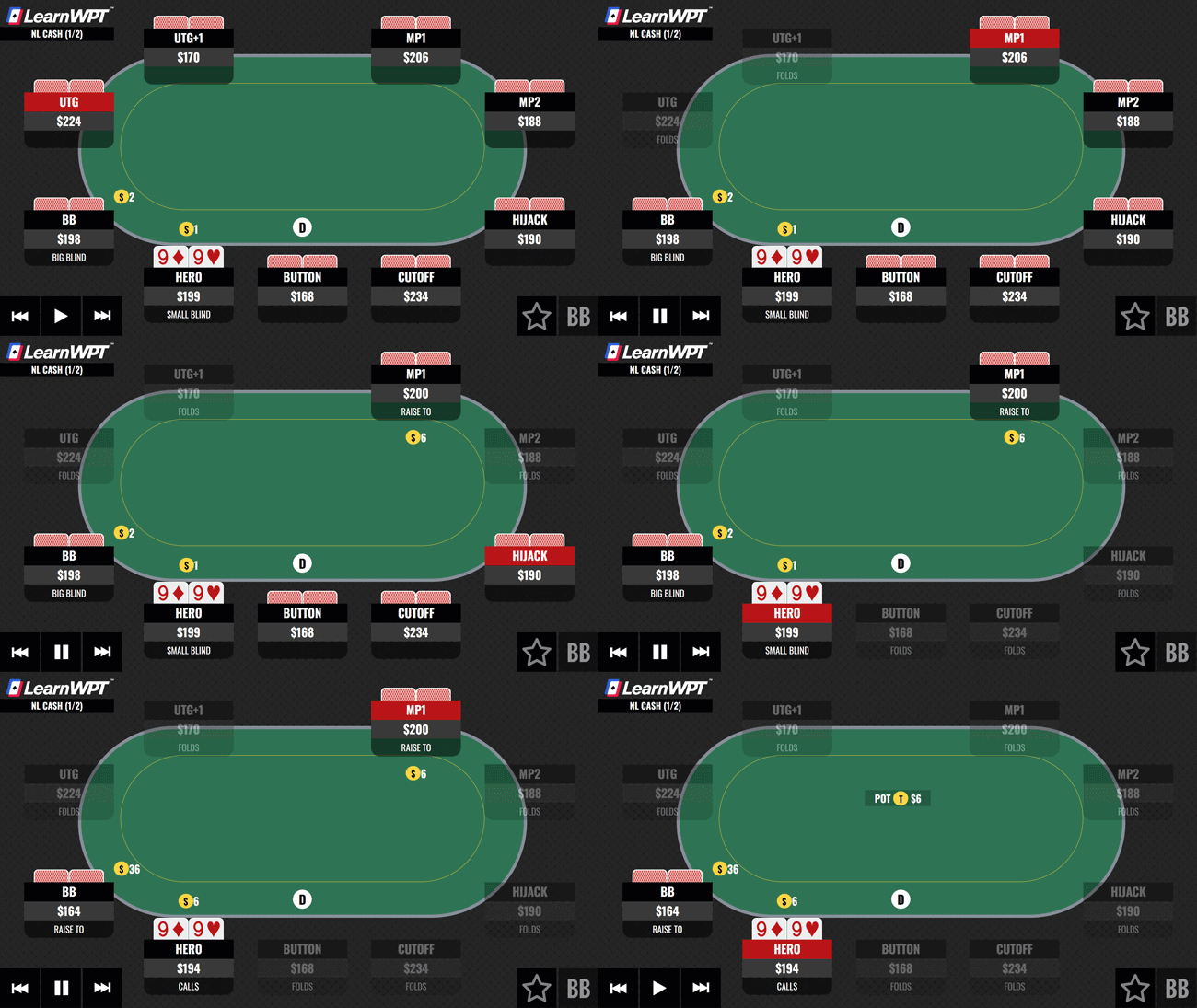
DECISION POINT: You are playing in a very loose and passive $1/$2 cash game where you’ve observed most players calling too much and being sticky postflop with marginal holdings. The MP1 seat is a very solid regular and is the only exception. Action folds to the MP1 player who raises to $6, you call from the Small Blind with 9♥9♦, and the Big Blind reraises to $36. The original raiser folds and action is on you.
What do you do here?
PRO ANSWER: We are playing in a $1/$2 live cash game where most of the play is very loose and passive with players calling far too frequently and being very sticky postflop with marginal holdings. The exception is the player in MP1 who is a very solid regular in this game and makes very few mistakes. We are dealt 9d9h in the Small Blind and it folds to the solid player in MP1 who opens to $6. Everyone else folds to us.
If we look at preflop GTO solutions for this spot it’s a totally mixed situation. The solver output dictates a mix of reraising, calling, and folding, with folding being the favored option by a slight margin. If the Big Blind were also a very good opponent, then mixing our play in this spot or even defaulting to a fold to avoid playing out of position in a marginal spot would be fine. However, we’ve developed solid reads on our opponents so we know the Big Blind is not as skilled.
That being said, because MP1 is a solid player we may be intentionally isolating to play out of position against a single tough opponent which is not preferred. By calling we can potentially induce the Big Blind to come along, and our read is that they call too much and are far too sticky postflop. Our hand plays well against multiple opponents and we want to be actively involved in pots against the weaker players as our implied odds are increased when we do hit the flop. We call and the Big Blind reraises to $36. MP1 folds which leaves action on us.
Continued below...

With the read that the Big Blind is usually quite passive and frequently calls, this reraise is likely to represent a big hand, weighted toward big pocket pairs or AK. Based on this assessment we are definitely behind their 3-betting range with our pocket nines.
The next step is to consider whether we have enough implied odds to call this raise and try to hit a set, which will happen roughly 1 in 8 times. Based on this probability we would have to win $210 on average every time we flop a set in order to call a $30 raise. There is $48 in the pot and the Big Blind has $164 behind, meaning we can potentially win a $212 pot. Considering stacks it does seem like set mining will be profitable in the long run in this spot, however we aren’t guaranteed to win every time we flop a set.
Additionally there will be sometimes when we do flop a set the board texture will be unfavorable for strong hands that dominate us preflop but will be forced to exercise caution. A good example of this is when the Big Blind holds hands like JJ-KK on an Ace high flop.
If the stacks were much deeper this situation against the active and sticky player in the Big Blind or the raise size smaller we could make a compelling case to continue. However in this scenario stacks are relatively small in relation to the large raise sizing, giving us little margin for error in navigating postflop. We would need to both get stacks in and win the pot every time we flop a set in order to be profitable in this spot long term.
Folding is the best play.
How would you play it?
Share your answer in the comments below!
Train ➧ Play ➧ Think ➧ Like a Pro
We created Fearless RIver with the goal to provide a place that empowers players to ask questions, help get them focused, and provide a solid game-plan to bring to the table every time they sit down.
Some of the ways we accomplish this is by:
- Teaching and presenting examples of proven, winning concepts through our Strategy Episodes (short 10-15 min videos)
- Having Members Practice, Drill, and Play Hands using the GTO Trainer for instant feedback on their decisions
- Providing a place where Members can send questions to receive answers and guidance with the Ask a Pro Feature
- Giving Members the ability to record and send hands they've played to receive expert analysis using the Hand Input Tool
Not a Member? Join today for just $5 your first month and start improving your game!