Poker Quiz! Flopped a Big Draw With 5♠6♠, What Do You Do?
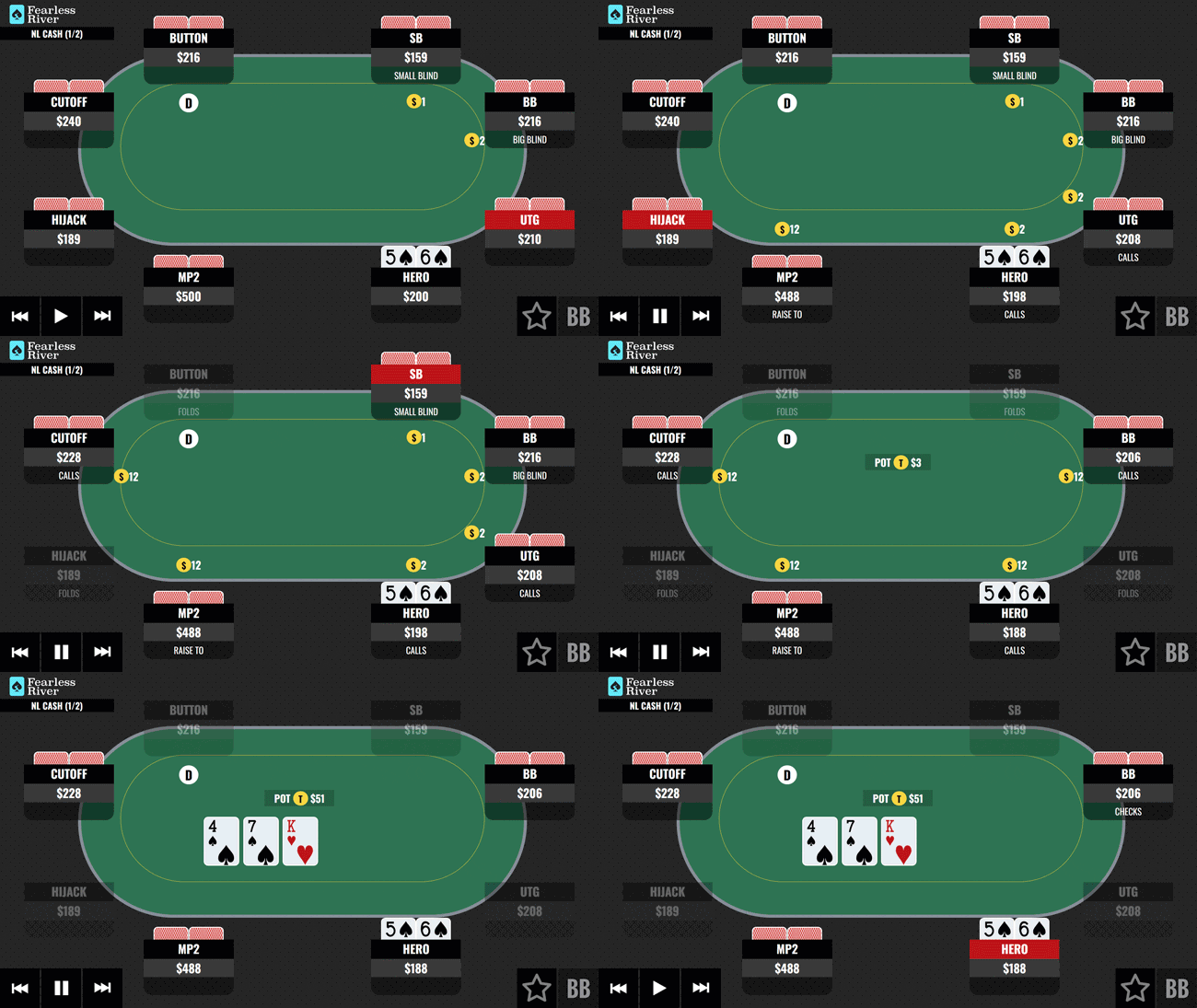
DECISION POINT: In a live $1/$2 cash game most stacks are around $200 and you’ve topped up after missing a few flops. The game so far has been loose and passive with a lot of limping and calling preflop. The UTG player limps and you call with 5♠6♠ from MP1. The player in MP2 raises to $12, the Cutoff and Big Blind call, and you also call. The Big Blind checks the 4♠7♠K♥ flop and action is on you. What do you do here?
PRO ANSWER: We are playing in a live $1/$2 cash game. The game is very loose and passive with lots of limping and calling preflop. Most of the stacks are around $200, and we have just topped up to $200 after missing a few flops. We are dealt 5♠6♠ in the MP1 seat and the UTG player limps first into the pot.
If action had folded to us this would be an easy fold based on our first-in raising strategy, however with a limper in front we can evaluate based on the calling criteria. Our hand is a speculative hand that plays well multi-way and limping behind represents only 1% of our stack, giving us very good implied odds to see a flop in a multi-way pot. We limp behind and MP2 makes it $12. The Cutoff and Big Blind both flat call and action folds back to us.
For the second time in this preflop round we are facing a calling decision. Our hand is still speculative and plays well multiway, but now we have to call 5% of our stack which is right at the ceiling of what we can potentially call speculatively preflop as a default.
There are a few additional factors working in our favor that could tip this decision. We close the action, so calling guarantees us a flop. MP2 also elected to raise multiple limpers in a passive game, which is likely to represent a stronger hand range and therefore increases implied odds when we hit a big hand.
We call and the flop is 4♠7♠K♥ giving us a flush draw plus an open ended straight draw for potentially 15 outs. The Big Blind checks and action is on us.
Continued Below ...

As a pot becomes increasingly multiway, the likelihood of the preflop raiser continuation betting decreases. If we consider the entire continuing range in this spot, hands such as 77 or 44 prefer betting out to prevent the flop from getting checked around and avoid potential scare cards on the turn. To balance our range in this spot we can also lead with some of our 12+ out draws. This leading range has the added benefit of disguising the draws. Even when facing a raise of the lead vs a single opponent, we are actually a 52% favorite on this flop against a range of KK+/AK/KQ.
Checking is definitely +EV, and in games where opponents are still likely to pay us off after hitting a draw, taking a more passive line can lower variance with a similar expected value. Leading balances our range much better and builds the pot in a situation where we are likely a significant equity favorite over three opponents.
Additionally, our hand is also well disguised which leads to bigger implied odds on the occasions when our draw hits on a future street.
Leading for around $20 is the best play.
How would you play it?
Share your answer in the comments below!
Improve Your Game Today!
Join Fearless River and Get:
- The GTO Trainer to play real solved hands and get instant feedback on YOUR leaks (over 4 BILLION solved spots!)
- On-demand access to our full library of 550+ (and growing) in-depth Strategy Episodes from world-class players
- All of your poker questions answered with the Ask a Pro Feature
- Analysis from Fearless River Pros using The Hand Input Tool
- Downloadable Tools you can use at and away from the tables
- Learn from a Team of world-class Professional Players
To join (just $5 your 1st month) click the JOIN NOW button and start improving your game!
Have Questions? Email us at [email protected].