Poker Quiz! J♣T♣ on a Dynamic Flop, What Do You Do Here?
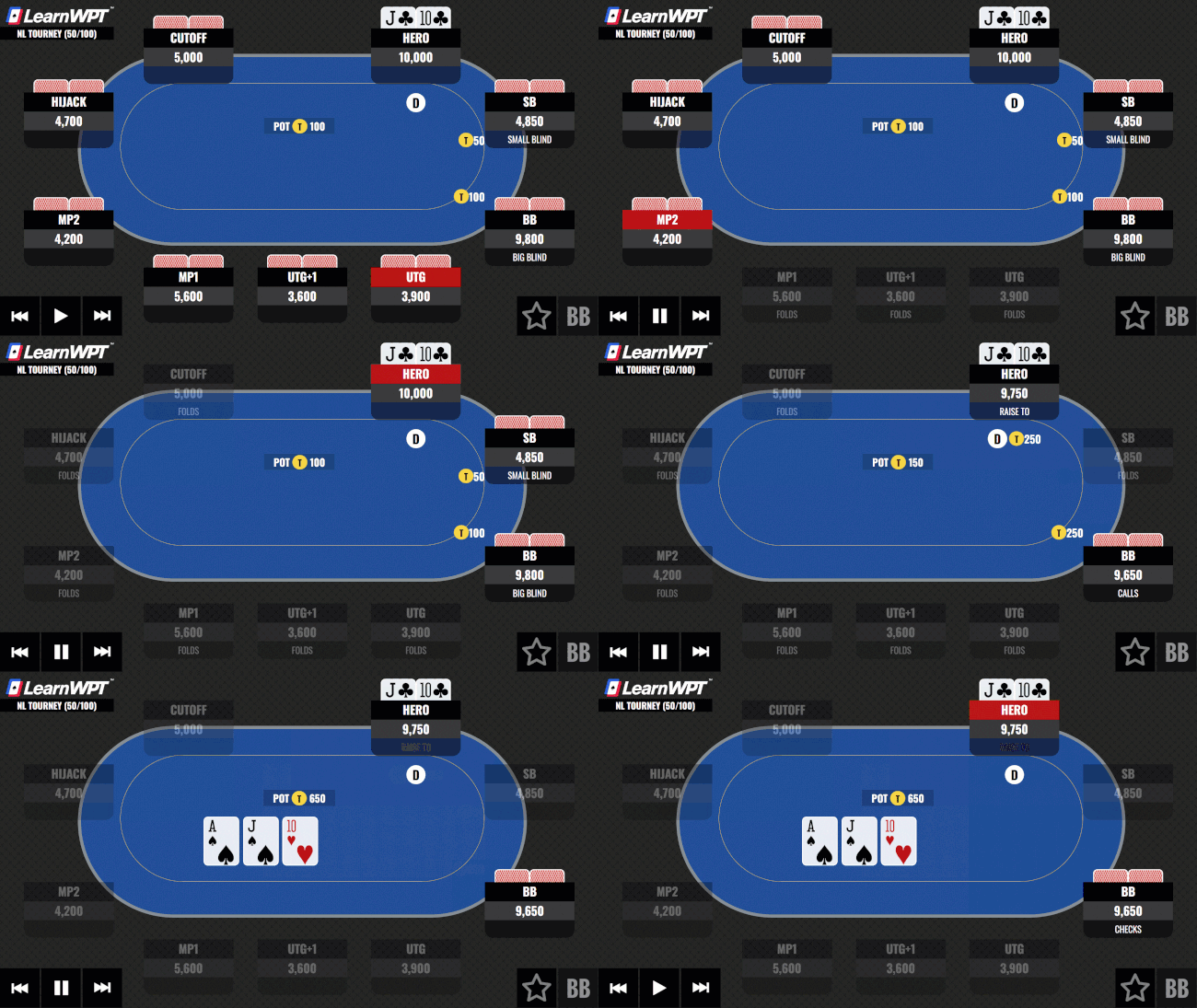
DECISION POINT: In the early stages of a daily tournament you are dealt J♣T♣ on the Button. Blinds are at 50/100 with a 100 big blind ante. You and the Big Blind have 100BBs and the rest of the stacks are around 40-50BBs. Action folds around, you make a standard preflop raise to 250 and the Big Blind flat calls. Your opponent checks the A♠J♠T♥ flop and action is on you.
What do you do here?
PRO ANSWER: We are in the early stages of a daily tournament with 50/100 blinds and a 100 big blind ante. Stacks around the table are mostly 40-50 big blinds with the exception of us and the Big Blind who both have 100BBs. We are dealt JcTc on the Button and everyone folds to us. We make a standard raise to 250, the Small Blind folds and the Big Blind flat calls. The flop is AsJsTh and the Big Blind checks.
When deciding the proper continuation bet sizing, we first need to consider our range advantage and nut advantage. In this situation, we have a very large range advantage as our preflop range is uncapped and contains many broadway hand combinations that connect, while the Big Blind’s has far fewer broadway combinations on this texture and will have a range that contains many more undercards.
We also have a significant nut advantage as hands including KQ, AA, JJ, TT are firmly in a Button first-in hand range, while our opponent in the Big Blind would almost certainly have reraised with all broadway combinations in their range.
Continued below...

It’s also critical to consider how our opponent’s range interacts specifically with the flop. We hold a jack and a ten in our hand, so it is much less likely that the Big Blind has one of those cards. That means when they do continue against a c-bet their range favors more Ax hands, as well as a lot of significant draws that have at least 8 outs to improve. The type of hands that will continue are much more likely to call a larger bet sizing than a range that has a higher concentration of middle and bottom pair hands.
When we combine our significant range and nut advantage with the fact that when our opponent does continue they likely have top pair or a strong draw, our bottom two-pair can go for significant value right now. Betting small here would still show a profit, however this is a spot on a dynamic board where we can immediately start going for more value and bet around 75% of the pot. Consulting a solver confirms this as the results recommend bet sizing options of between ⅔ to full pot.
Continuation betting around ¾ pot is the best play.
How would you play it?
Share your answer in the comments below!
Improve Your Game Today!
Join Fearless River and Get:
- The GTO Trainer to play real solved hands and get instant feedback on YOUR leaks (over 4 BILLION solved spots!)
- On-demand access to our full library of 550+ (and growing) in-depth Strategy Episodes from world-class players
- All of your poker questions answered with the Ask a Pro Feature
- Analysis from Fearless River Pros using The Hand Input Tool
- Downloadable Tools you can use at and away from the tables
- Learn from a Team of world-class Professional Players
To join (just $5 your 1st month) click the JOIN NOW button and start improving your game!
Have Questions? Email us at [email protected].