Poker Quiz! 8♥8♣ In a Daily Tournament, What Do You Do?
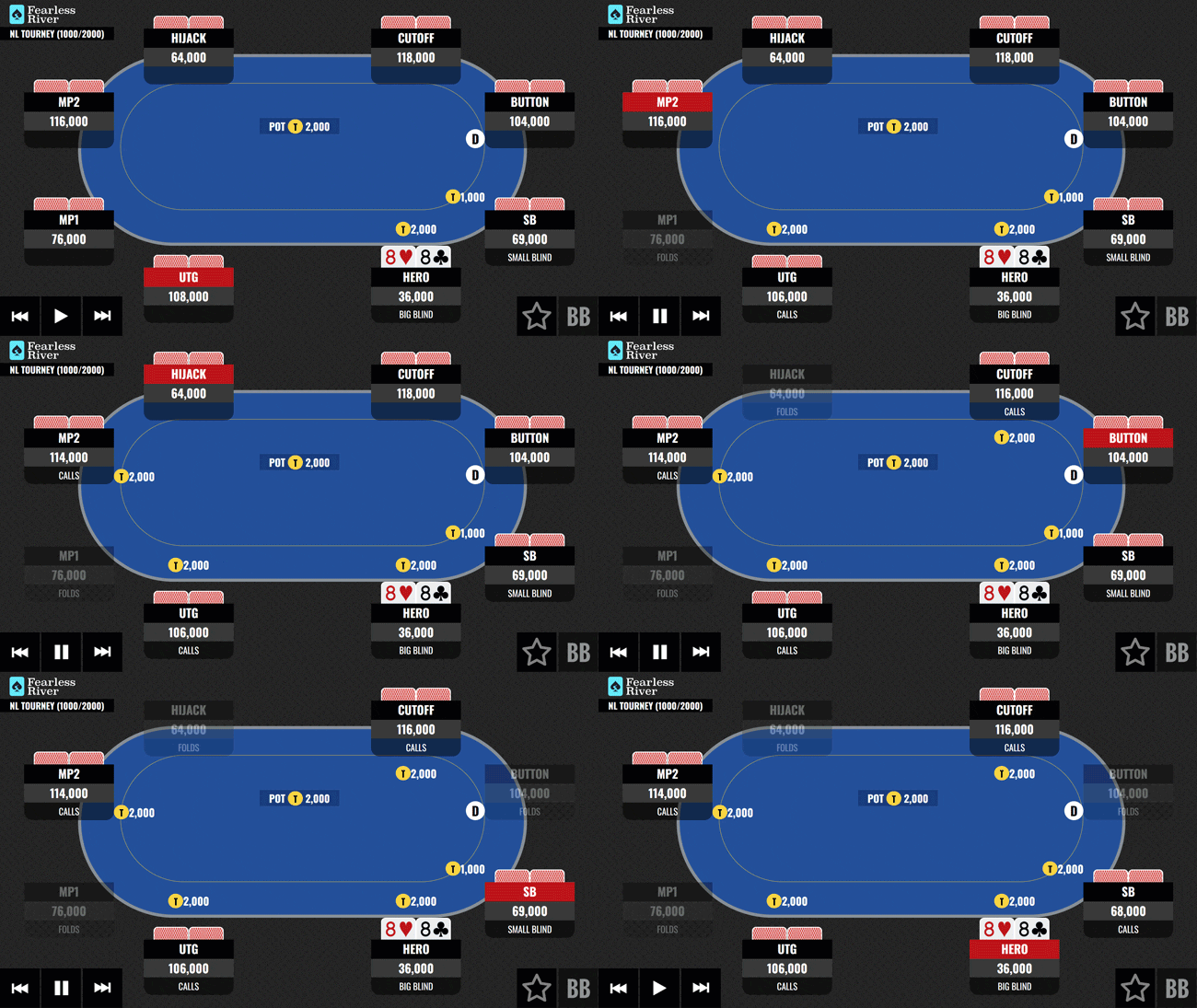
DECISION POINT: In a live daily tournament with blinds at 1,000/2,000 and a 2,000 big blind ante you are the effective stack at the table with 36K (18BBs). You’ve observed the field as being very passive with many players limping. The action starts with a limp from UTG followed by calls from MP2 and the Cutoff. The Button folds and the Small Blind completes. Action is on you in the Big Blind with 8♥8♣. What do you do here?
PRO ANSWER: We are playing a daily live tournament with a very passive field with lots of limping. The blinds are 1,000/2,000 with a 2,000 big blind ante. Most of the stacks are around 100K and we are the shortest with 36K to start the hand.
We are dealt 8♥8♣ in the Big Blind. The action starts with a limp from UTG followed by calls from MP2 and the Cutoff. The Button folds, the Small Blind completes and action is on us with a middle pocket pair and 10K in the pot before we act. There is no real “GTO” solution for this spot because our opponents aren’t supposed to have limping ranges from early position, so we have to fall back on range analysis and what we know about each opponent to make the best decision.
Any time we can potentially add 20-25% to our stack uncontested by moving all-in, we should at least consider shoving all-in as a potential option. In this particular situation, we also have a very solid hand that is likely favored over our opponents’ ranges and has reasonable equity even when called. It is very unlikely that anyone is calling preflop with a very strong range aside from potentially UTG, so the most important range to consider is that of the UTG limper.
In many live games we will see players limping in from all positions and a wide range using hands they “want to see a flop with”. This limping range typically includes Ax combinations, hands with two broadway cards, pocket pairs, and suited connectors.
Continued below ...

Against this range we would be way ahead and our hand would easily warrant moving all-in. There some opponents who may be a little more sophisticated and will limp with big hands to trap, particularly at tables where there is a lot of preflop raising occurring. If we had specific information on the UTG player’s potential to limp with strong hands as well this decision becomes much easier.
The last step is to consider the overall table dynamics. Is this a table where we are able to pick up chips easily through winning uncontested pots? Since we are currently the shortest stack at the table the answer is likely no, however if we are likely to take down uncontested pots with a decent frequency in future orbits checking becomes the preferred option.
Most players aren’t capable of limping with a truly balanced range, and there are only a few combinations of big hands available to begin with. Consequently, players who employ a limping strategy in early position can easily start including too many hands in their limping ranges. Without a specific read that the UTG player limps infrequently and does so with strong hands, the ability to add over 25% to our stack by winning an uncontested pot when we move all-in is far too enticing to worry about the few times they are trapping with a big hand.
Moving all-in is the best play.
How would you play it?
Share your answer in the comments below!
Improve Your Game Today!
Join Fearless River and Get:
- The GTO Trainer to play real solved hands and get instant feedback on YOUR leaks (over 4 BILLION solved spots!)
- On-demand access to our full library of 550+ (and growing) in-depth Strategy Episodes from world-class players
- All of your poker questions answered with the Ask a Pro Feature
- Downloadable Tools you can use away from the tables
To join (just $5 your 1st month) click the button below and start improving your game!
Have Questions? Email us at [email protected].