Poker Quiz! A♦A♥ Facing a Flop Check-Raise, What's Your Move?
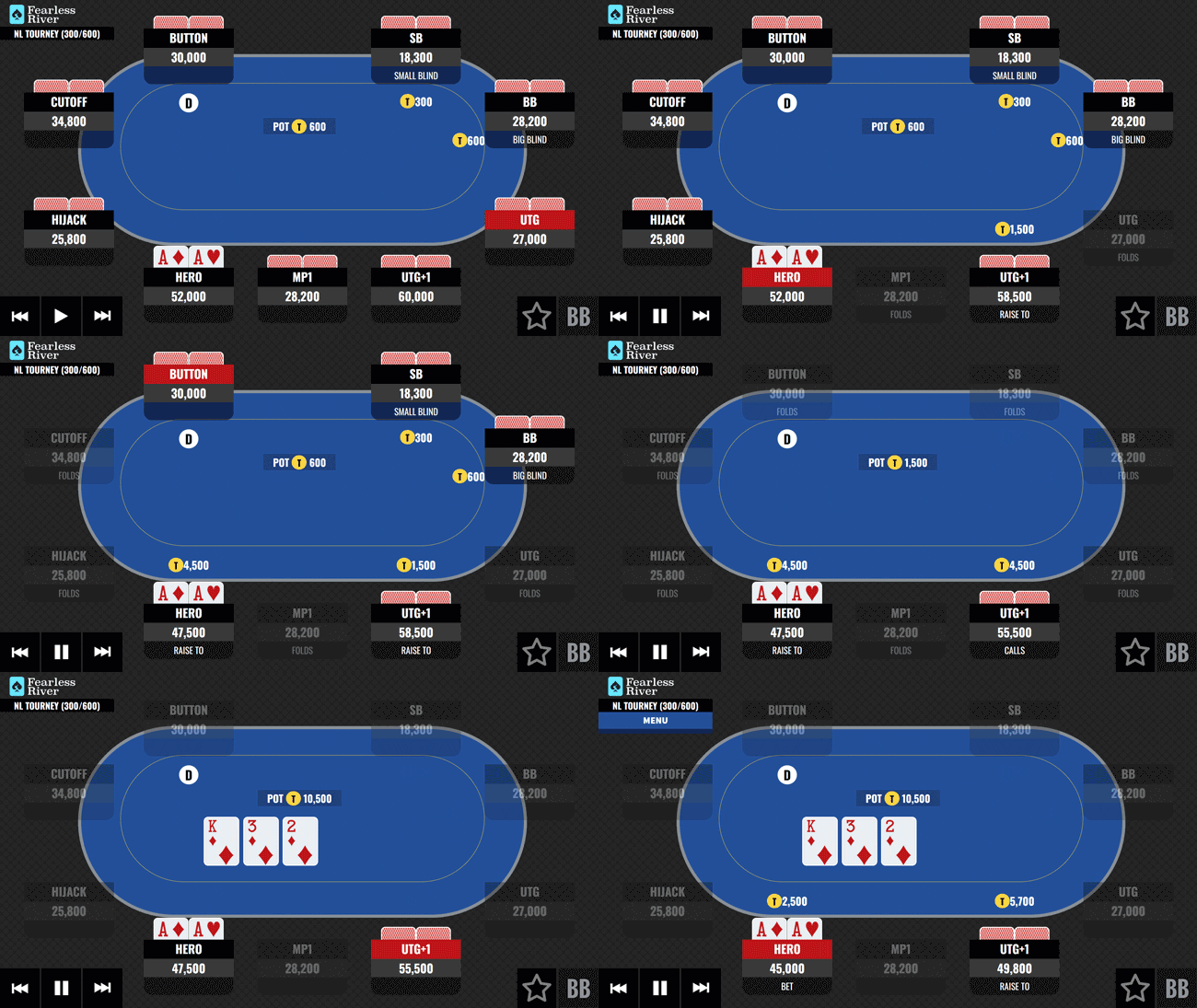
DECISION POINT: You’re in a regional tournament series with deep stacks that attract both pros and recreational players. The blinds are 300/600 with a 600 big blind ante. UTG+1, who is a known and well-studied player capable of making aggressive plays, opens to 1,500. You reraise to 4,500 in MP2 with A♦A♥. Action folds back around to the UTG+1 player, and they call. The flop comes K♦3♦2♦. Your opponent checks, you bet 2,500, and they raise to 5,700. What do you do here?
PRO ANSWER: We are playing a regional series event with deep stacks that tend to attract a variety of both pros and recreational players from around the area. The blinds are 300/600 with a 600 big blind ante. The UTG+1 player is a known player with over $500k live earnings who is well studied and capable of making aggressive plays.
We are dealt A♦A♥ in MP2 and following a 1,500 chip open from UTG+1 and a fold by MP1, we make a standard reraise to 4,500 chips. Everyone else folds back to the UTG+1 player who just calls. The flop is K♦3♦2♦ and the UTG+1 player checks.
As the preflop aggressor we retain a significant range advantage, meaning we can often bet these monotone boards with 100% frequency. Our opponent in UTG+1 also has a lot of hands that completely miss these types of boards that will fold to any size bet. Given these factors, choosing a small c-bet size will allow for a great price on our bluffs while still being able to get value out of bigger hands and draws on future streets by sizing up. We bet 2,500 chips into a pot of slightly over 10,000, and our opponent makes a very small check-raise to 5,700.
With an overpair and the A♦ in our hand, folding isn’t a consideration. At this point, we have to decide if it is better to just call or if raising is preferred. This specific check-raise size isn’t something we would normally expect to see, in theory. Since this appears to be a deviation, we need to think about what type of hands this specific opponent might check-raise this size with and put them on a range.
It’s unlikely UTG+1 expects much fold equity when we’re getting 6:1 pot odds on our call. What is more likely is that they have a range consisting of some made hands of varying strengths, or semi-bluffs that prefer to wait until the turn (often for a “safe” card) to start bloating the pot more aggressively. This range includes hands like Kx with a diamond, as well as hands including AK, 33, 22, and some made flushes. If we didn’t hold the A♦, that range might include some combos with just the Ace of diamonds, as well as suited Ax of diamonds for some nut flushes, but since we do they can be excluded.
If we consider how the hands in UTG+1’s check-raising range might react if we were to reraise, most of the hands that we dominate are likely fold and only the hands ahead of our Aces currently such as made flushes and sets are likely to continue. This is a classic “way ahead, way behind” scenario where it benefits us to keep our opponent’s range wide so that hands like Kx can continue to shovel money into the pot on future streets drawing extremely thin.
Even when our opponent does have a hand like a set or flush we are getting a very compelling price to draw to the nut flush and potential one of the two remaining Aces for top set.
Calling is the best play.
How would you play it?
Share your answer in the comments below!
Improve Your Game Today!
Join Fearless River and Get:
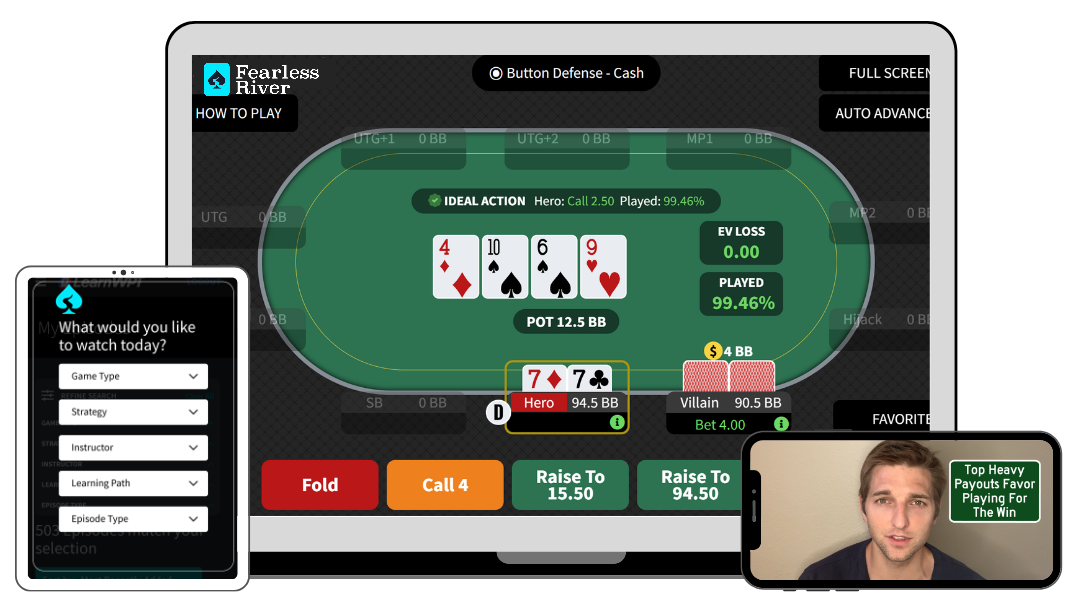
- The GTO Trainer to play real solved hands and get instant feedback on YOUR leaks (over 4 BILLION solved spots!)
- On-demand access to our full library of 550+ (and growing) in-depth Strategy Episodes from world-class players
- All of your poker questions answered with the Ask a Pro Feature
- Downloadable Tools you can use away from the tables
To join (just $5 your 1st month) click the button below and start improving your game!
Have Questions? Email us at [email protected].