Poker Quiz! Deciding to C-Bet With Q♠T♥ Vs the Button...
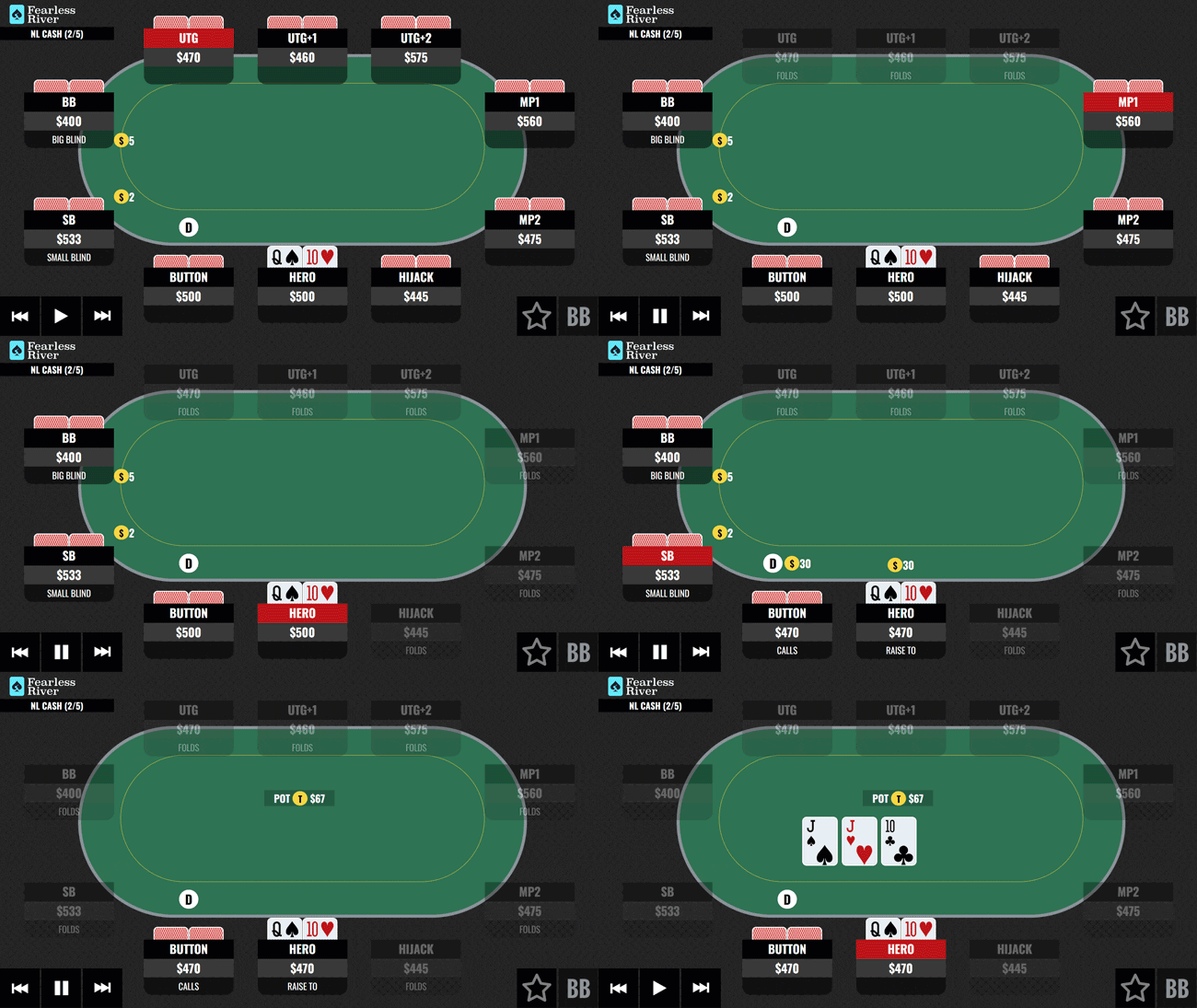
DECISION POINT: In a live $2/$5 cash game action folds around to you in the Cutoff with Q♠T♥ and you make the standard raise for this table to $30 (6BBs). The Button calls and both the Small Blind and Big Blind fold. The flop comes J♠J♥T♣ and action is on you. What do you do here?
PRO ANSWER: We are in a 100 big blind deep cash game with Q♠T♥ in the Cutoff seat. Action folds around to us and we make the table-standard opening raise to $30 (6 big blinds), the Button flat calls, and the Blinds fold. The flop comes J♠J♥T♣.
This is a fairly common situation with a medium strength made hand that can be very tough to navigate as the out of position player against tougher opponents who will frequently float and potentially raise our continuation bets. When deciding to continuation bet we need to focus on a few key factors.
First we want to determine who has the range advantage on the flop. If one player has a significant range advantage betting will often be preferred with the majority of, if not all, hands in that player’s range. In this specific hand we opened in the Cutoff and were called by the Button. Both our hand range and the Button’s range connect with this flop fairly well. We certainly have more JJ/TT/AJ type hands in our range since our opponent likely would have reraised preflop with those hands a significant portion of the time. The Button's calling range does however include many hands that connect quite well with this flop. While we may have a slight range advantage, it certainly cannot be categorized as significant.
The next factor to evaluate is position. When we are in position our c-bet frequency can increase because we'll be getting more information on every street. Since we are the preflop aggressor, our opponents will often check first to act and we potentially are afforded the option to check back and get a free card on future streets or even a free showdown to realize our equity. In this hand however we are out of position, so when other key factors aren’t heavily skewed toward c-betting we will defer to checking more often as a default.
Continued below...

The final consideration is whether protecting our equity in the hand is necessary. When you hear an opponent at the poker table say “no free cards” they are describing equity protection in its most basic definition. Equity protection is essentially betting with a vulnerable made hand that is currently ahead on the flop or turn to discourage an opponent from continuing with portions of their range that have strong future equity such as a draw with an overcard. This particular spot is somewhat deceiving to evaluate, as the board is very coordinated which is often an indicator that our range may benefit from protection.
On this paired high card flop the main draws we are protecting against are 98s and KQ. If we are facing 98s it is less likely for the Button to complete their draw as we have one of the Queens in our hand. We also make it less likely for KQ combinations to be in the Button’s flop range when we hold a Queen. The Button would likely have reraised preflop with AK/AQ and we block some combinations of AQ, so protecting against overcards is less of a concern. Though initially our hand appears as it might benefit from protection, after examining the specific draw combos that we would target in this specific spot it indicates that betting for protection is less important.
Running this hand through a poker solver, the output shows a mixed strategy is preferred consisting of checking in this spot around 55% of the time and continuation betting small 45% of the time. Many players make the mistake of continuation betting at too high a frequency in this spot against tough opponents.
If you are facing a weaker opponent that you’ve observed will fold anytime they didn’t significantly connect with the flop, then you should make an exploitative adjustment and continuation bet here 100% of the time. Against players who will frequently float and raise continuation bets, including hands like QT offsuit in your checking range at some frequency will balance your c-betting strategy appropriately and significantly improve your win rate.
Checking is the best play.
How would you play it?
Share your answer in the comments below!
Play Better Poker With Fearless River!
Whether you’re brand-new to poker training or are an experienced student, a membership to FearlessRiver.com is your chance to learn from world-class professional poker players in a friendly community using state-of-the-art tools.
Join now to get started, and you'll immediately gain access to the Fearless River training features, including GTO Trainer packs, 550+ strategy videos, downloadable tools, Ask a Pro Discord, and more!
Have Questions about Fearless River? Send an email to our Support Team at [email protected] or click the CONTACT US button.