Poker Quiz! In the Small Blind with A♦Q♦, what do you do?
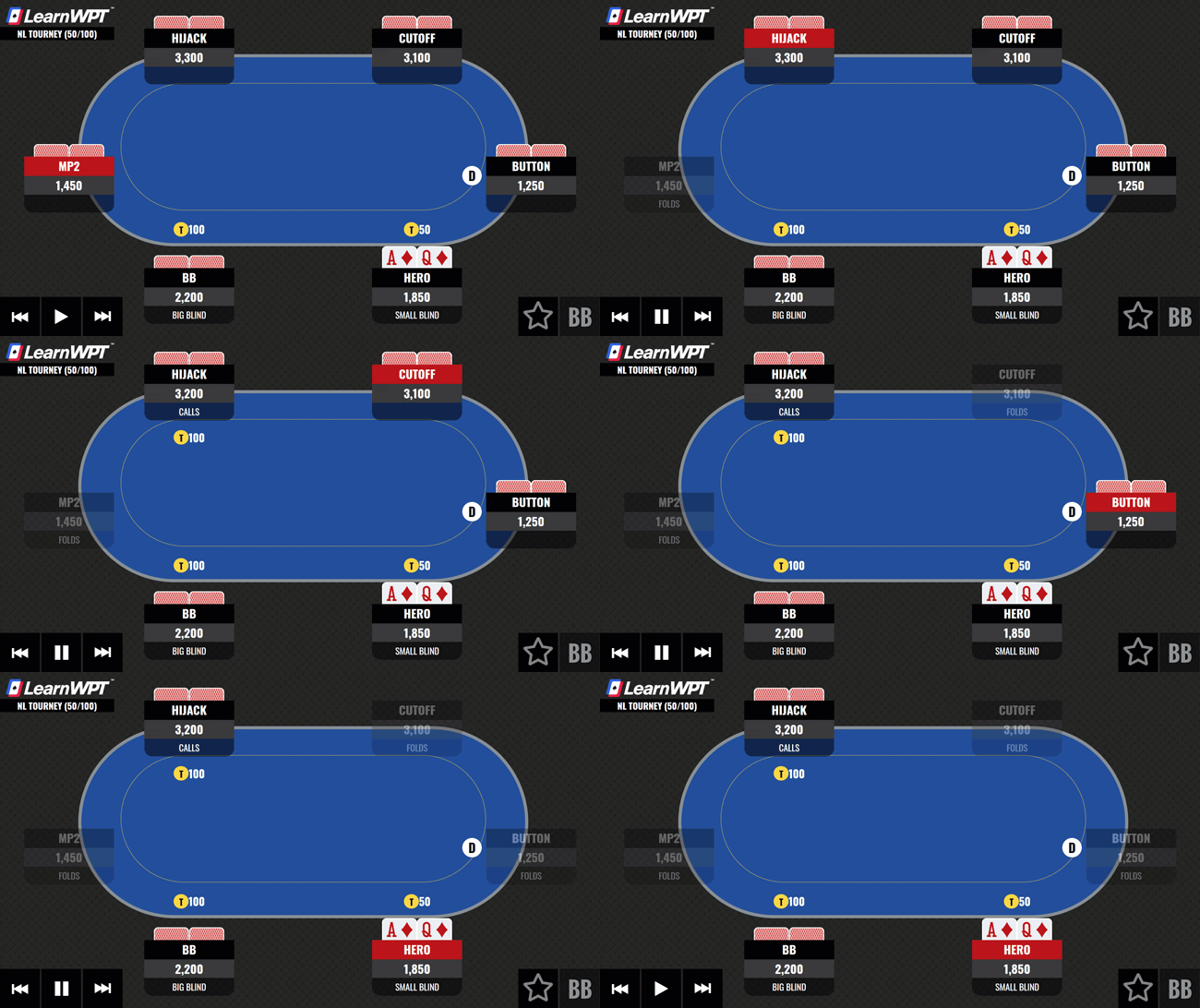
DECISION POINT: In the middle stages of a tournament pre-ante you are 6-handed with player specific reads that the Big Blind is tight and the Hijack is loose and calls often. The UTG player folds, the Hijack limps, and both the Cutoff and Button fold. Action is on you in the Small Blind with A♦Q♦. What do you do here?
PRO ANSWER: We are playing in the middle stages of a smaller stakes multi-table tournament before antes are in play. We’re 6-handed and have been at the table long enough to have a read that the Big Blind and UTG player in this hand are quite tight, while the Hijack is very loose/passive splashing around in a lot of pots and generally calling far too frequently.
The blinds are 50/100 and we are dealt AdQd in the Small Blind. The UTG player folds, the Hijack open limps for 100, and the action folds to us. Our specific hand AQs is well ahead of the Hijack limping range so the question isn’t so much if we’re raising, but what amount we should raise in this spot.
Running this hand in a simulation with betting options of a raise to 600 chips or shoving all-in, the resulting output shows the Expected Value (EV) of both plays is very close (separated by .06 big blinds) however it slightly favors raising to 600 over shoving.
Given how close the results are, this is a good example of a situation where you shouldn’t blindly follow a simulation since we know information about this player.
Continued below ...

The default simulation assumes this player would implement a good, balanced open limping range that consists of around 8.5% of hands and includes a mix of big hands plus more speculative ones.
We have observed this player splashing around quite liberally, and we can assume they likely limp with more than 8.5% of hands. In the simulation the Villain only calls with their really big hands when we shove all-in. In real life given the information on this opponent we can assume that this player is calling a little wider.
If we node lock the simulation and widen the limping range for the Hijack of approximately 15% of hands instead of 8.5% as a conservative estimate, and calling our raise with just a few more hands than the top 1.3%, the solver output shows shoving will be more profitable overall than just raising to 600.
Considering our read on the Hijack, this decision between a smaller raise and an all-in that would normally be close based on pure expected value when facing a tougher player, becomes a clear shove vs our opponent that is likely to have a much wider limping range.
Moving all-in is the best play.
How would you play it?
Share your answer in the comments below!
Improve Your Game Today!
Join Fearless River and Get:
- The GTO Trainer to play real solved hands and get instant feedback on YOUR leaks (over 4 BILLION solved spots!)
- On-demand access to our full library of 550+ (and growing) in-depth Strategy Episodes from world-class players
- All of your poker questions answered with the Ask a Pro Feature
- Downloadable Tools you can use away from the tables
To join (just $5 your 1st month) click the button below and start improving your game!
Have Questions? Email us at [email protected].