Poker Quiz! Facing a C-Bet After Flopping Trips, What Do You Do?
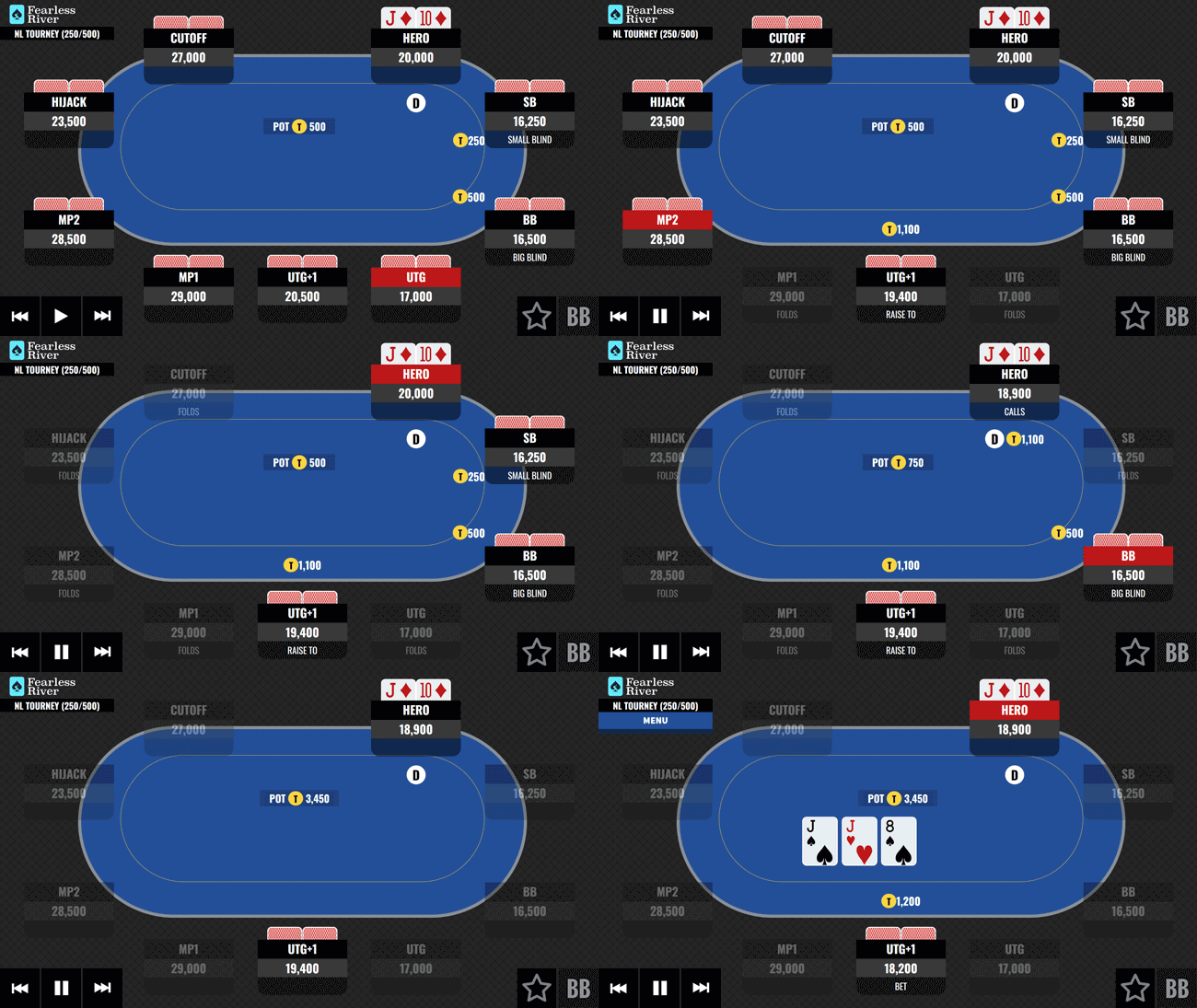
DECISION POINT: You’re playing a $1,500 regional tournament main event at a local card room that brings serious recreational players and pros. The play at your table has been aggressive with a lot of players firing multiple streets and few hands going to showdown. Blinds are 250/500 with a 500 big blind ante and you have a 20,000 chip stack. The opponent in UTG+1, who is an accomplished player, opens to 1,100 and everyone folds to you on the Button with J♦T♦. You call and the flop comes J♠J♥8♠. The early position opponent c-bets 1,200 and the action is on you. What's your move here?
PRO ANSWER: We're playing in a regional tournament at our local card room. It's a $1,500 main event that tends to draws in a lot of serious recreational players as well as pros from around the region. The action at our table has been a bit on the aggressive side, with lots of players capable of firing multiple barrels and few hands going to showdown.
The blinds are 250/500 with a 500 big blind ante, and we have 20,000 chips to start the hand. We are on the Button and are dealt J♦T♦. The UTG player folds and the opponent in UTG+1, who we recognize as an accomplished player and WSOP Bracelet winner, opens to 1,100 chips. Everyone else folds.
This is a great spot to call as part of an overall Button defense strategy. Our hand plays extremely well postflop with positional advantage, giving us a big edge at this stack depth against players who are capable of firing multiple barrels.
Both Blinds fold and the flop is J♠J♥8♠. The UTG+1 player comes out firing 1,200 chips, or just over one third of the pot. This is a flop where the early position raiser has a significant range advantage, and we can expect them to be betting nearly their entire range. We flopped a very strong hand and have a decision to make. Should we slow play our three of a kind or play it faster by raising now?
In this case, we are in position and against a single opponent. They should be continuation betting with a very wide range of hands, including plenty of overcard combinations that might not call a raise on the flop but could easily put more chips in the pot if they hit something like an ace or a king on the turn. UTG+1’s c-bet bluffing range could also easily continue bluffing on a lot of turn cards.
Many players immediately see the flush and straight draw cards on this board and become passive for fear of getting drawn out on. While that is the case, flush draws make up a very small portion of our opponent’s overall range, and we block a key straightening card by holding the Td in our hand. Additionally, if we raise it is difficult to get called by many worse hands. An early position raising range is unlikely to have many worse Jx combos than our JTs, and while UTG+1 does have some AA/KK/QQ hands, even those might proceed with caution when we raise the flop.
When we pause to consider the specific opponent, table tendencies, our position, the stack depth, and how both our ranges interact with this board, our best chance to win a big pot and maximize EV in this spot is to slow play and just call.
Calling is the best play.
How would you play it?
Share your answer in the comments!
Play Better Poker With Fearless River!
Whether you’re brand-new to poker training or are an experienced student, a Membership to FearlessRiver.com is your chance to learn from world-class professional poker players in a friendly community using state-of-the-art tools.
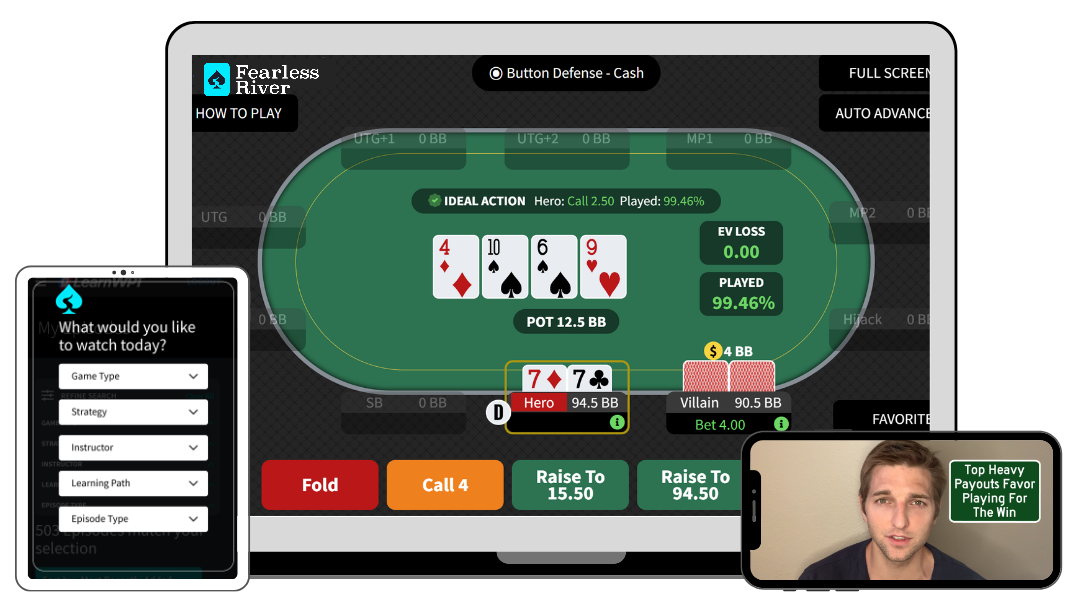
Join now to get started, and you'll immediately gain access to the Fearless River training features, including GTO Trainer packs, 550+ strategy videos, downloadable tools, Ask a Pro Discord, and more!
Have Questions about Fearless River? Send an email to our Support Team at [email protected] or click the CONTACT US button.