Poker Quiz! Your Move Facing a Turn Decision With A♠T♥...
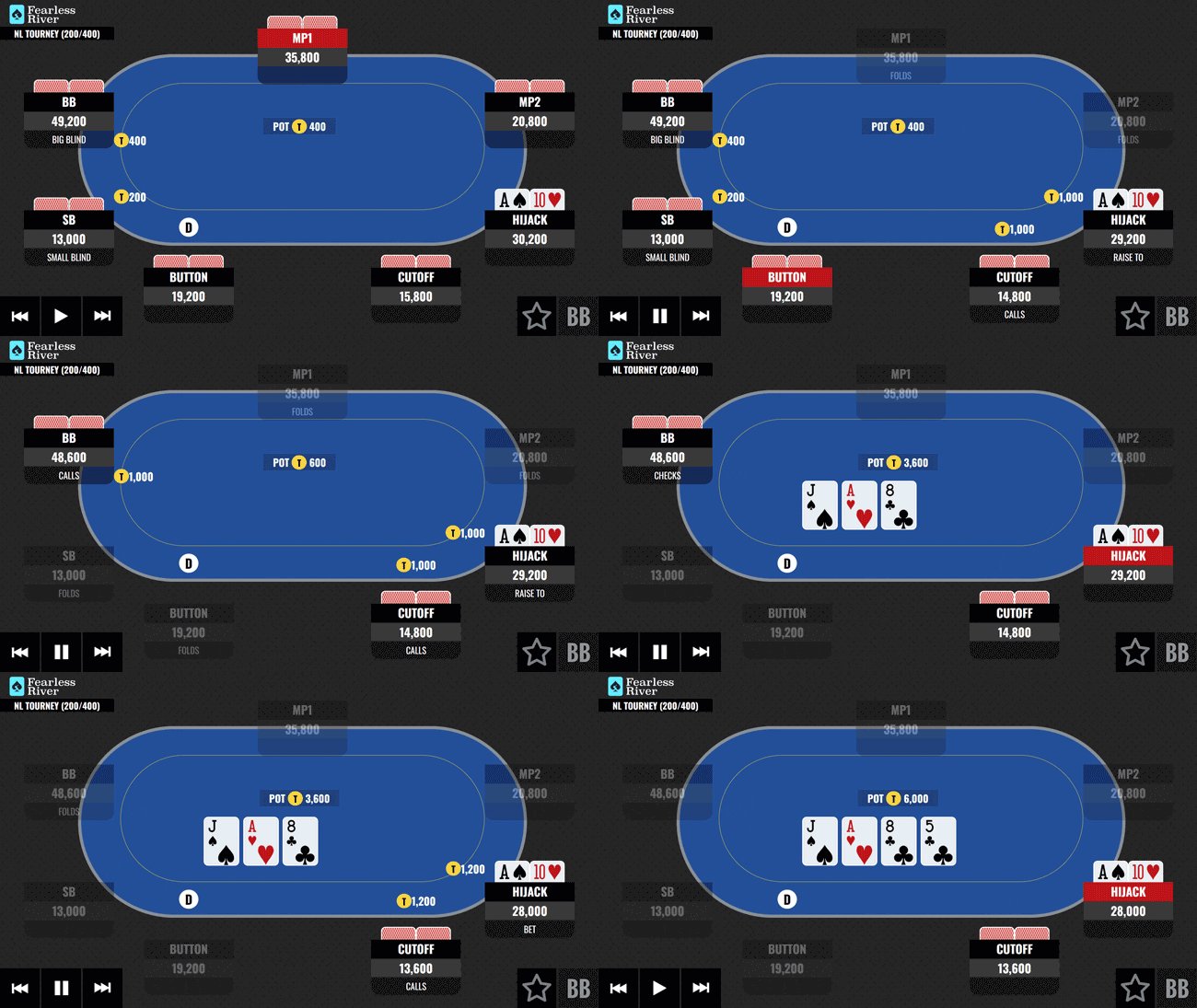
DECISION POINT: You are in the early stages of a live daily tournament with blinds at 200/400 with a 400 big blind ante. Action folds to you in the Hijack, you raise to 1,000 (the standard open) with A♠T♥ and get called by the players in the Cutoff and Big Blind. The Big Blind checks the J♠A♥8♣ flop, you bet 1,200, and only the Cutoff calls. The turn is 5♣ and action is on you. What do you do here?
PRO ANSWER: We are playing a live daily tournament. It is still early on with 200/400 blinds with a 400 big blind ante and most of the field still remaining. We are dealt A♠T♥ in the Hijack seat and everyone folds to us. We make a standard open to 1,000 chips and both the Cutoff and the Big Blind call. The flop is J♠A♥8♣ and the Big Blind checks.
This is a tricky spot as we likely have the best hand and strongest range, however this is the type of coordinated flop that also connects quite well with our opponents’ ranges. If we decide to bet, a larger sizing will likely fold out a lot of the hands we have dominated and only get called by hands that are either ahead of us or have significant equity against our AT offsuit. If we bet too small we keep a lot of dominated hands in but are also giving our opponents a tremendous price to hit any potential draws.
Having the Ten in our hand does help as it blocks some of the QT/T9 combinations that make up some of our opponent’s highest equity draws. Since we are early in the tournament and the effective stack in the hand is over 70 big blinds, it makes a lot of sense to keep the pot small for now and keep our opponent’s weaker hands in. We can then determine how to proceed based on the flop action and the specific turn card.
We elect to bet 1,200 and the Cutoff calls and the Big Blind folds.
Continued below ...

The turn is the 5♣. This is one of the more innocuous turn cards that could have appeared, and is unlikely to have significantly impacted the equity of our hand versus our opponent’s range. Often players are inclined to continue betting in this spot to try and deny equity to the opponent’s draws. We are essentially facing the same dilemma on the turn that we just encountered on the flop. If we bet large enough to deny equity to our opponent's draws, we are likely to only get action from hands we are behind.
If we choose to fire a turn second bullet we are basically at the bottom of the range we are trying to represent. Additionally, we have to play the rest of the hand out of position which likely creates some tough decisions on a majority of river cards. Checking keeps all of our opponent's weaker hands in their range that we could get value out of on the river that won’t call a turn bet, and we may induce bluffs from weaker hands as well.
Reviewing this spot in a solver, the output confirms we are on the cusp of hands that could potentially bet. When holding AQ or AK, the solver would choose to purely bet for value. With AT, however, checking to keep the opponent’s range wide to induce bluffs and/or go for thin river value against weaker made hands is favored against a looser opponent capable of calling down with weaker Ax hands or Jx hands. We could continue betting for value exploitatively, however against all other opponents we should check.
Checking is the best play.
How would you play it?
Share your answer in the comments below!
Improve Your Game Today!
Join Fearless River and Get:
- The GTO Trainer to play real solved hands and get instant feedback on YOUR leaks (over 4 BILLION solved spots!)
- On-demand access to our full library of 550+ (and growing) in-depth Strategy Episodes from world-class players
- All of your poker questions answered with the Ask a Pro feature
- Analysis from Fearless River Pros using The Hand Input Tool
- Downloadable Tools you can use at the table and away from it
- Learn from a Team of world-class Professional Players
To join (just $5 your 1st month) click the JOIN NOW button and start improving your game!
Have questions? Email us at [email protected].