Poker Quiz! At the Final Table With 9♥9♦ Facing an All-In...
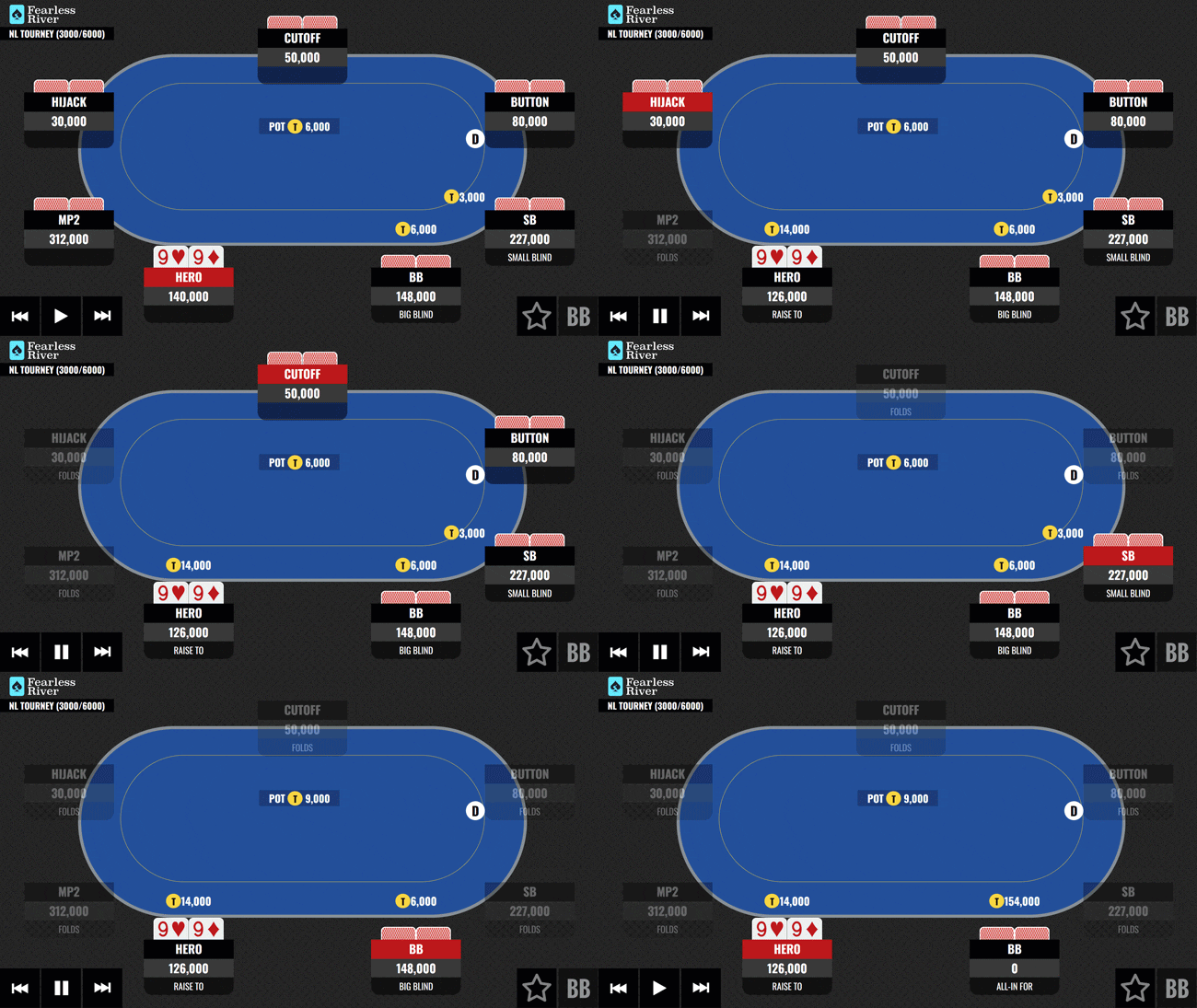
DECISION POINT: You are fourth in chips with 24BBs at the Final Table of a daily $100 tournament. There are two short stacks with less than 10BBs. The payouts are 1st = $1,600 | 2nd = $1,000 | 3rd = $600 | 4th = $500 | 5th = $350 | 6th = $300 | 7th = $250. First to act, you raise to 14,000 (2.5BBs) with 9♥9♦. The action folds to the Big Blind (who has you covered) and they move all-in. What's your move here?
PRO ANSWER: We are at the Final Table of a daily $100 tournament with seven players remaining and the following payouts:
1st: $1,600
2nd: $1,000
3rd: $600
4th: $500
5th: $350
6th: $300
7th: $250
We are fourth in chips with almost 24 big blinds and there are two short stacks with less than 10 big blinds. Action is on us in UTG and we are dealt 9♥9♦. At a Final Table the greatest ICM pressure is usually on the medium stacks, so we would want to tighten up our opening ranges some in this spot. Even taking ICM into account, pocket nines is easily high enough up in our range to be worthy of a raise. We open to 14,000 and everyone folds to the Big Blind who moves all-in!
If the Big Blind is a studied player in this scenario, their range should be quite polarized when shoving all-in here. Taking a look at this spot from the surface level in a solver, the output recommends calling with 88+/AQo/ATs+. When using solvers to study, many players make a big mistake and assume we can simply call in this spot without factoring ICM into decision-making.
If we use a more sophisticated tool designed to consider ICM’s impact on hand ranges for this exact spot and specific payout structure, the calling range changes to JJ+/AKo/AQs+. In fact, if we were to drill down even further and allow our opponents to make a non-all-in raise as well, the Big Blind would start to split their ranges even more and we could actually call with 99+/AQo/AQs+.
How does this help us in real time though?
Continued below ...

Assuming that we’ve done enough work away from the table to at least know what normal ranges look like in this scenario, there’s a good chance we have some feel for how ICM can affect calling ranges. One of the first questions we should ask in these spots is “Does our opponent make this all-in reshove with any hands we dominate?”
While it’s possible there are some 88/A9s in our opponent’s range, those hands would be near the very bottom of a likely shoving range. That assumption alone should alert us that this is at best a close decision. After we start to consider ICM and that many of our opponents (barring a player-specific read) are unlikely to use a polarized all-in range in this spot and are more likely to be value heavy in a $100 daily tournament, what initially seems like a close decision becomes a fairly trivial fold.
Folding is the best play.
How would you play it?
Share your answer in the comments below!
Will YOU Be Our Next Bracelet Winner?
Our students consistently crush the summer poker season, bringing home massive scores and achieving their poker dreams.

In fact, in just the past few years alone during the summer in Vegas Fearless River Students have achieved:
🥇 4 WSOP BRACELETS
🏆 6 WSOP Final Tables
💪 1 Around Town Win
👏 9 Around Town Final Tables
💰 Over $1.7 Million in Cashes
Ready to be our next success story?
Become a FearlessRiver.com Member now for just $5 your 1st month and start preparing for your best summer yet.
Have Questions about Fearless River? Send an email to our Support Team at [email protected] or click the CONTACT US button.