Poker Quiz! Short Stacked in the Big Blind With 7♥7♦, Your Move?
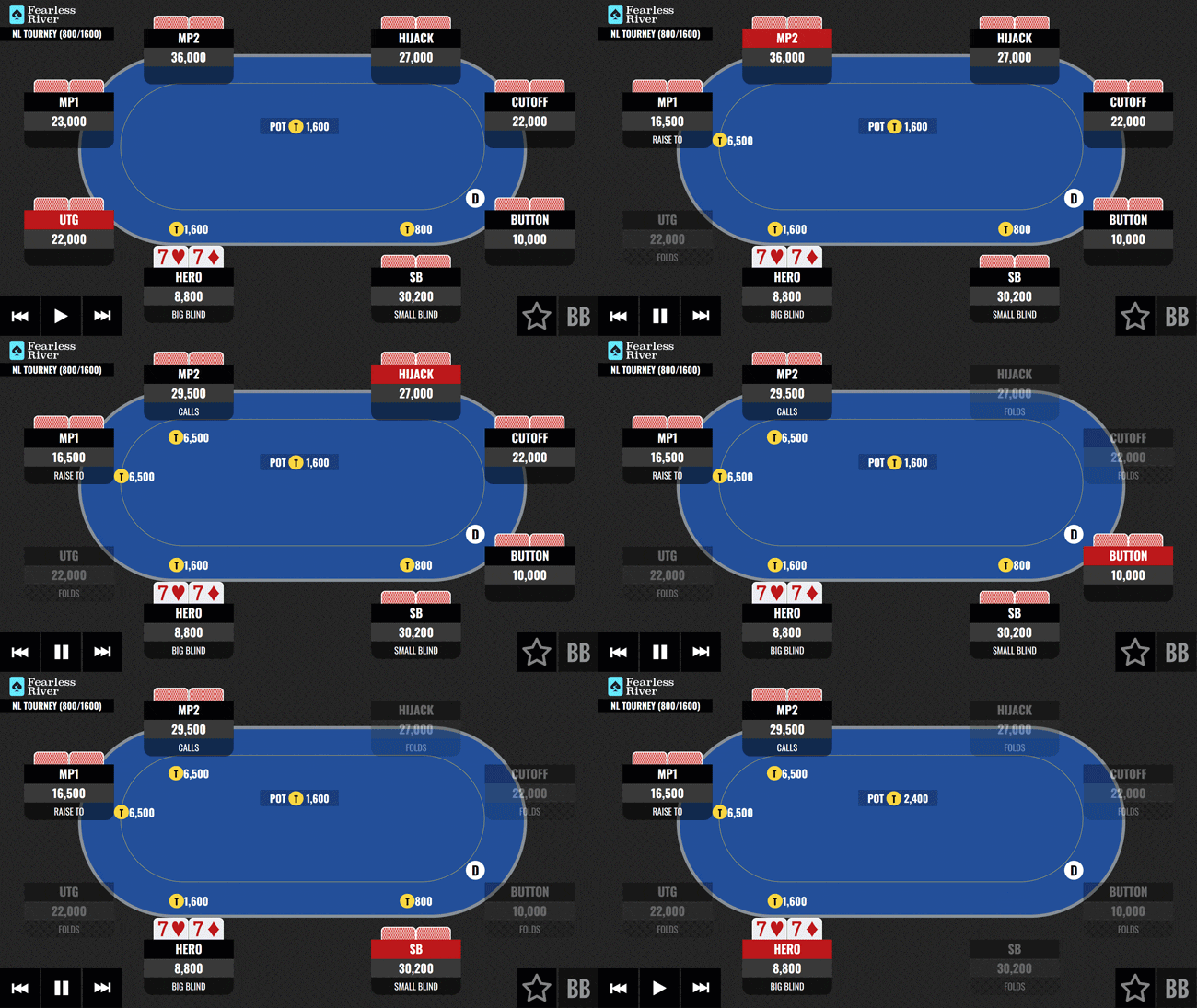
DECISION POINT: You’re in a one-day, fast-structured daily tournament. 12 places get paid and there are 40 players remaining. The table is 8-handed and the blinds are 800/1,600 with a 1,600 big blind ante. You are in the Big Blind with 7♥7♦ and an 8,800 stack after posting your blind and ante. The MP1 player raises to 6,500, MP2 calls, and action folds to you. What do you do here?
Vote and see how your answer compares to other players 👇
PRO ANSWER: We are playing a fast-structured one-day local tournament. Nearly 40 players remain with the top 12 being in the money. The blinds are 800/1,600 with a 1,600 big blind ante. We are in the Big Blind with 7h7d and have 8,800 chips after posting our big blind and the big blind ante, and the table is currently 8-handed.
The UTG player folds, and MP1 makes it 6,500. This raise is over 4 big blinds and represents over a quarter of their remaining stack. MP2 flat calls and everyone else folds over to us in the Big Blind.
Playing with a short stack is often an exercise in patience and picking your spots. Ideally, we would have found a spot to move all-in before we got this short. However, in these very fast structured daily tournaments the blinds can catch up to us quickly. That means we are likely to often find ourselves in situations such as these, so navigating them well adds meaningfully to our overall win rate.
If we continue with this hand, we are basically all-in. This situation really becomes a math problem where we estimate our opponents' ranges, estimate our equity against those ranges, factor in any perceived risk premium we have, and then decide how to proceed.
There aren't really range charts for opening more than 4 big blinds with an awkward stack, but intuitively we can guess that MP1 likely has a hand they are willing to risk their stack with. This range might look like 99+/AJs+/AQo+. Assuming that MP2 recognizes the situation, they are probably calling with a very narrow range of hands as well. Calling would normally cap someone's range but given the abundance of short stacks at this table and the unusually large opening raise size, our opponent could easily call with big hands as a trap. Given that potential, we would estimate MP2’s range to be something like TT+/AQs+/AQo+.
Using an equity calculator after the fact, we can see that against these two ranges we have just over 25% equity with 77. This means we need to be getting over 3:1 pot odds to break even. If we move all-in and assume both players call, we will be risking 8,800 chips to win 24,800 chips (2.8:1). This is very close, but not quite enough to continue, especially once we factor in any ICM/risk premium that our stack has.
In real-time, without an equity calculator, we can take a simple shortcut in these situations where continuing is likely close. The first question we want to ask is "Do we dominate any hands in our opponent's range?”. In this case, in order to continue, we would want our opponent’s likely ranges in this spot to include some hands such as 66 or A7s. If we are able to dominate even a small portion of our opponent's range, our overall equity increases significantly.
If we have observed our opponents enough to think it is likely that by shoving we may induce an all-in from the original raiser which causes the caller to fold a reasonable percentage of the time, then moving all-in becomes a compelling play. We would likely have over 35% equity all-in against the original opener's range in a heads-up situation.
Without very opponent specific information however, our hand just isn't quite good enough to continue with. In fact, against the ranges we estimated, pocket tens is the minimum we would need to continue.
Folding is the best play.
How would you play it?
Share your answer in the comments below!
Get Ready To Launch Your Poker Game

The Fearless River Launch Tournament Poker Course is a 4-session system built by WSOP Bracelet winners and WPT Champions. You'll get a clear framework for every stage of a tournament and a structured curriculum covering essential concepts and easy-to-learn methods for implementing advanced tactics.
The course includes lifetime access to the recorded sessions, GTO trainer packs, supplemental strategy videos, range charts, and a private strategy Discord.
Have Questions? Email our Support Team at [email protected] or click the CONTACT US button.