Poker Quiz! A♥T♥ Facing a River All-In, What Do You Do Here?
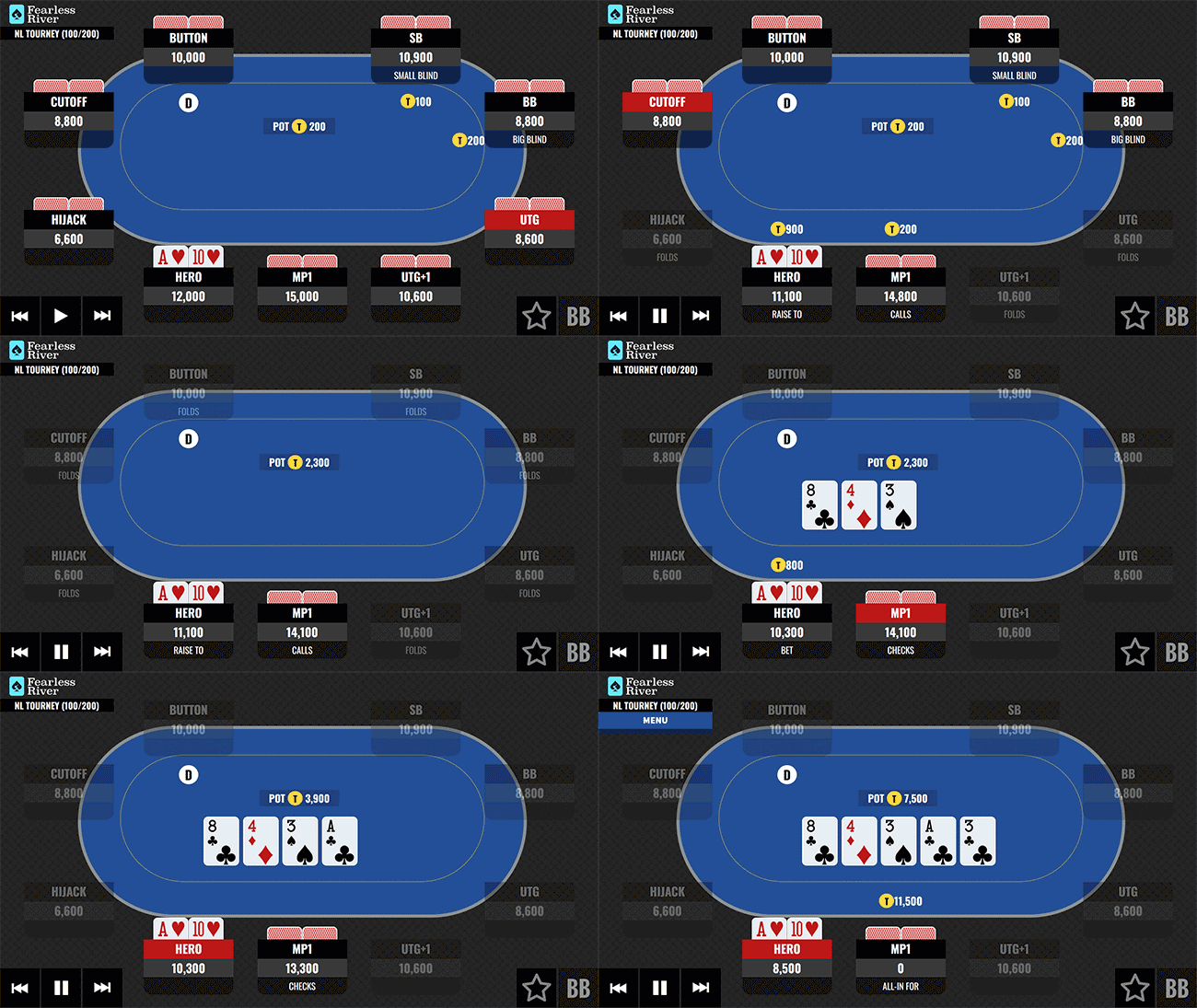
DECISION POINT: In the early stages of a daily tournament with blinds at 100/200 and a 200 big blind ante, you’ve observed opponents frequently limping and calling preflop as well as passive fit-or-fold postflop play. The player in MP1 limps, you raise to 900 in MP2 with A♥T♥, and action folds to the original limper, who calls. Your opponent checks the 8♣4♦3♠ flop, you bet 800, and they call. On the A♣ turn, your opponent again checks, you bet 1,800, and get called. Your opponent goes all-in for 11,500 (which covers your stack) on the 3♣ river, and action is on you. What do you do here?
PRO ANSWER: We are in the early stages of a daily tournament. Even though it’s one of the first few levels, we’ve noticed a lot of limping and calling preflop as well as a lot of passive fit-or-fold play postflop. The blinds are 100/200 with a 200 big blind ante. We are dealt A♥T♥ in MP2 (sometimes called the Lojack), and the first two players fold. The player to our immediate right in MP1 limps, and action is on us.
While limping behind is an option as we have a hand that could be played speculatively in a multiway pot, there are other game specific factors to consider. Given our read that most play has been passive preflop and relatively straightforward postflop, this is a great spot to make an isolation raise with a hand that figures to be well ahead of our opponent’s open limping range. As a general rule, we should consider raising with any hand we would have raised had it been folded to us in the limper’s position. In this scenario that means any hand in our MP1 opening hand range charts.
This criteria to select what range we should raise limpers with is just a general guideline and not a hard and fast rule. We could isolate much wider if the player in MP1 was very fit-or-fold postflop and we were in a later position preflop. Caution will likely be required if the player is much trickier and has been observed reraising after limping with some frequency.
We decide to isolate 900 chips with our ATs, and everyone folds except the initial limper, who calls. The flop is 8♣4♦3♠, and our opponent checks. When we think about what MP1’s range is based on this limp-calling line, it likely contains a lot of hands our opponent wants to “see a flop” with. These hands are pocket pairs, suited connectors, and some weaker broadway combinations such as JT/QJ/QT.
The range of hands we are assuming for MP1 connects reasonably well with this board. We decide to bet small (800 into 2,300). This sizing will induce folds from some of their weaker broadway combos and get called by many of the one-pair hands that would be unlikely to fold to a larger bet anyway. We can then potentially target these 1-pair hands in the limp-calling range on turn overcards with a much larger bet that would really apply pressure to hands such as 66 or 54s. In this spot, however, the turn is the A♣ and MP1 checks again.
While part of our original plan was to bet larger on dynamic turn cards, in this case we need to take a different tack. Rather than betting large, we really want to target that second or third pair part of their range again. This is an exploitative, unbalanced strategy, as we would likely bet larger as a bluff. Passive opponents who are largely playing based on their own hand strength and not in terms of ranges are unlikely to pick up on this nuance in our play.
We bet just under half pot (1,800 into 3,900), and they call. The river is the 3♣, and MP1 surprisingly shoves into us for 11,500, or effectively our remaining 8,500. At this point against a passive preflop opponent who plays fit-or-fold postflop, our hand becomes a bluff catcher. Our opponent is unlikely to make this play with a worse hand for value. We have to call an 8,500 effective bet into what is now a 16,000 chip pot. That means our opponent has to be bluffing just over 33% of the time in order to make this call since we are getting slightly worse than 2:1 pot odds.
On a board with few missed draws against a very passive opponent, it is highly unlikely that they are finding a bluff frequently enough for us to call here.
Folding is the best play.
How would you play it?
Share your answer in the comments below!
Improve Your Game Today!
Join Fearless River and Get:
- The GTO Trainer to play real solved hands and get instant feedback on YOUR leaks (over 4 BILLION solved spots!)
- On-demand access to our full library of 550+ (and growing) in-depth Strategy Episodes from world-class players
- All of your poker questions answered with the Ask a Pro Feature
- Analysis from Fearless River Pros using The Hand Input Tool
- Downloadable Tools you can use at and away from the tables
- Learn from a Team of world-class Professional Players
To join (just $5 your 1st month) click the JOIN NOW button and start improving your game!
Have Questions? Email us at [email protected].