You're Out of Position With A♦T♦ Vs a Pro at the WSOP...
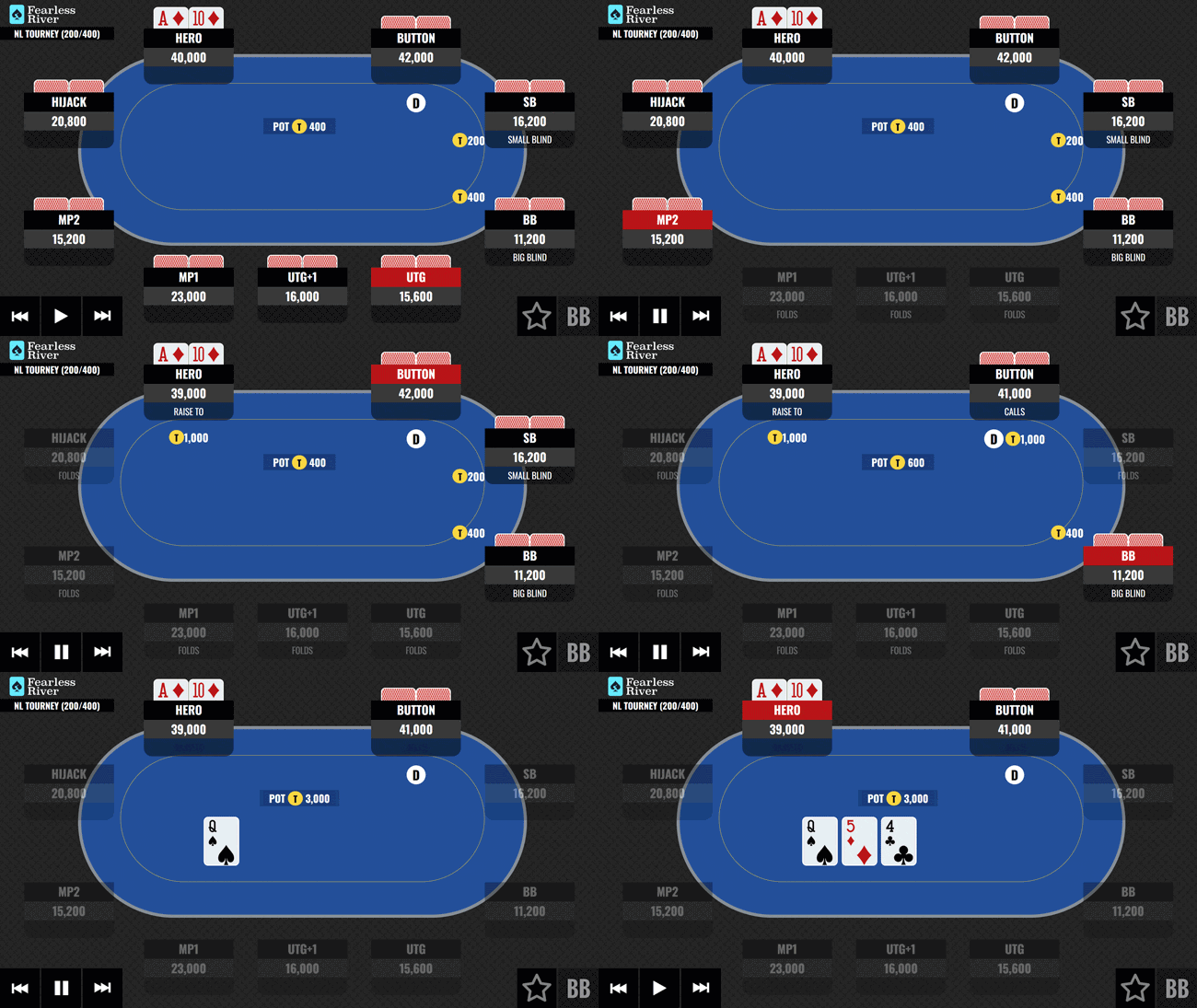
DECISION POINT: You're in the early stages of a World Series of Poker multi-day tournament with late registration and reentry still open. The blinds are 200/400 with a 400 big blind ante. Most players have around 50 big blinds, and you’ve worked your stack up to 100BBs. Action folds to you in the Cutoff with A♦T♦ and you make a standard raise to 1,000. The Button, who is an accomplished Pro and has a 105BB stack, calls. The flop comes Q♠5♦4♣ and action is on you. What do you do here?
PRO ANSWER: We're playing a multi-day event at the World Series of Poker. The tournament is in level 2 with late registration still open and players are allowed to reenter until the end of level 8. Most players have around 50 big blinds, but we’ve managed to work our stack up to 100BBs. The Button is a very studied professional poker player. The blinds are 200/400 with a 400 big blind ante and we are dealt A♦T♦ in the Cutoff. The action folds to us and we make a standard raise to 1,000. The Button decides to call and both Blinds fold. The flop is Q♠5♦4♣ and we are first to act.
The primary driver of continuation betting frequency on the flop is range advantage. Many players incorrectly believe that being the preflop raiser gives them a range advantage on dry boards like this one. Position is a key factor to consider in c-betting spots. Had we raised in Early Position instead of the Cutoff, we certainly would have a range advantage against the Button on this board. However, in this specific situation, we have a wide uncapped range and our opponent has a significantly narrower range that is capped and condensed.
Reviewing this spot in a solver as a part of post-hand analysis, we see that the Button defends with less than half as many hand combinations as we raise with from the Cutoff (215 vs. 450) and has a slight range advantage (51% vs. 49%) on the flop before any action takes place.
Continued below ...

This dynamic occurs most frequently in Cutoff open vs Button call and Small Blind vs Big Blind scenarios. When facing skilled and aggressive players who are capable of utilizing their position appropriately in these spots, we should check the flop quite frequently. In fact, based on the solver results, the Cutoff checks with the entire range around 85% of the time. While the Cutoff is often taking a passive line on the flop, it’s crucial to note that checking here doesn’t mean giving up. We should be checking some of our big hands to protect our checking range and add check-raises with some strong value hands and bluffs such as A2s/A3s on this particular board. Check-calling on the flop also makes up a portion of our strategy, particularly against smaller bet sizes.
If our opponent on the Button were a more passive recreational player in this spot, the strategy would change significantly. There would be more merit to betting because a passive opponent is like to call preflop with a much wider range, negating the range advantage a more narrow and condensed range has on this board. Recreational opponents are also far less likely to float and raise the flop with the appropriate tendencies to discourage us from continuation betting.
Against tougher players it’s very important to recognize these spots as high-frequency checks, or we will quickly bleed chips to good players who utilize position well.
Checking is the best play.
How would you play it?
Share your answer in the comments below!
Will YOU Be Our Next Bracelet Winner?
Our students consistently crush the summer poker season, bringing home massive scores and achieving their poker dreams.

In fact, in just the past few years alone during the summer in Vegas Fearless River Students have achieved:
🥇 4 WSOP BRACELETS
🏆 6 WSOP Final Tables
💪 1 Around Town Win
👏 9 Around Town Final Tables
💰 Over $1.7 Million in Cashes
Ready to be our next success story?
Become a FearlessRiver.com Member now for just $5 your 1st month and start preparing for your best summer yet.
Have Questions about Fearless River? Send an email to our Support Team at [email protected] or click the CONTACT US button.