Poker Quiz! Playing K♠J♠ in the WPT Prime Championship
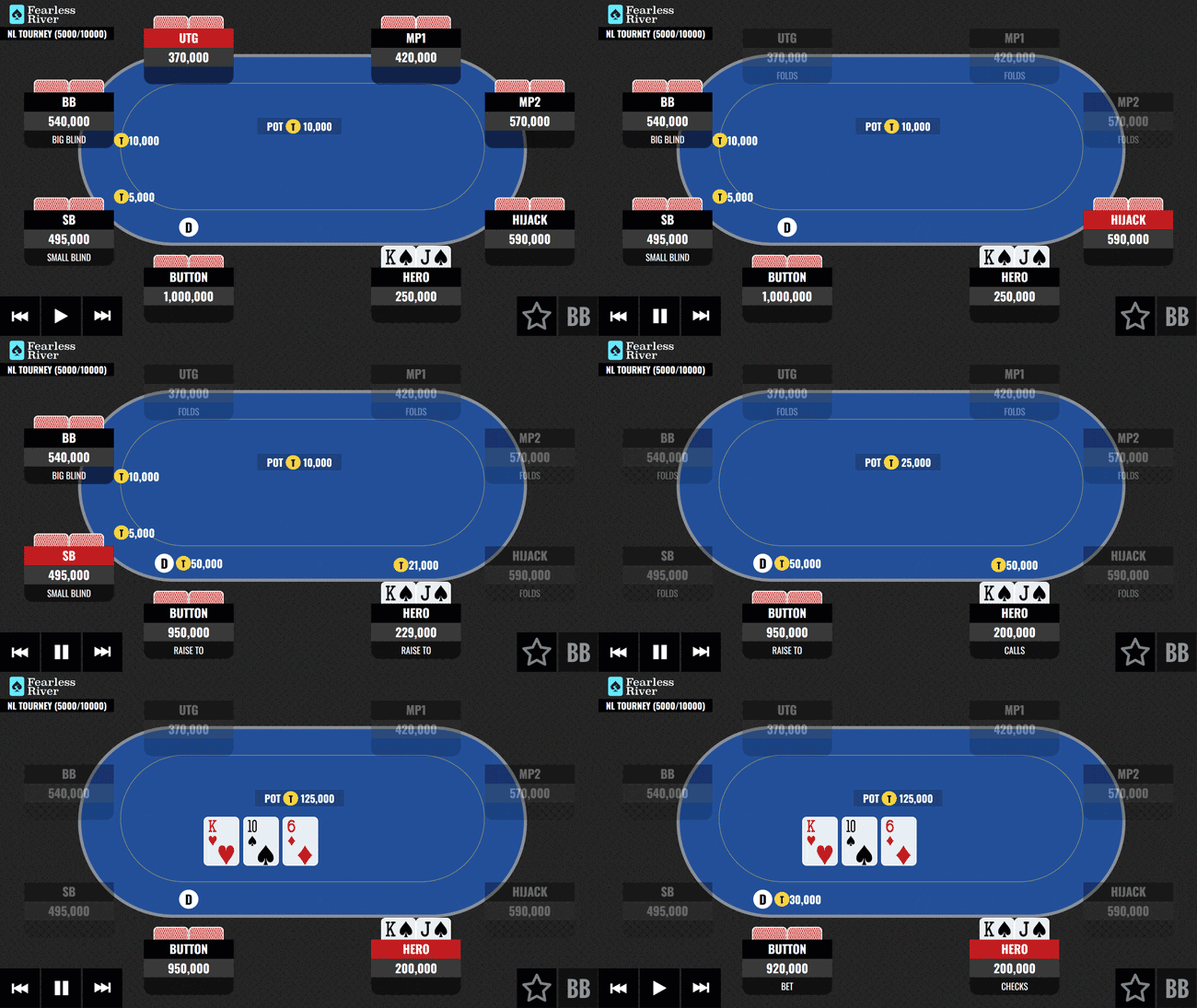
DECISION POINT: You are in the middle stages of the WPT Prime Championship at Wynn Las Vegas with blinds at 5,000/10,000 with a 10,000 big blind ante. Action folds to you in the Cutoff with K♠J♠ and you raise to 21,000. The Button 3-bets to 50,000, both Blinds fold and it's off to the flop. You check the K♥T♠6♦ flop, your opponent bets 30,000, and action is on you. What do you do here?
PRO ANSWER: We are in the middle stages of a large field multi-table tournament. The blinds are 5,000/10,000 with a 10,000 big blind ante and we are dealt K♠J♠ in the Cutoff. Everyone folds to us.
KJs is definitely a hand we want to be opening with in the Cutoff and with 25BB effective stacks a standard raise size in this spot is 2.1BBs. This small size of just over a minraise makes the risk vs reward on stealing very favorable, sometimes winning the pot outright and other times often getting us heads up in position against one of the Blinds. If we choose a larger raise size but still try and use a wide range in the Cutoff, our opponents would be incentivized to 3-bet against with a range that is quite wide.
In this instance the Button does 3-bet to 5BBs and everyone else folds. Had we opened to 2.5-3BBs this would be a much trickier spot as we’d be looking to commit nearly a third of our stack against an opponent having a wide enough range that KJs would have lots of equity against while also nearly pot committing ourselves versus their stack. In this instance we make a pretty standard call.
The flop is KhTs6d. As the preflop caller our default is to check with our entire range to the preflop raiser in this spot. We check and the Button bets 3BBs into a 12.5BB pot. At this point folding is out of the question with the decision being whether we should call or raise.
Calling will keep our opponent’s range wide as they should be continuation betting with a large portion of their range here. Raising will protect our equity in the hand and potentially get value from hands including Tx that might play more passively on future streets, or even give up if a scare cards comes on the turn. However, in this situation we don’t need to bet based on protecting equity.
There is only one overcard to our pair, and we have the Js which blocks the main straight draws present. While there are some scary cards that can come on the turn, this is a prime opportunity to double up.
If the Button has a hand like AK/AA/KK/TT we’re likely losing our entire stack anyway, so giving ourselves the best opportunity to profit from the weaker parts of our opponent’s range and potentially win a significant pot at this stage in the tournament is very important.
Allowing the Button to keep bluffs in their range and continue betting future streets is likely the best opportunity to get the most value out of our hand in this scenario.
Calling is the best play.
How would you play it?
Share your answer in the comments below!
Step Up Your Poker Game
Join Fearless River and Get:
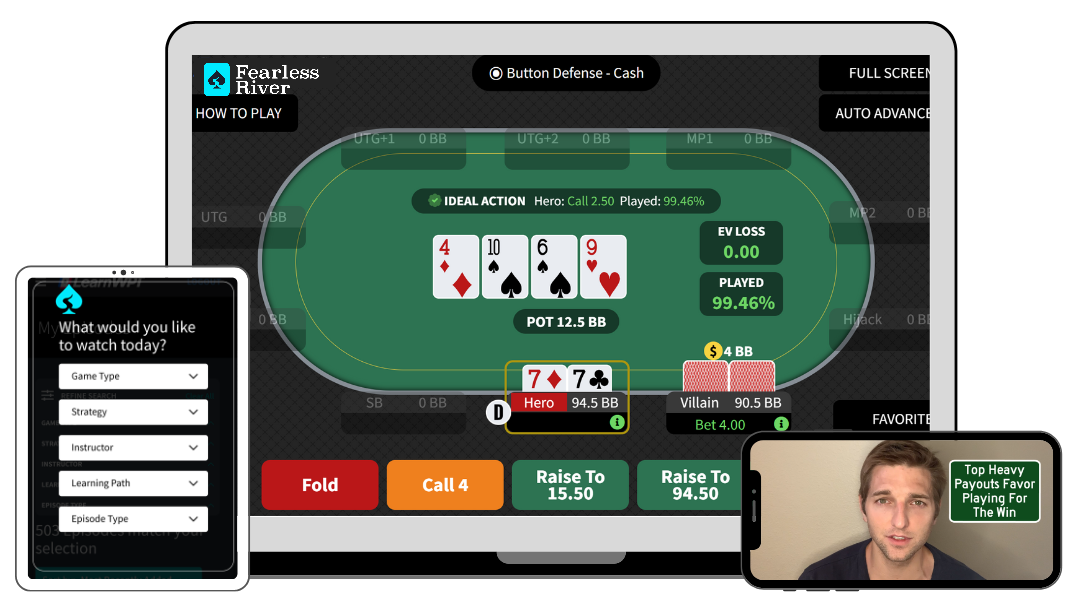
- The Fearless GTO Trainer to play real solved hands and get instant feedback on YOUR leaks (over 4 BILLION solved spots!)
- On-demand access to our full library of 550+ in-depth Strategy Episodes from world-class players
- All of your poker questions answered with the Ask a Pro Feature
- Expert analysis from our pros using The Hand Input Tool
- Downloadable Tools you can use at and away from the tables
- Learn from a Team of world-class players and Instructors
To join (just $5 your 1st month) click the below and start improving your game.
Have questions about Fearless River? Email our team at [email protected].