Fearless River Poker Hands of the Month: Playing Aces

OK, so you know that pocket aces are the best starting hand in poker you can be dealt preflop...
BUT do you know:
When to hold 'em?
When to fold 'em?
When to walk away?
When to run?
Practice your decision-making skills with everyone's favorite hand by reviewing this collection of Poker Hand Quiz examples featuring the illustrious "pocket rockets".
Poker Quiz! A♠A♦ on the Turn...

In a Cash Game, you raise from Under the Gun with A♠A♦. It folds around to the Small Blind who calls. The Big Blind folds. The flop comes K♣2♥6♠. The Small Blind checks, you bet, the Small Blind raises. You call. The trn is the 9♥. The Small Blind checks.
🡆 Do you check or bet here?

Poker Quiz! A♠A♥ vs a Flop Check-Raise...

In this cash game scenario, a UTG+2 player calls, you raise from the Hijack seat with A♠A♥, it folds around to UTG+2 who calls your raise. The flop comes 2♥6♦9♠, the UTG+2 player checks, you bet, and UTG+2 check-raises.
🡆 Would you fold, call, or reraise here?

Poker Quiz! A♦A♥ on the River...

In a Tournament, you are dealt A♦A♥ in an early position and you raise. It folds around to the Big Blind who calls. The flop comes Q♣Q♥5♠. The Big Blind checks, you bet, and the Big Blind calls. The turn is the T♦. The Big Blind checks and you check behind. The river is the Q♠. The Big Blind checks, you bet, and the Big Blind raises all-in.
🡆 Do you fold or call here?

Poker Quiz! Trip Aces vs a River Bet...

In a Tournament, the UTG player raises preflop, MP2 calls, you call with A♣5♣ and the other players fold. The flop comes A♥A♦4♣. UTG and MP2 check and you bet. UTG calls and MP2 folds. The turn is the K♦. UTG checks, you bet, they call. The river is the Q♠, and UTG shoves.
🡆 Do you fold or call here?
Poker Quiz! Set of A♠A♣ vs a Check-Raise...

In a Cash Game, both early position and middle position players and the Hijack all call. You are in the Cutoff seat with A♠A♣. You raise and it folds around to MP1 who calls. All other players fold and it’s heads up to the flop, which comes K♦A♦7♦. MP1 checks and you bet. MP1 raises. Facing this raise from MP1, what is your play?
🡆 Do you fold, call, raise, or go all-in here?

When playing a poker hand, it's very important to look at all the hands in your range and not just the hand you hold. Pocket aces are the strongest hand preflop, but sometimes it’s pretty obvious that your hand is behind postflop and you need to be present and engaged enough to know when you are beat and fold.
Understanding and mastering strategies such as fundamental 1-Pair Betting Lines, Relative Hand Strength Postflop, and Pot Odds will give you the opportunities to exert skill edge against your opponents and play your aces effectively.
The concept of betting lines is crucial to understanding your overall game plan. A betting line is the plan of action taken across multiple streets, the blueprint of how to play various types of hands. If you have good betting lines in your game plan, you shouldn't think street by street or find yourself on the turn without a plan for the hand.
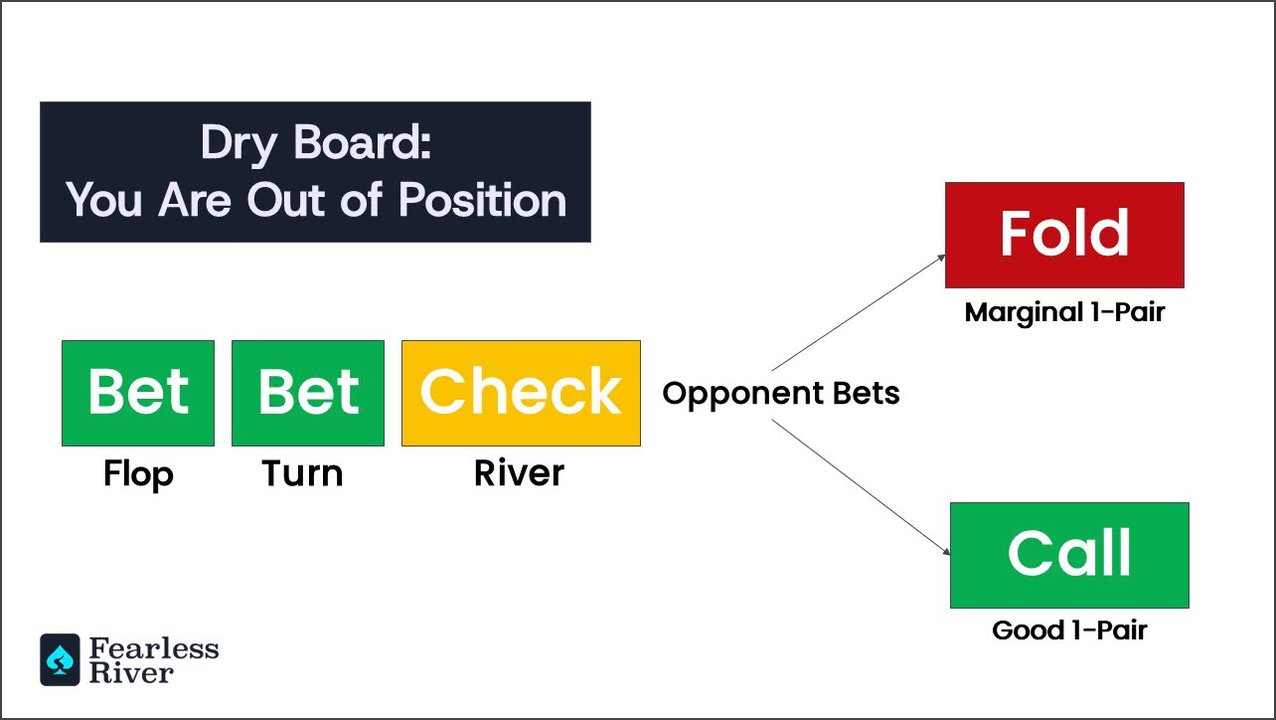
With 1-Pair hands, specifically a top pair or an overpair, it's important to know when to continuation bet postflop, up against a single opponent and when to take a cautious approach. If you are just focused on the specific hand you hold and not on the situation, you may end up trying to get three streets of value where it's not profitable and find yourself up against much better hands by the time there's a showdown at the river.
Relative hand strength refers to your hand strength changing based on the situation, so your goal should be to start seeing poker situationally and pay attention to the number of opponents that saw the flop with you.
Number of opponents is key to relative hand strength because the more players that see the flop, the stronger the average hand at showdown. You should also pay attention to how coordinated that flop is, for example how many draws are present and how close together and rank those cards are.
Board texture will influence how likely it is that anybody has hit the flop. It’s also very important to note how position can change from preflop to postflop. For example, in the blinds you act last preflop but often act first after the flop.
Stack depth is another crucial factor that you need to consider in every hand that you play, as the deeper the stacks are, the better hand you need to get all your chips in the middle.
Tying all these concepts together, in every single hand that you play postflop you should estimate your opponents' hand ranges based on actions taken. Note how your opponents played the hand thus far and what hand range would you put a reasonable opponent on that took those actions.
Lastly, when deciding whether to continue in a hand, it’s essential to look at the pot odds you are being offered in a hand to determine appropriate risk/reward.
Pot odds refers to how much is already in the pot for you to win versus how much you risk in order to win it. In other words, how much is already in the pot compared to how much you have to call in order to continue in the hand. As a quick reference you can always remember that you are facing a one pot-sized bet, the pot odds are 2 to 1, and if the bet is half-pot sized, your pot odds are 3 to 1.
We hope you enjoy these hands and that the strategies you learn will have you singing instead of crying the next time you are dealt the mighty pocket aces.
🎶 You never count your money when you're sittin' at the table. There'll be time enough for countin' when the dealin's done. 🎶
(Sorry we got carried away....)
Becoming a Fearless River member is the easiest and fastest way to add more levels of complexity and nuance to your game. Gain access to 600+ scenarios like this to practice your decision-making skills!
How are these scenarios helping your game?
Post your answers in the comments below.