Tour Terms With Fearless River: Check-Raise

Hey Poker Fans!
Welcome to Tour Terms, where we break down key terms that poker pros use to talk strategy and give you helpful tips to use in your next poker tournament. Today's Tour Term is ...
Check-Raise: verb
check·raise \ ˈchek ˈrāz \
1) The act of checking and then raising an opponent's bet during the same betting round.
Example of Check-Raise in a Sentence
Gags30 checks from the Big Blind and LuckyChewy bets 2,000 into a 10,000 chip pot. Gags30 Check-Raises to 6,000 and LuckyChewy folds.
How Do You Add Check-Raising To Your Game?
A Check-Raise is one of the most powerful moves in poker, however if you don’t know what to look for you could be setting yourself up to lose a big pot. Watch this Strategy Episode with Nick Binger as he outlines the process Pros use to pick the perfect spots to check-raise from the WPT Montreal Final Table.
✏️ Tips for Timing Your Check-Raises:
- Focus on wider range opponents who c-bet frequently
- Look to apply pressure to shorter stacked opponents you have outchipped
- Small bet sizing by an opponent often provides great risk/reward for your check-raise
- Flops with 1 broadway card, 2 low cards, and a flush draw are ideal spots
- Avoid check-raising when stacks are deep (100BB or more)
Protect Your Continuation Bets
A winning first-in strategy requires careful hand selection, consistent raise sizing to avoid betting tells, and a solid default for continuation betting so you can keep the pressure on sticky opponents and take down your fair share of uncontested pots.
What happens when your opponent is tricky and is prepared to battle back vs your c-bet strategy?
Check out this Strategy Episode from Fearless River Instructor Nick Binger on how adding the check-raise to your postflop plan can yield big dividends vs tough opponents.
The Theory Behind the Move
Identifying the best spots for check-raising may not always be obvious, unless you’ve got the skills of a poker legend.
In this Strategy Episode, Fearless River Instructor Andrew “LuckyChewy” Lichtenberger provides an in-depth look at the key factors you should be looking for when deciding to check-raise in cash games and tournaments.
What Happens When They Call?
Check-raising is a powerful poker move that puts the pressure on your opponents and mitigates the power of position. A well timed check-raise will often lead to an agonizing fold from your opponent as you pad your chip stack.
However, you’ll often encounter sticky players who won’t give up that easily and knowing how to navigate these big pots from out of position can be a challenge.
Fortunately, WPT Commentator and online poker master Tony Dunst did the heavy lifting by breaking down these 4 spots where his check-raise was called using PioSolver. Check out this Strategy Episode to help you play better postflop in check-raised pots.
Check-Raised with Top Pair, How Do You Play It
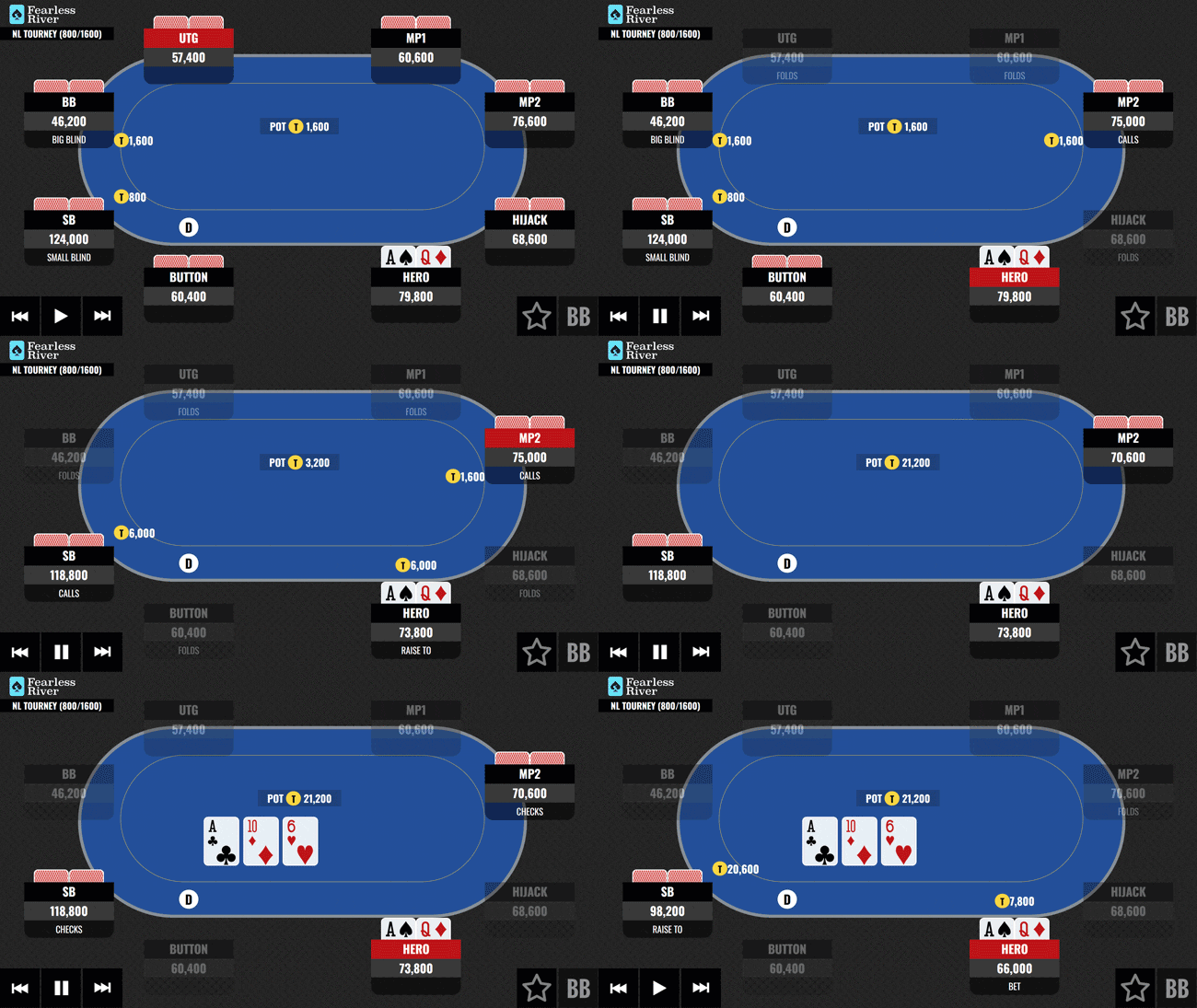
You are in a Tournament with blinds at 800/1600 and a 1600 big blind ante. The action folds to a Middle Position player who limps. You raise from the Cutoff to 6000 with A♠Q♦, the SB calls as does the MP2 player. The flop is A♣T♦6♥. Your opponents check, you bet 7800, the Small Blind check-raises to 20600, and MP2 folds.
Action is on you, what do you do here?

Select your answer & see how the Pros would play it!
🖥️ A Check-Raise Bluff In Action
In this hand from the WPT Five Diamond World Poker Classic we see one of the all-time greats, Justin Bonomo, execute an expert check-raise bluff and force a fold near the final table bubble.
Check out Nick Binger’s analysis from this legendary hand as captured by the WPT Live Updates team.
Not sure how to optimize your check-raising? Why not ASK A PRO for insight into this critical skill and get expert feedback.
Find out what it's like to have a professional poker coach help you improve your game by trying out your 1st month of Membership for just $5 and gain access to the Fearless River Ask a Pro feature.
Want More Tour Terms?
Fearless River Members have instant access to a comprehensive poker training database. Search for any poker term and get the correct definition plus complete results for all related video, written, and playable poker education content on fearlessriver.com.

With a massive library including 550+ on-demand video Strategy Episodes (from top Pros including Tony Dunst, Andrew “LuckyChewy” Lichtenberger, and Michael “Gags30” Gagliano.), dozens of downloadable charts and tools, direct access to the Fearless River Pros, and the state-of-the-art GTO Trainer, you’re certain to find the answers to your most pressing poker questions.
Improve your No-Limit Texas Hold'em game by joining Fearless River for just $5 your first month. After your first month choose the Membership Tier that best fits your budget, schedule, and stage in your development as a player (upgrade or cancel at any time).

Find Your Flow. Train Smarter. Play Fearless.
During your next tournament or session give these check-raising techniques a try and you'll become tougher to play against and keep your opponents on their heels more often.
Good Luck and Good Playing,
- Team Fearless River
Have Questions? Email our Support Team at [email protected] or click the red Contact Us button and we'll be happy to help.
[FREE VIDEO] At a World Poker Tour Final Table With Tony Dunst

All of the big prizes and money in a poker tournament are at the Final Table. Whether it is your local daily or a World Poker Tour Main Event, understanding the unique strategy adjustments for Final Table play is vital to finishing strong.
Often players are unprepared for the pressure that comes with playing in front of an audience, when their goal is in reach, or having potentially life-changing money at stake. When facing the pressure of big pay jumps and the studio lights seem a little too bright, it’s important to stay focused and make objective decisions.
To show you how the Pros think while on the big stage we are giving you EXCLUSIVE ACCESS to a Member-only video for a limited time!
To make sure you are prepared to shine for the TV cameras and show off your poker skills, watch and take notes as Fearless River Instructor and WPT Commentator Tony Dunst goes through his thought process and decision-making from his World Poker Tour Tournament of Champions final table appearance.
BONUS: Join for just $5 your first month and gain access to our library of over 500 videos including parts 1, 3, and 4 of Tony's final table review. Click the above button to get started!
Tony's Final Table Tips ✏️
Here are a few tips to help sharpen up your game for showtime!
- Be aware of stack sizes and pay jumps at all times, even the slightest changes in stack sizes can shift strategy dramatically
- When short stacks exist, there is extra pressure on the bigger stacks to avoid busting out
- The chip leaders can use this extra pressure to win many pots while the short stack is in play
- As a medium stack vs larger stacks be cautious with any bets and raises and try to take marginal hands to showdown passively
- Preflop ranges shift quite a bit at final tables due to this effect with big stacks playing much wider ranges and medium stacks much narrower ranges
- Do not be afraid to ramp up your aggression against poker players that are playing tight in the hopes of laddering up
📓 Fearless River Tour Term: ICM
You've probably heard the term ICM. But what exactly does it mean?
Independent Chip Model: noun
\in-də-ˈpen-dənt ˈchip ˈmä-dᵊl\
1) A mathematical model for calculating the real money value of chips in a poker tournament at a given stage. ICM is used most often at final tables during deal making to calculate a fair distribution of the remaining prize pool in relation to the number of poker chips each player holds. Abbreviated as ICM.
Example of ICM in a Sentence
Johan and LuckyChewy decided to make a deal based on ICM and then played heads-up for the trophy.
Want More Tour Terms?
Fearless River Members have instant access to a comprehensive poker training database. Search for any poker term and get the correct definition plus complete results for all related video, written, and playable poker education content on Fearless River.com.
On Tour With Tony Dunst!
This video is part of the Fearless River Exclusive On Tour with Tony Dunst Strategy Episode series. Join Tony for a behind the scenes look into the most thought provoking hands he plays from real WPT events and teaches poker strategies and concepts you can use in your game.
Creating and structuring a study routine is an important part of your growth in poker. Check out some tips from Tony to avoid burnout and stay sharp on the felt.
Click to learn more about Tony's extensive poker accomplishments and more importantly, how he can help improve your poker game.
Ready for more? Join Fearless River for just $5 your first month of Membership and get full access to more poker content from Tony Dunst and Team Fearless River.
We'll see you online,
-Fearless River
We Hope You Enjoyed These Free Tips From Fearless River!
Subscribe Below For More Poker Content
[FREE VIDEO] LuckyChewy Vs Daniel Negreanu

Poker legend and Fearless River Instructor Andrew "LuckyChewy" Lichtenberger used his steady and mindful poker approach to become a $100,000 buy-in WPT Alpha 8 Champion, WSOP Bracelet winner, and secure more than $11 Million in live poker tournament earnings.
He doesn't compare himself or his progress to anyone else's, but rather works on strengthening his own poker skills. Due to his dedication to learning and improvement LuckyChewy has been an innovative catalyst for new poker strategies throughout his entire career. By adopting a meditative attitude he is able to execute optimal strategies under tremendous pressure, providing a key balance for his analytical and collaborative approach to learning and playing poker.

LuckyChewy's opponent in this hand was another legend, Daniel Negreanu, one of the most influential and successful poker players worldwide as well as a favorite of poker fans with his distinctive and fun personality. Having played poker since he was a teenager, testing his skills and moving up in levels while plugging leaks and studying the game, he eventually became the youngest player to win a WSOP Bracelet at 23 years old, eventually winning 6 WSOP Bracelets. Daniel is no stranger to success on the World Poker Tour® as a 2 time WPT champion and WPT Season III Player of the Year, which helped him amass over $45 Million in tournament earnings.
As the subject of a Fearless River Strategy Episode, LuckyChewy reviewed a hand he played against Daniel Negreanu in the $300,000 buy-in Super High Roller Bowl and explored some strategic ideas as a result of how this hand played out. LuckyChewy describes exactly what he was thinking after flopping a huge hand with millions of dollars at stake.
This video is part of our High Stakes with LuckyChewy Strategy Episode series where Chewy takes a deep dive into his most interesting and useful hands from real WPT and WSOP Final tables and teaches strategies and concepts you can use in your game.
Watch This FREE Strategy Episode From Fearless River Instructor LuckyChewy!
In this ultra-high stakes tournament, LuckyChewy opened 2.5x the big blind, effectively risking what's in the pot with the blinds and antes. Daniel elected to 3-bet to 27,000, or 9 big blinds total. LuckyChewy had a fairly straightforward call with pocket fours and flopped a bottom set with a backdoor flush draw on the A♣9♣4♥ flop. With the in-position player having the range advantage, LuckyChewy checks and Daniel bets around one-quarter of the pot.
LuckyChewy decided to raise slightly more than 3 times his bet, knowing that Daniel is not likely to reraise him with anything because he already had the range advantage. With this stack depth, it's not recommended to play aggressively against LuckyChewy’s range, as he's quite polarized. There's not any reason for Daniel to raise, because if he has a strong value hand he prefers the opponent to keep bluffing or betting his weaker value hands. Daniel does call and the turn is a texture-changing card, the 2♣.
Based on the solver study, LuckyChewy initially thought this was a card that would encourage Daniel to slow down on, use smaller bet sizes to not bloat the pot. The solver actually recommends a larger bet of around 2/3 of the pot as you should push an equity advantage on a card that's better for you than it is for your opponent. However, if you bet a larger size, you would get way more folds than the solver prefers and your opponent is expected to fold hands as strong as AK.
The deeper you get into the game tree, the more assumptions you have to make about how your opponent would respond in order to determine the appropriate action based on the recommended strategy. The key in understanding the equilibrium approach to poker is to employ proven strategies, based on the program algorithm, to minimize the chance to lose.
LuckyChewy elected to use the smaller bet sizing and Daniel continued with a call. On the 8♠ river card Daniel shoved all-in. A shove from a hand such as A4s would be very perplexing and you're not likely to benefit from shoving with a hand like this as part of a balanced poker strategy. However this is one of those nuanced scenarios where the raise is mandatory, so you can reach equilibrium as the in-position player.
These are interesting conceptual ideas that do exist in a theoretical sense and familiarizing yourself with why these abstractions may occur through solver study is fascinating. If your opponent got here with pocket eights they would likely shove all-in. There may be some bluffing with pocket tens and jacks, so you would assume it would be more advantageous to bluff with stronger club blockers.
The simulation LuckyChewy used to analyze this hand would argue against that, as it's shoving all its flushes as the in-position player. Hands such as pocket tens and pocket kings where one of the cards is a club, as well as hands with AK with the K♣ or AQ with the Q♣, are considered bluff shoves from Daniel because it doesn't seem likely that LuckyChewy is bluffing. Considering the odds he was getting and the strength of his hand, LuckyChewy made the decision to call it off. Much to his dismay, Daniel did have K♣J♣ for the nut flush.
Although it was a painful hand to lose, LuckyChewy says through analyzing this hand with a solver post-game he realized how much better that turn was for him than it was for Daniel, regardless of the fact that they had a relatively equal distribution of suited hands that could make a club flush.
We hope that observing LuckyChewy's poker insights, strategies and concepts will be beneficial to you and boost your own game!

Click here to learn more about LuckyChewy, his accomplishments, and more importantly... how he can help improve your game.
Ready for more? Join Fearless River for just $5 your first month of Membership and get full access to LuckyChewy content.
We'll see you online,
-Fearless River
Improve Your Game Today!
Join Fearless River and Get:
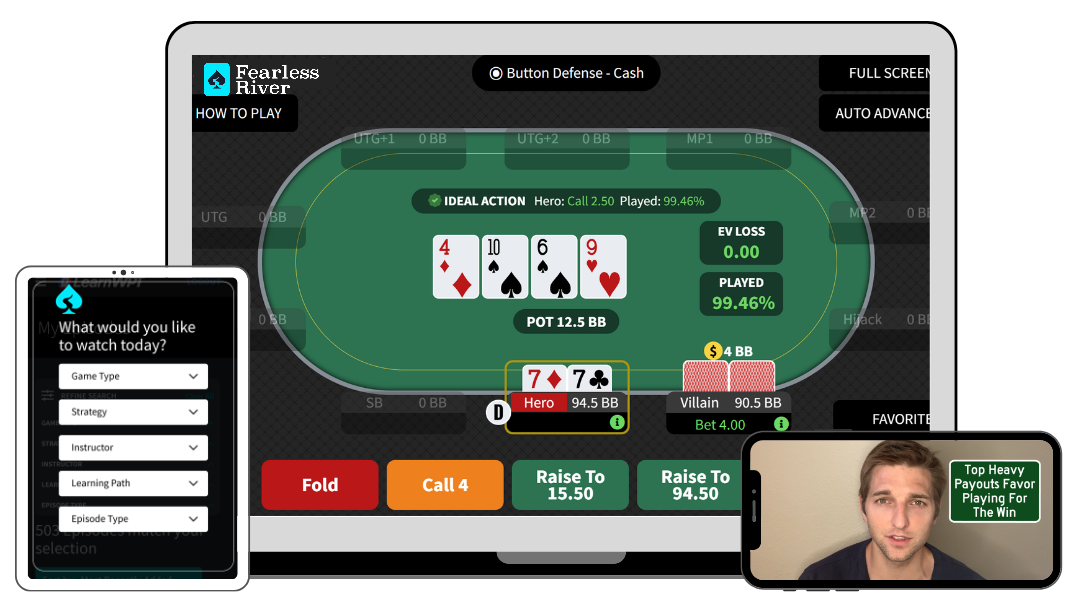
- The GTO Trainer to play real solved hands and get instant feedback on YOUR leaks (over 4 BILLION solved spots!)
- On-demand access to our full library of 550+ (and growing) in-depth Strategy Episodes from world-class players
- All of your poker questions answered with the Ask a Pro Feature
- Downloadable Tools you can use away from the tables
To join (just $5 your 1st month) click the button below and start improving your game!
Have Questions? Email us at [email protected].
The Top 10 Online Poker Tells from Tony Dunst

These Top 10 Online Poker Tells will help you identify opponents' tendencies at the table, learn how to adjust to certain poker player types, become more skilled at reading poker opponents, and exploit population tendencies in your poker game.
This list is created by Tony Dunst, WPT Commentator, Fearless River Instructor, professional poker player, WPT Champion, 2x WSOP Bracelet, and 2x WSOP Circuit Ring winner. Tony recently did an in-depth hand history review of a tournament where he made a deep run featuring the Top 10 Online Poker Tells.
Check out his most common notes on opponents below:
► #1 Poker Tell: Opens Too Wide
► #2 Poker Tell: Straightforward in Big Spots
► #3 Poker Tell: Flat Calls Too Wide Preflop
► #4 Poker Tell: Passive Postflop with No Showdown Value
► #5 Poker Tell: Open Shoves Too Wide
► #6 Poker Tell: Flat Call or Small Reraise Instead of Shoving
► #7 Poker Tell: Reshoves Too Wide Preflop
► #8 Poker Tell: Calls Down Too Wide Postflop
► #9 Poker Tell: Bluffs Too Wide Postflop
► #10 Poker Tell: Not ICM Conscious
#1 Poker Tell: Opens Too Wide
This is a note that Tony takes most often, and it refers to catching your opponent's opening with too many hands, which is pretty common in MTTs and poker in general, but especially in poker tournaments since people have a stronger incentive to open wide.
With a solid grasp of what your own opening ranges are supposed to be, you can have a better understanding of what people should be opening. When you are in the early stages of a deep-stacked tournament, Tony suggests 3-betting wider ranges for value.
Opening too wide from an early position makes defending your range almost impossible!
The benefit of using a fairly linear range (i.e. mostly good hands with strong playability post-flop) allows you to systematically broaden your range and take advantage of a poker player opening too wide.
If you see an opponent opening too wide, which is often accompanied by them calling 3-bets too wide, the hands in your linear range for that position become automatic 3-bets.
With a player who opens too wide, you need to take all of the hands that mix calling and shoving and turn them into really profitable shoves.
For example, if the Cutoff opens and you have 25 big blinds in the small blind, Tony suggests to start mixing suited combinations of A9, K9,J9, T8, 98, and KJ offsuit as 3-bets, and flatting A2 and A3 suited against those who open too wide. This is a very simple and profitable adjustment to make against opponents with the tendency to open wider preflop.
#2 Poker Tell: Straightforward in Big Spots
The second most common note Tony takes on his opponents is particularly true at the low to mid-stakes online, and in live poker. This note means that in general, your opponent is going to be under bluffing, particularly when 3-btting, 4-betting, check-raising you on the flop, raising you on the turn, raising over your river bet, or big spots where they have to put in a large percentage of their stack.
This type of player can also be identified through how they talk about poker and hands at the table and are often observed as hesitant and skeptical with regard to both wasting chips and bluffing their stack away.
These opponents are simply way too straightforward in big spots, which provides you with a cheat code and an opportunity to fold everything unless you've got the goods. The counter adjustment is achieved by opening with a tighter range of hands against a player who is straightforward in big spots and folds all of your marginal opens to their 3-bets.
Tony suggests that in heads-up pots vs these kinds of players you can make an exploitative adjustment.
Against this specific player it is acceptable to flat call with pocket aces and allow them to take the lead postflop as they will likely be betting strong with hands they enter the pot with.
#3 Poker Tell: Flat Calls Too Wide Preflop
Tony sees this frequently with the low to medium midstakes players who tend to flat call with too many of the offsuit Ace and offsuit Broadway combinations.
Sometimes players flat pairs in spots where they are too short stacked to do so, so against this type of opponent you can bet wider against them as a bluff, because they often flat too many hands preflop that don't connect.
Consider this example: you're out of position, your opponent flats, you get a scattered flop and you're supposed to mix between betting and checking.
Against a player who's flatting too much wide preflop, you can start to make money by using a much more frequent small C-bet sizing.
Another strategy against opponents who flat too wide preflop is to barrel down (bet out on the flop, turn, and river) wider against them because it is tougher for them to get to turns and rivers with strong hands when their ranges broaden preflop to include many more random second pair or third pair combinations.
You can put a great deal of pressure on these kinds of players on the later streets because they get there with weaker ranges.
#4 Poker Tell: Passive Postflop with No Showdown Value
This is a tendency you see from players who are passive and don't realize that they are supposed to be bluffing fairly often when they have no showdown value.
This kind of player calls out of the big blind when you open in late position, and will continue vs a c-bet fairly often while holding a capped wide range when something favorable hits your range on the board, such as King-High or Ace-High.
When the river misses your hand and most of the plausible draws and your opponent has not shown aggression, you might start contemplating bluffing them off it.
Against these players, Tony suggests taking more showdowns with high card hands instead of trying to bluff them.
Here is an example to illustrate this concept further: You open a 87 Suited, you see that the flop is bad for your range, the turn and river is a brick, but you don't beat the draws and your opponent checks to you. Since now it's clear that this player is very passive with no showdown hands, they have gotten to this river and checked to you with more hands that don't really have showdown value. In this spot you should turn more of these types of hands into bluffs against the passive player type.
In addition, you should focus on being more passive with any hand that can showdown and win vs a player who takes a passive line postflop with hands that have no showdown value, and at the same time become more aggressive with the hands that you can absolutely never showdown.
#5 Poker Tell: Open Shoves Too Wide
This is a pretty common mistake amongst MTT players and many still have outdated ideas about shoving ranges.
For instance, if someone has 10 big blinds in the middle position, many players would assume any Ace is acceptable to shove all-in with preflop, and that's not actually the case.
With 10 big blinds in Middle Position 2 (MP2) you should mostly be folding A2 through A6, as well as hands including JT, QT and KT. If you spot players open shoving too wide in the 10-15 blind zone, it may fold to you in the Small or Big Blind, and you now have a significant advantage especially if you can identify the types of hands that they open or shove too wide with.
As another example, if you do see a wide opponent shove from an early position with 10 big blinds and it folds you in the big blind with A6, now you have a clear call. Against players who are shoving too tight, who jam 10 big blinds from an early position and you're in the Big Blind with a hand as weak as A6, there are a lot of players you should go ahead and make that fold against.
Having players at your table who open shove too wide is actually beneficial, as you will be able to make more money off of those players as they present you with opportunity to call getting good odds.
#6 Poker Tell: Flat Call or Small Reraise Instead of Shoving
Tony says he takes this note in tournaments 'all day long'.
Most players who make this mistake don't even realize that they are playing face up when they do it, and you will see this happen all the time in tournaments.
Here is a common scenario to help illustrate the concept: The player on the button has 18 to 22 big blinds and a stack that is mostly flatting or jamming, without any hands that 3-bet with a small sizing in their range. You're supposed to jam a lot of the pairs, the suited broadways, both strong offsuit aces and suited low aces including A5 suited, as well as a mix of the A4, A3 and A7 suited combinations.
As observed by Tony, many players jam a lot of these medium-strong hands and 3-bet small with only aces and kings, and they never balance that by 3-betting small with a hand like A9 offsuit for instance.
Another common example to illustrate this concept is a scenario where you open raise, and an opponent calls. You get the flop with top pair and continuation bet, they call, you barrel the turn intending to barrel down for value, and instead of calling, your opponent hits you with a min-raise on the turn.
Once you identify a player using these small raises when they should be shoving, it's safe to assume that they will not find the bluffs until proven otherwise and that you should overfold these spots. This opponent is doing you a favor, just turning their hand face up, and you must be observant to this and make some very snug folds as an adjustment.
#7 Poker Tell: Reshoves Too Wide Preflop
While this tell is not quite as common as some of the others Tony has listed, this tendency is definitely something you want to keep an eye on.
Consider a scenario with 20 big blinds deep in the Small Blind facing an open raise vs the Cutoff. In this scenario, you're jamming all the pairs, all of the suited broadways, mostly except KJs and including A9, A8o, K9s, Q9s, K8s, plus some suited connectors such as 98s.
You will definitely catch players who reshove this spot way too wide, jamming, reshoving too many off-suit ace combos anytime they have a broadway combo. While these hands may seem like attractive and profitable reshoves in this spot, these hands actually don't fare really well with low to medium offsuit Aces as reshoves, because they have bad equity against the calling ranges of the opener.
When you spot somebody reshoving with a high frequency using offsuit Aces, all of the pairs that you were borderline become calls, and all of the medium aces become automatic calls.
Widen your calling ranges and be careful with broadway combos like KQ in your range if your opponent is observed reshoving offsuit aces too much, assuming it's not a suited broadway that retains a lot of equity.
#8 Poker Tell: Calls Down Too Wide Postflop
Not everybody who calls down too wide postflop is just a flat-out fishy calling station, however, a lot of players have a tendency to get a bit too sticky to top-pair hands, when their relative hand strength has been negated from the runout on the board.
Against this kind of player, Tony suggests doing more of the value betting yourself and less balancing through checking when you're the out-of-position player.
This recommendation is because there are a lot of situations where we open in the middle position, a player calls us on the button, and we mix betting and checking.
Be cautious in this spot not to bet the hands that may be a mix of combos in this player’s bluffing range, as well as to bet and barrel the hands that are top pair more frequently. In a spot where for example you open AJ and flop top pair, and get flat called on the flop and turn, you just need to bet the river for value.
As this type of player enters with more second-best hands and gets married to those second-best hands postflop, you should look to bet in order to maximize the value of your strong or medium-strong hands, as well as to bluff them a lot less frequently. When facing an opponent who loves to call down, it’s critical to not try and bluff them.
#9 Poker Tell: Bluffs Too Wide Postflop
While this is a far less common tell than most, there is a specific player type that will favor bluffing postflop with a too high of a frequency.
Against this type of player, we want to mix between betting and checking.
Tony suggests checking many more of our strong hands and sometimes hands with moderate showdown value, often having to take many more hands to showdown vs larger bet sizing on average.
Once you identify somebody who loves bluffing too much postflop, it might be beneficial to let them have the lead as often as possible. With our strongest hands against these opponents, we can start playing more lines where we check/call flops, call turn, and raise the river.
When you're in doubt whether this player is going to do enough betting for you to get max value on a big hand, Tony suggests checking to them frequently, given that you have a hand that's happy to call down.
When you find yourself on a turn or a river and you're facing a tough decision to call and you have a hand with showdown value, these spots start to become automatic calls.
Against frequent bluffers with wide ranges you can set up opponents by just checking to them over and over again, letting them spew right on into you.
#10 Poker Tell: Player Not ICM Conscious
With the Independent Chip Model or ICM Poker being crucial when it comes to improving your game and forming valuable strategies, this is an approach Tony says he pays a lot of attention to.
For both on bubble situations and at final tables, ICM has a very strong influence on decision making and the way stack sizes can be played. If for example, we're the big chip leader in a tournament field where everyone is very ICM conscious, we get to pummel opponents because they know they're supposed to fold.
However, if you are a big chip leader and everyone around you is not concerned with making money, and it's just players calling off preflop shoving way too wide, then you end up being more constricted and you should tighten it up.
Against players who are not ICM conscious, if you keep playing aggressive opponents will push back on you and you end up being the one who's responsible for those ICM mistakes.
Consequently, it is critical to remember that if you're a big stack and the players around you are not ICM conscious, you won't be able to exploit that situation as much as you'd like.
ICM is an area of poker study that most MTT players should focus on more, as these strategies will be one of the best ways to increase your profit against these fields.
Simply by sitting back and waiting for other players to get involved, you'll be able to make progress at the final table as players will bust earlier than they should and ultimately help you ladder up the pay scale.

Using these winning strategies and Tony Dunst’s Top 10 Online Poker Tells to your best advantage during your next poker event, you’ll continue to minimize mistakes and maximize your opportunity to accumulate chips and ultimately win tournaments!
Act now and get instant access to:
► 500+ On-Demand Video Strategy Episodes 🎥
► Play Solved WPT GTO Trainer Solutions 🏋️
► Direct feedback from proven winners with Ask a Pro Forums 🎓
All for just $5 your first month of Membership!
Subscribe below to receive FREE poker strategy content, weekly quizzes, downloadable tools, and more.
What is a PKO Tournament?
- PKO (Progressive Knockout) tournaments are fun, unique events where a dynamic bounty is placed on each player
- As you knock out other players, typically you are paid 50% of their bounty and the other 50% is added to your total bounty
- Unlike regular knockout tournaments the value of the bounties can grow
- If you are the victor in a PKO Tourney you win in multiple ways:
- Win the amount in the general prize pool for 1st place
- Win the bounties you earned over the course of the event
- Keep the full amount of the bounty that is on your head
SHOULD I PLAY A PKO DIFFERENTLY?
Yes! The strategy for playing PKOs is very different from regular bounty tournament strategy.
Click below to view an in-depth Strategy Episode from Fearless River Instructor Nick Binger to learn valuable math shortcuts and strategy tips to improve your play in PKO events.
Remembers these tips when playing in a PKO Tournament:
- Because bounty values change based on each player's number of knockouts, some players are worth much more than others to knock out
- Players are incentivized to widen their ranges and go after opponents when they have a high bounty value
- Starting PKO Tournaments on time and avoiding late registration is critical to maximize your chances of winning the most bounties
- It's often profitable to call with any 2 cards in PKO Tournaments when your opponent's bounty value is high
- This style of tournament has become extremely popular over the last year because it encourages so much action!
- Download the PKO Equity Reduction Reference Guide for an easy and quick way to determine your equity in PKO Tournaments
Have Questions about Fearless River? Send an email to our Support Team at [email protected] or click the CONTACT US button and they will be happy to help!
Find Your Flow. Train Smarter. Play Fearless.
Staying in Flow: Your WSOP 1-Day Prep Guide
Prep Time: 1 Day Before the Start of Your 1st Tournament
Your first WSOP event is 1 day away. The prep work is done, trust it. Today is about getting your logistics sorted, your mindset locked in, and making sure nothing off the felt gets in the way of your best poker.
We asked Team Fearless River to give us their best advice on exactly what to do the day before your first event in Las Vegas. We put one question to each of them:
❝ What advice would you give players when preparing for the WSOP based on the time before the start of their first event? ❞
We've assembled their answers along with FREE videos, strategies, and tips plus expert advice from Tony Dunst, Michael Gagliano, Eric Lynch, and Johan Schultz-Pedersen to make sure you are ready to crush starting hand 1. ⤵
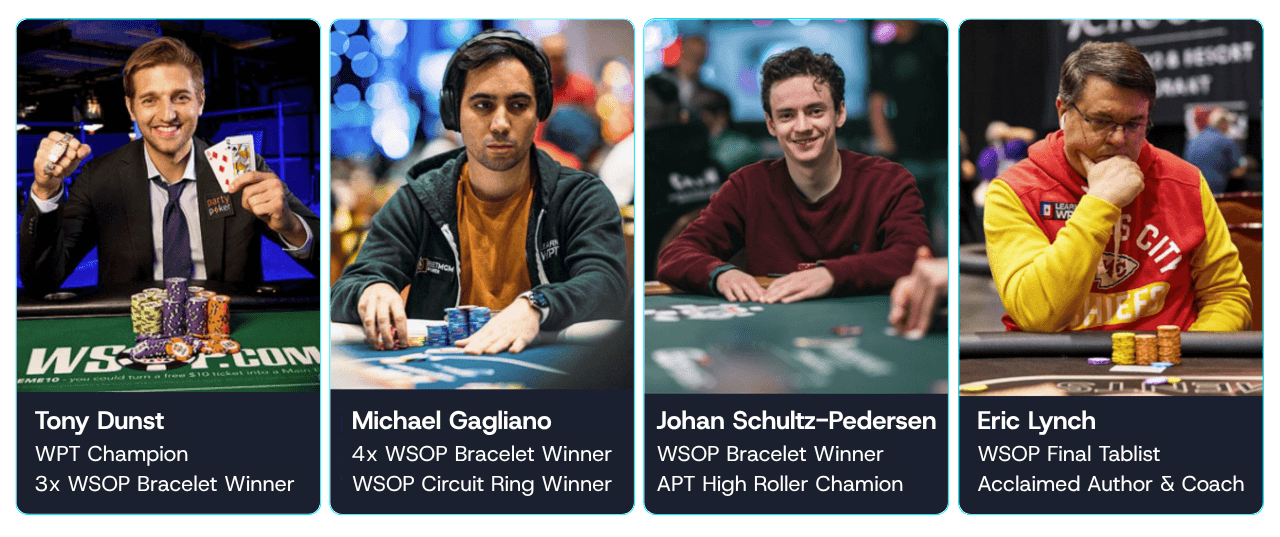
➧ Tony Dunst:
❝ I think the day before the event you want to get your logistics in order. Are you buying in that night and getting there for hand one, or will you late-reg the following day? Where are you eating in the morning? How long does it take to get from your place to the tournament? Did you leave enough time to get plenty of sleep? Did you pack a backpack with everything you’ll need for a 12 hour day of play? Is your phone charged? Think these things over so you’re not scrambling the day of the tournament and putting unnecessary stress on yourself. ❞
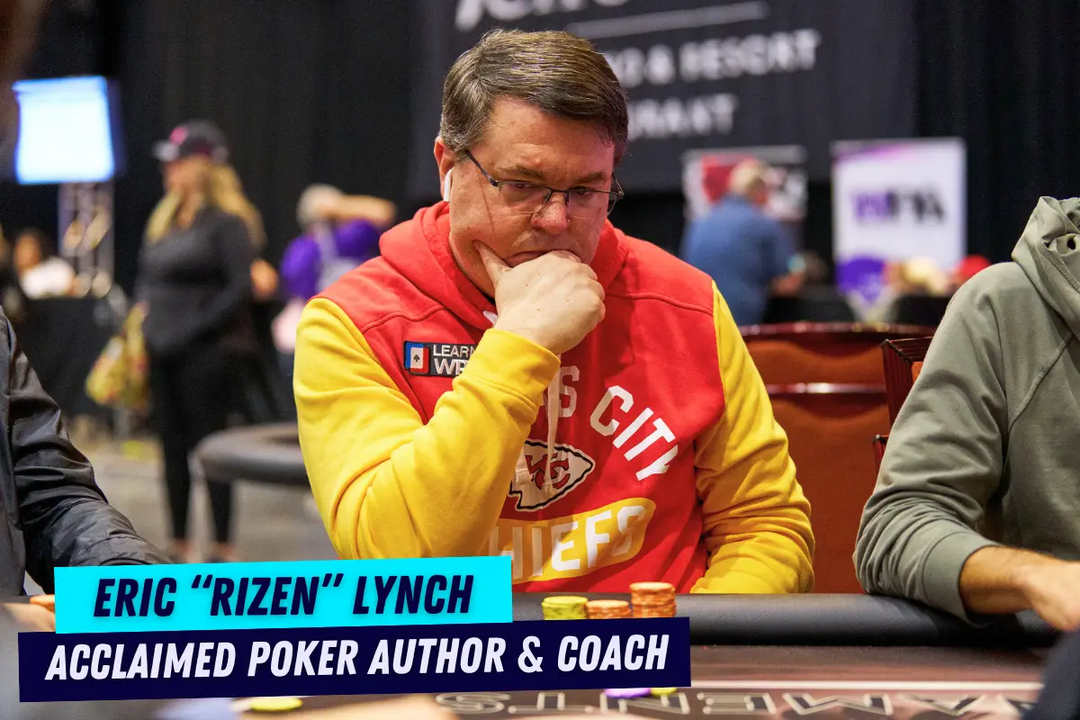
➧ Eric "Rizen" Lynch:
❝ Your preparation is done. Get the best rest you can and have your nutrition dialed in. Do everything you can to be your best self when the event starts. Go into the event with the expectations of doing well, but treat yourself with kindness if it doesn't. Good play isn't always rewarded, nor bad play always punished. Your mindset needs to be such that you expect you can win, but understand that even the best players bust out of events before the money around 80% of the time. Most of all, have fun. This is what you've prepared for, and as long as you show up and try to execute the best you know how, be proud of yourself. After the event, try to take away any lessons you can use for your next one. ❞
➧ Johan Schultz-Pedersen:
❝ My best advice for the day before your first tournament is to get a good night’s sleep. It can't be overstated how much of a difference good sleep makes when it comes to playing well and having fun at the table. ❞
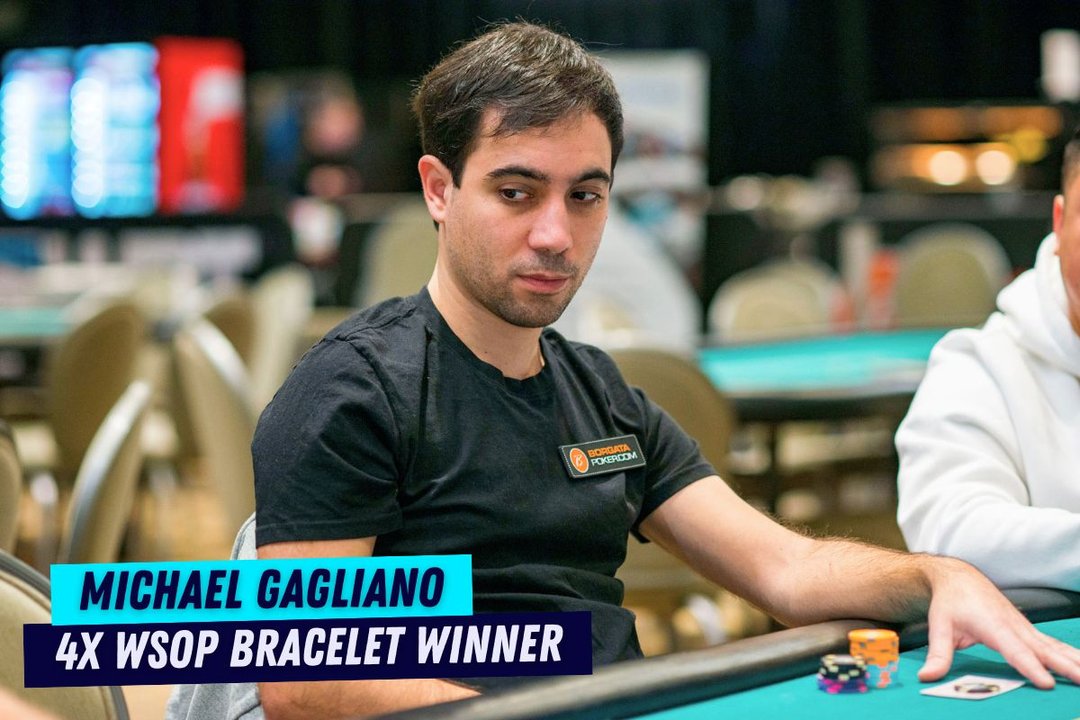
➧ Michael "Gags30" Gagliano:
❝ It's nearly tournament time. Hopefully you're already in Vegas and have settled in. Now is a great time to check out the venue and make plans for the day of. Things to check for include:
➥ Find the place to register, if you plan to arrive on time the next day you may want to register the night before to avoid lines.
➥ You likely need a players card to play in the event, it may be good to get on the day before.
➥ See if you can find the structure sheet of the event. You often can find these online, but many venues also have printed copies. Note how often and what time breaks are going to take place.
I was working on my schedule for Vegas and I wound up making a full calendar app.
— Gags30 (@Gags30poker) May 12, 2026
It has list view and calendar view, many filters, and you can build and save your own schedule.
All important info is shown, and there are links to structure sheets.https://t.co/MRnYPa85cX
➥ Note the locations of bathrooms near the tournament room. If there is one very close, take note of a second, as the primary bathroom is often overcrowded during the event. It can often save time to walk a little further to the less crowded bathroom.
➥ Find out the location of food options around the venue. Oftentimes you only have 15 minutes on break to use the restroom and also get food if you're hungry. If you waste 5 minutes trying to find a place that sells food then you have wasted most of your break. Also, make plans for your dinner break. If needed, make a reservation so you have a table waiting for you right at the time of break.
Final thoughts: Las Vegas during the summer is a fantastic time to play poker, but it can also sometimes be overwhelming or frustrating if you haven't properly prepared for your trip. Taking time beforehand to sort as many variables as possible so you can just focus on your strategy at the tables can be the make or break between a good trip and a bad one. Finally, making money is great, but try to enjoy yourself even if you don't. Enjoy the events, converse with your tablemates, and make the most of all that Las Vegas has to offer! ❞
➧ What To Focus On Now:
With 1 day remaining prior to the start of your first event, it’s time to clear your schedule and prepare your mindset for peak performance and ready to execute. Make sure that any unresolved questions about your game are answered.
Watch below (Free, no membership required) as Nick Binger discusses the proper mindset to approach playing tournaments and why it is essential to play to win vs simply trying to survive:
New to structured study? Start with our free poker training to lock in the 5 Keys framework before you build your plan.
➧ Go Deeper: Create Your Feedback Loop
Having a trusted source to discuss strategy with is VITAL to your growth. Fearless River members have that feedback loop with our Pros through the WSOP or anytime!
If you're playing this summer keep track of any tough spots from your tournaments and get feedback from Team Fearless River anytime with these membership features:
➥ Jot down key details during play and after your session use the Hand Input Tool to store and share your hands for analysis.
Visit your HIT Dashboard
➥ Submit all of your questions about specific challenges directly to our Pros and receive in-depth feedback and answers in Discord.
Visit the members-only Ask a Pro Discord
➥ Join live Study Sessions to help focus your efforts, maximize your results, and talk poker or watch previous sessions.
Review all Study Sessions
Get quick fixes and strategy advice all summer long!
Not a member? Join for just $5 your 1st month and get instant access to the membership feedback loop features plus 550+ strategy videos and GTO Trainer spots to practice. No contracts, cancel anytime.
➧ WSOP Helpful Links and Info:
➥ 2026 World Series of Poker Full Series Information
➥ WSOP Tournament Schedule
➥ WSOP Bracelet Event Structures
➥ WSOP Satellite Schedule
➥ WSOP Daily Deepstacks Schedule
➥ Follow @KevMath and @WSOP on X for Daily Information
➥ PokerNews WSOP Hub
➥ The Guide to the 2026 Summer Las Vegas Poker Scene by Kim Unger for a great resource of events around Las Vegas
➥ Michael Gagliano's Summer Poker Calendar to build and save your own schedule. Get more info from Gags on the app.
📍 Getting Around the WSOP
Kevin Mathers is one of the most trusted resources in the poker world for WSOP information. He posted a detailed floor plan breakdown covering tournament start locations, daily deepstack and satellite venues, registration, payouts, safe deposit boxes, and other key services across Horseshoe and Paris (also available on the WSOP+ app). ➥ View on X
Some additional notes about the WSOP Floor Plan
— Kevin Mathers (@Kevmath) May 19, 2026
10am starts - Horseshoe Grand Ballroom
12pm/2pm/Restarts - Paris
Daily Deepstacks/Satellites - Horseshoe Event Center
Normandie/Provence (located on the 2nd/3rd floors, take the escalators at the Horseshoe Poker Room) - Overflow… https://t.co/NugUl0RESy
How to Register in Person or Online
All players must provide valid photo identification and a Caesars Rewards Loyalty card to register and a WSOP+ app account.
➥ WSOP Registration Information
➥ Download the WSOP+ App to pre-register for events and skip cage lines, make payments and get all the information about the Series.
Healthy and Quick Food Options
➥ Check out PokerOrg's: The best healthy places to eat on a break
➥ Or: Unhealthy Vegas food for your 2026 WSOP dinner break
➧ Watching from Home? Follow the Action Live
New this year, the WSOP will be host a free livestream each day on their YouTube channel for fans around the world. And ...
https://t.co/AQgfMeU4XD pic.twitter.com/vMmKn1GcqC
— Jeff Platt (@jeffplatt) March 26, 2026
➧ Staying in Flow With Team Fearless River
We’ve got the strategies to help you play better poker this summer no matter how much prep time you have before your 1st tournament.
Did you miss any the previous Guides? Click below for more FREE tips and strategies:
➥ Prep Time = 60-Day Prep Guide
➥ Prep Time = 30-Day Prep Guide
➥ Prep Time = 7-Day Prep Guide
➥ WSOP 2026 Prep: All 4 Guides in One Place
➧ This Is What You Trained For
HAVE FUN! Playing a large tournament series like the WSOP is why you put in the hard work studying. Now it's time to relax, have fun, and enjoy. Even if you don't win your 1st bracelet, enjoy the process and the game we all love.
However, if you DO win your 1st WSOP bracelet, make a deep run, or cash in a tournament around town, let us know.
@Fearless River @tonydunsttv @Gags30poker @NickBinger @AdrianFearless River FINAL TABLE!!! pic.twitter.com/OyOsNsd4K0
— T.J. Murphy (@TJMurphy_5) June 7, 2024
We love celebrating Student accomplishments, and they've been consistently crushing the Summer Poker Season. In fact, we’ve helped Fearless River students achieve:
🥇 4 WSOP BRACELETS
🏆 6 WSOP Final Tables
👏 9 Around Town Final Tables
💰 Over $1.7 Million in Cashes

This is why we teach, and this is why you play!
Remember to share your successes with us and we'll highlight your achievements on our upcoming blog. Tag us on social media with your results from the felt or email [email protected].
X @_FearlessRiver | Facebook @fearlessriver | IG @fearlessriver
And if you see any of Team Fearless River, stop and say Hi!
Good luck and good playing,
- Team Fearless River
Have Questions about Fearless River? Send an email to our Support Team at [email protected] or click the CONTACT US button.
Find Your Flow. Train Smarter. Play Fearless.
www.fearlessriver.com
Staying in Flow: Your WSOP 7-Day Prep Guide
Prep Time: 7 Days Before the Start of Your 1st Tournament
Your first 2026 WSOP event is one week away. The time for big strategy changes is over. Now it's about sharpening execution, locking in your mindset, and showing up ready to play your best poker from hand 1. Here's exactly how to do it.
We asked Team Fearless River to give us their best advice on how to prepare your poker game to stay in flow all summer in Las Vegas. We put one question to each of them:
❝ What advice would you give players when preparing for the WSOP based on the time before the start of their first event? ❞
We've assembled their answers along with FREE videos, strategies, and tips plus expert advice from Tony Dunst, Michael Gagliano, Eric Lynch, and Johan Schultz-Pedersen to make sure you are ready to crush starting hand 1. ⤵
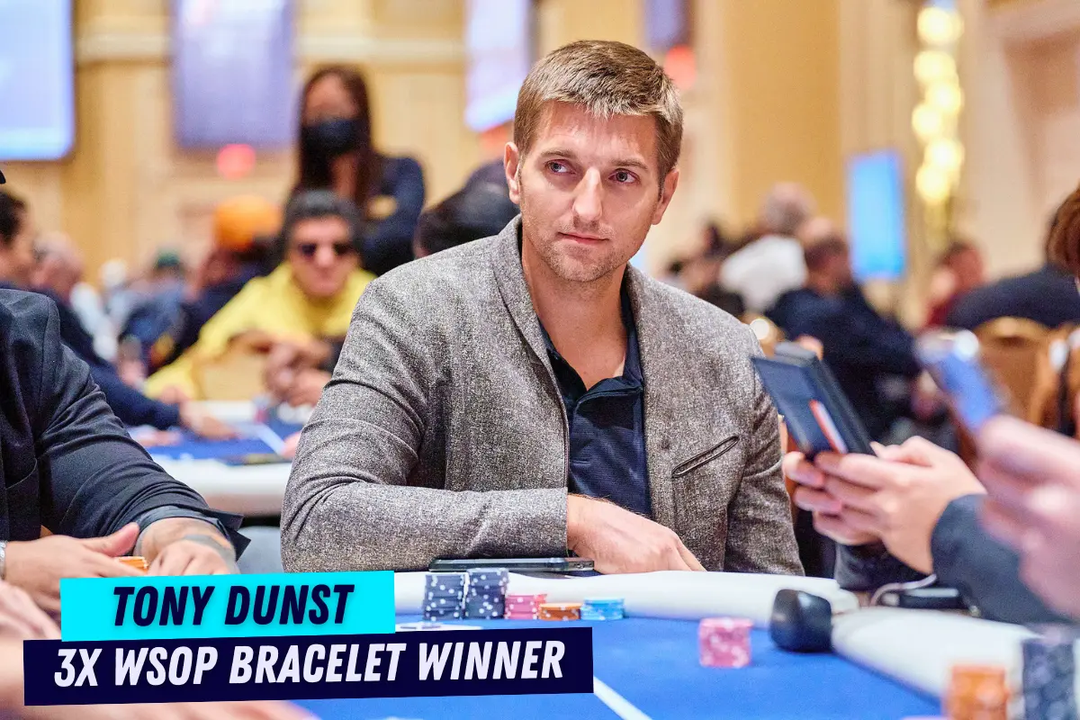
➧ Tony Dunst:
❝ While you should continue the study habits you’ve built up in the week leading up to the tournament, this is a good time to think about preparing your body for the grind of tournament poker. Above all that means getting on the right sleep schedule for playing from noon to midnight PDT. So if you live on the East Coast and are early to bed, you need to start staying up later and sleeping in so you’re not exhausted during the late hours of play in Vegas. The highest EV decisions of your poker day are made latest at night, so it’s crucial that you’re alert during those hours. ❞
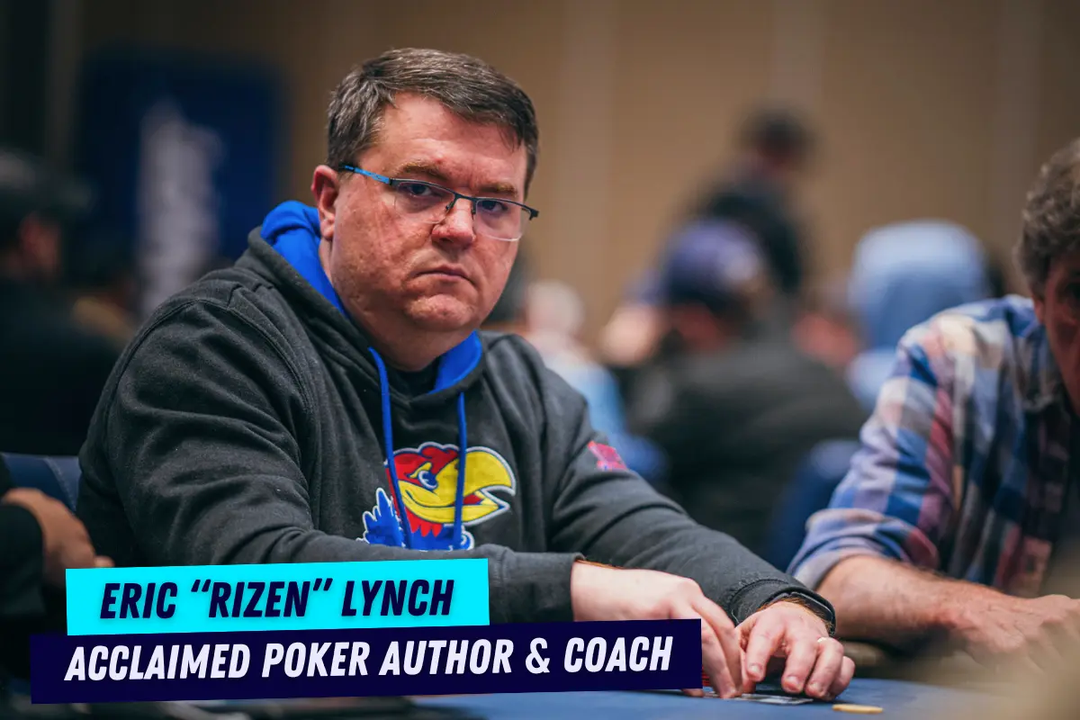
➧ Eric "Rizen" Lynch:
❝ At this point, you really shouldn't be looking into anything new and just really solidifying the things you've already studied. Executing a good game plan very well is FAR better than executing a perfect game plan poorly, so at this point, you should really trust what you've been studying, and all your attention should be focused on taking the skills you already have and maximizing your ability to execute them flawlessly. Focus on getting good sleep and nutrition, and just maximizing your ability to be the best version of yourself. ❞
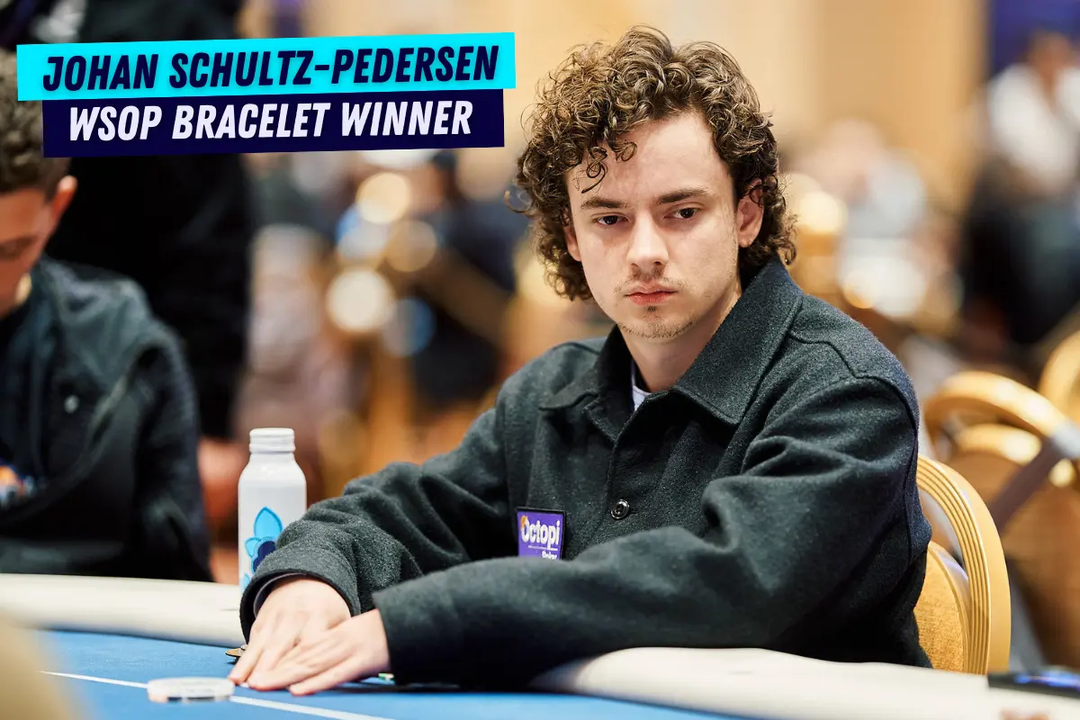
➧ Johan Schultz-Pedersen:
❝ Try to exercise regularly leading up to the series, especially if you plan on playing long sessions. This will help with both concentration and fatigue. ❞
➧ Michael "Gags30" Gagliano:
❝ Hopefully by now you've spent some time working on your game and planning what you're going to play. Take any final looks over your strategy or any charts you've been studying, but don't try to make any large adjustments at this point. Your game is what it is, and you want to try your best to execute well in the moment, not have to craft an entirely new strategy based on something you just learned the week before. Now is the time to make sure you have all your logistics for your trip in order. Are you flying to Las Vegas? Make sure you're packing everything you'll need. Days at the poker table can be long; make a list of what you'll need while you play. I recommend a small bag you can carry with you to hold some snacks, water, headphones if you wear them, a charger for your phone, a sweatshirt in case you're cold (it might be 115 degrees outside, but those poker rooms can get cold), and anything else you may want while you're playing. You're going to need some money to buy into whatever tournaments you're playing. How will you get cash in Vegas? If you plan on going to the bank beforehand, now is a good time to do so. Many banks have limited hours and if, for example, you're flying out early Monday your bank might not be open the day before. Get your funds set now so you don't have to worry about that right before the tourney. ❞
➧ What To Focus On Now:
1 week prior to the start of your first event it’s crucial to ensure that any critical leaks are plugged and start shifting focus to execution.
Watch Below: Pregame Warm-up (Free, no membership required). Mental Game Coach Jared Tendler provides the building blocks for an efficient tournament poker pregame warm-up and describes why it is essential for growth in your game.
➧ Go Deeper: Members-Only Strategy Episodes
With one week to go, use these Episodes to sharpen your mental game and execution. Members can log in and watch anytime:
Your strategy is set — now it's about execution. Jared Tendler shows you how to stay locked in and mentally sharp when it matters most.
➥ Episode 84: Focus With Jared
Learn how to use aggression on the bubble in a tournament to help improve your chances of accumulating chips and maximize your ROI.
➥ Episode 61: Bubble Play
Chris Wallace introduces and outlines the fundamentals of his world-class short stack strategy.
➥ Episode 168: Short Stack Play
➥ Episode 293: Pregame Warm-Up With Jared (Watched Above)
Not a member yet? Join now for just $5 your 1st month and get instant access to all these episodes above plus 550+ strategy videos and 45 GTO Trainer spots to practice. No contracts, cancel anytime.
➧ Quick Review Checklist: 7 Days Out
Use this final week to review the concepts that come up most frequently at the tables. Don't learn anything new, just sharpen what you already know:
☑ First-In Hand Ranges: Review your opening ranges from each position before you arrive
☑ Big Blind Defense: Know which hands to defend and which to fold facing a raise
☑ Continuation Betting: When to fire and when to check based on board texture
☑ 3-Bet Pots: Have a clear plan for how you play both as the 3-bettor and the caller
☑ Short Stack Play: Brush up on sub-30BB strategy since you will face this in every tournament
☑ ICM Awareness: Near the bubble and at final tables, understand how stack sizes affect your decisions
➧ Summer in Vegas Helpful Links and Info:
➥ 2026 World Series of Poker Full Series Information
➥ WSOP Tournament Schedule
➥ WSOP Bracelet Event Structures
➥ WSOP Satellite Schedule
➥ WSOP Daily Deepstacks Schedule
➥ Follow @KevMath and @WSOP on X for Daily Information
➥ Kevin Mather's Getting Around the WSOP
➥ PokerNews WSOP Hub
➥ Michael Gagliano's Summer Poker Calendar to build and save your own schedule. The calendar includes all information including links to structure sheets. Find out more here.
I was working on my schedule for Vegas and I wound up making a full calendar app.
— Gags30 (@Gags30poker) May 12, 2026
It has list view and calendar view, many filters, and you can build and save your own schedule.
All important info is shown, and there are links to structure sheets.https://t.co/MRnYPa85cX
➥ The Guide to the 2026 Summer Las Vegas Poker Scene by Kim Unger for a great resource of events around Las Vegas
➥ If you're playing any WSOP events this summer, it can be hard to find something to eat quickly during a tournament break. Somewhere healthy? Even tougher. Poker-playing fitness coach TJ Jurkiewicz put together a guide with an overview of the best options within walking distance of the Horseshoe and Paris Casinos you can easily reach on a dinner break. You can sign up for TJ’s free comprehensive free guide here.
➧ Staying in Flow With Team Fearless River
We’ve got the strategies to help you play better poker this summer no matter how much prep time you have before your 1st tournament. Click below for more FREE tips and strategies:
➥ Prep Time = 60-Day Prep Guide
➥ Prep Time = 30-Day Prep Guide
➥ Prep Time = 1-Day Prep Guide
➥ WSOP 2026 Prep: All 4 Guides in One Place
If you are a member of the Fearless River family and will be here in Las Vegas for the World Series of Poker, we want to cheer you on! Let us know what you are playing or share your success at the table. Tag us on social media or email [email protected] with your photos and updates from the felt.
X @_FearlessRiver | Facebook @fearlessriver | IG @fearlessriver
Good luck and good playing,
- Team Fearless River
P.S. If you are new to poker or structured study, start with our free poker training focused on the 5 Keys you should be thinking about every time you play a hand.
Find Your Flow. Train Smarter. Play Fearless.
www.fearlessriver.com
Have Questions about Fearless River? Send an email to our Support Team at [email protected] or click the CONTACT US button.
Staying in Flow: Your WSOP 30-Day Prep Guide

Prep Time: 30 Days Before the Start of Your 1st Tournament
Your first 2026 World Series of Poker event is one month away, and this is the sweet spot for preparation. You still have enough time to sharpen your strategy meaningfully, but the series is quickly approaching. The players who make the most of this window arrive in Vegas confident, focused, and ready to flow. Here's how to join them.
We asked Team Fearless River to give us their best advice on how to prepare your poker game to stay in flow all summer in Las Vegas. We put one question to each of them:
❝ What advice would you give players when preparing for the WSOP based on the time before the start of their first event? ❞
We've assembled their answers along with FREE videos, strategies, and tips plus expert advice from Tony Dunst, Michael Gagliano, Eric Lynch, and Johan Schultz-Pedersen to make sure you are ready to crush starting hand 1. ⤵
➧ Tony Dunst:
❝ I think a month out is the ideal time to dial up your study and effort; you should feel ready and prepared approaching the tournament but not burned out on poker. The main three forms of studying are training videos, hand history reviews (while checking strategy in a solver), and playing against GTO trainers. Hand history reviews are great because you’ll be looking at your play during various stages of the tournament and in a variety of spots, but for training videos and trainer study, I think you should focus on the weak spots in your game. For example, I tend to play ICM situations too close to ChipEV out of habit, so when I have major tournaments coming up I focus more on ICM study so it’s fresh in my mind. Also, when working with GTO trainers, I think you should mostly play as the aggressor and not the caller, because the players you’ll encounter in Vegas are much more passive than a trainer and will be under-bluffing. So practice spots where you’re the one 3-betting or check-raising and not the one calling against that kind of aggression because if you call down humans like you should the trainer, you’ll end up punting against people who never bluff in big spots. ❞
➧ Johan Schultz-Pedersen:
❝ I also recommend studying - whether that means reviewing preflop ranges, discussing strategy with friends, or watching training videos, it all helps. ❞
Simple advice, but consistent study in the final month, even in small doses, compounds quickly heading into Vegas.
➧ Eric "Rizen" Lynch:
❝ This is the point where you really shouldn't be learning anything completely new but just refining things you already know and really solidifying them in your mind. If you have access to play in tournaments (either online or live) that mimic the structures you're preparing for, then put the things you're studying into practice. If not, use tools like the Fearless River GTO trainer to mimic play so you can really reinforce concepts. ❞
➧ Michael "Gags30" Gagliano:
❝ It's time to plan your trip. Take a look at the schedules from all the casinos and pick what events you want to play. There is a LOT to play in Las Vegas during the summer, and so many choices in terms of venue, game type, buy-in level, satellites, cash... it can be very overwhelming. Players who do not spend time preparing and making an outline of a schedule for themselves can wind up spending their time in Vegas running around like a chicken with its head cut off and more focused on what event might be next rather than focusing on the cards they're being dealt and their strategy. Taking the time early to do your planning will pay off big time when you can just focus on playing your best. It's ok to give yourself some options in your schedule, like "If I'm doing well, I'll play tourney A, but if my trip is going poorly, I'll play tourney B," but make sure you have some goals in mind and have looked at the schedules beforehand. Also, if you have the time, put in some reps at the table and continue working on your strategies that you've hopefully been studying for the past month. Take note of any weak points in your game and brush up on what you've been working on. ❞
📌 Check out the Summer Poker Calendar from Michael Gagliano to build and save your own schedule. The calendar includes all information including links to structure sheets. Find out more here.
➧ What To Focus On Now:
With 1 month remaining, it's crucial to ensure any critical leaks are plugged and shift focus to execution. These Fearless River GTO Trainer solutions are ideal for developing mental muscle memory and quickly identifying leaks. Alternate your training sessions with the related Strategy Episodes:
Watch Below: Tony's Live Reads & Tells (Free, no membership required). In his installment on player tendencies, Tony Dunst breaks down his most frequently observed live poker tells and gives you key guidelines for how to respond when you encounter them. With one month to go, reading your opponents at the table is just as important as your strategy off it.
➧ Go Deeper: Members-Only Strategy Episodes
With time still on your side, use these GTO Trainer hands and episodes to sharpen execution and plug leaks before you arrive in Vegas. Members can log in and watch anytime:
Continuation betting is one of the most critical skill sets in tournament poker, getting reps in now builds the muscle memory you'll need when it counts.
➥ Test Your C-Betting Skills! Play 10 Solved GTO Trainer Hands
➥ Then Watch Episode 294: Advanced Continuation Betting
Tournament chips can change hands fast in 3-bet pots. Practice as the aggressor and try to apply Tony's advice from above.
➥ Test Your 3-Betting Skills! Play 5 Solved GTO Hands
➥ Then Watch Episode 465 as Tony Plays the Same Hands
A full tournament series requires sustained focus across days and events. This episode covers exactly how to maintain peak performance throughout.
➥ Episode 541: Tournament Series Prep With Chewy, Tony, & Johan
➥ Episode 502: Tony's Live Reads and Tells (Watched Above)
Not a member yet? Join now for just $5 your 1st month and get instant access to all these episodes above plus 550+ strategy videos and 45 GTO Trainer spots to practice. No contracts, cancel anytime.
➧ Train & Practice Specific Spots
Practice, drill, and play through solved spots that give you the most problems and become more confident in your decisions on the felt (members only, log in to access).
All scenarios are categorized so you can filter for Game Type, Your Position, Stack Size, and Situation (defense, open raise, 3-betting, and more) based on the packs available at your membership tier.
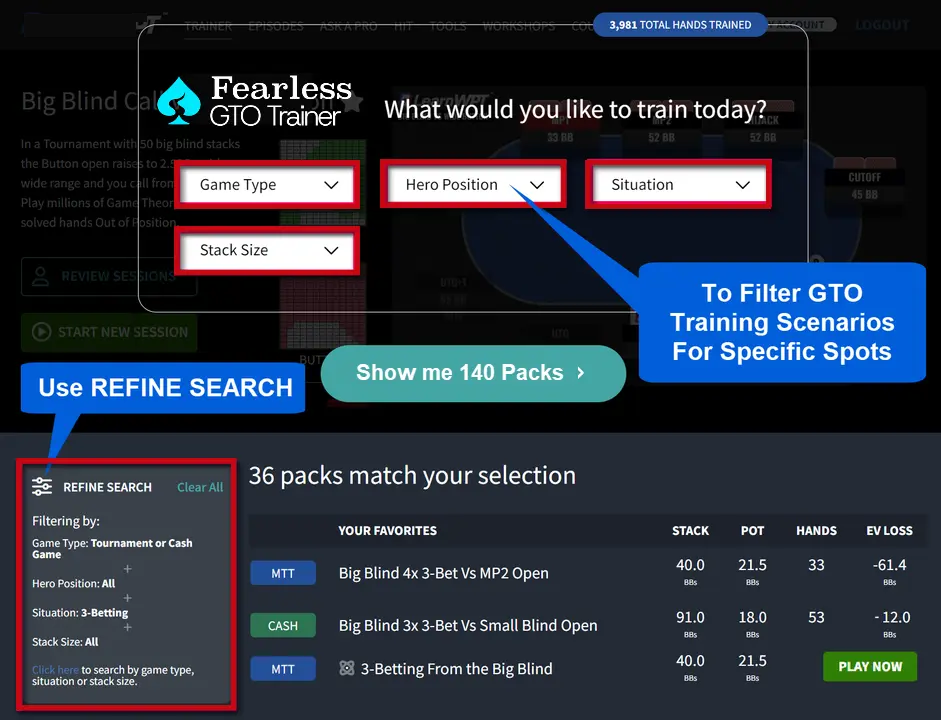
Platinum Members have access to over 140 spots! Upgrade anytime from your My Account page under Available Plans.
Helpful Training Tip: To improve your Big Blind Defense: Watch the Big Blind Defense Episode 287 → Go to the GTO Trainer → Click the Situation filter box below "What would you like to train today?" and select Big Blind Defense → Select a Pack and Begin!
➧ Staying in Flow With Team Fearless River
We’ve got the strategies to help you play better poker this summer no matter how much prep time you have before your 1st tournament. Click below for more FREE tips and strategies:
➥ Prep Time = 60-Day Prep Guide
➥ Prep Time = 7-Day Prep Guide
➥ Prep Time = 1-Day Prep Guide
➥ WSOP 2026 Prep: All 4 Guides in One Place
If you are a member of the Fearless River family and will be here in Las Vegas for the World Series of Poker, we want to cheer you on! Let us know what you are playing or share your success at the table. Tag us on social media or email [email protected] with your photos and updates from the felt.
X @_FearlessRiver | Facebook @fearlessriver | IG @fearlessriver
Good luck and good playing,
- Team Fearless River
P.S. If you are new to poker or structured study, start with our free poker training focused on the 5 Keys you should be thinking about every time you play a hand.
Will YOU Be Our Next Bracelet Winner?
Our students consistently crush the summer poker season, bringing home massive scores and achieving their poker dreams.
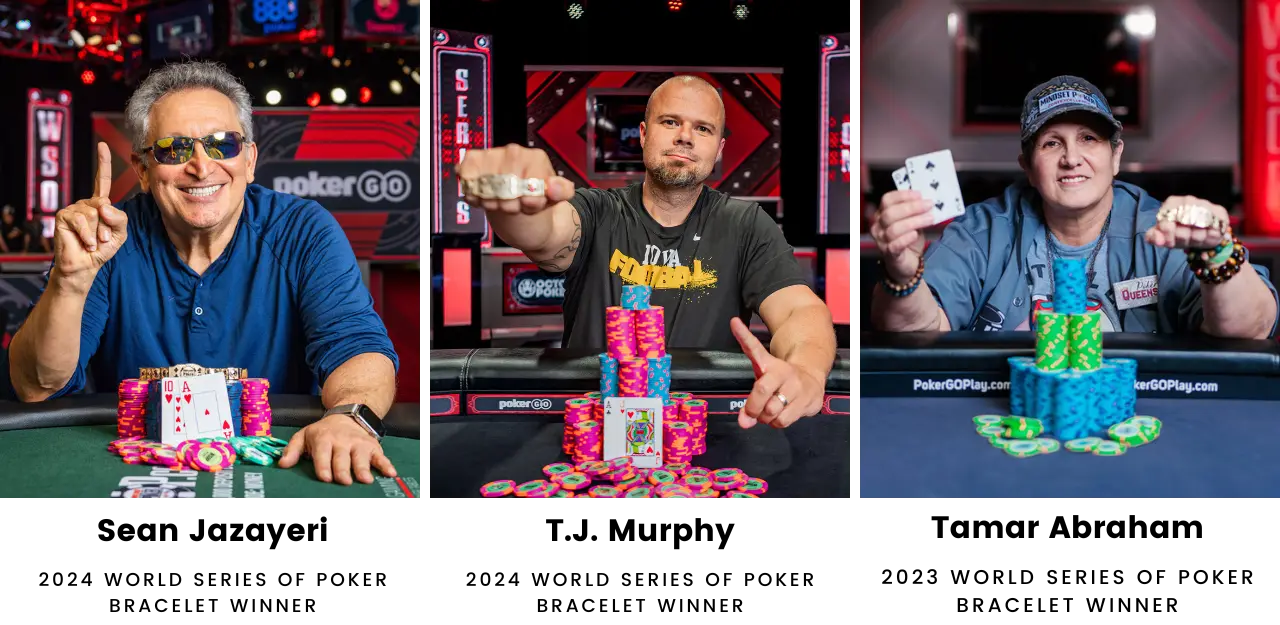
In fact, in just the past few years alone during the summer in Vegas Fearless River Students have achieved:
🥇 4 WSOP BRACELETS
🏆 6 WSOP Final Tables
💪 1 Around Town Win
👏 9 Around Town Final Tables
💰 Over $1.7 Million in Cashes
Ready to be our next success story?
Become a FearlessRiver.com Member now for just $5 your 1st month and start preparing for your best summer yet.
Have Questions about Fearless River? Send an email to our Support Team at [email protected] or click the CONTACT US button.
Find Your Flow. Train Smarter. Play Fearless.
www.fearlessriver.com
Staying in Flow: Your WSOP 60-Day Prep Guide
Prep Time: 60 Days Before the Start of Your 1st Tournament
Your first 2026 World Series of Poker event is 60 days away and the players who show up ready didn't start preparing with one week to go. Two months of prep time is a gift most players don't take advantage of. Here's exactly how to use it right.
We asked Team Fearless River to give us their best advice on how to prepare your poker game to stay in flow all summer in Las Vegas. We put one question to each of them:
❝ What advice would you give players when preparing for the WSOP based on the time before the start of their first event? ❞
We've assembled their answers along with FREE videos, strategies, and tips plus expert advice from Tony Dunst, Michael Gagliano, Eric Lynch, and Johan Schultz-Pedersen to make sure you are ready to crush starting hand 1. ⤵
➧ Tony Dunst:
❝ While it’s never a bad idea to form study habits, I think trying to change too much about your game or approach to poker 60 days before the summer is probably overkill. But if you’re someone who mostly plays and doesn’t study, I think it’s smart to use this time to start gradually building the habit of studying 30-60 minutes a day several times a week. Studying poker is kind of like working out, where nothing dramatic happens in one session but if you build it into your routine, you make consistent progress over a long period of time. ❞
➧ Michael "Gags30" Gagliano:
❝ Two months before playing in larger live events is the perfect time to work on your game and put in some study time. A lot of players wait until the final days before an event to study, but you really want to make sure you give yourself time to digest what you're learning and also take some time to practice your strategies so you're comfortable with them. If you're going to try anything new or make any larger changes to your game, this is the time to do so. ❞
➧ Eric "Rizen" Lynch:
❝ If you've identified the event(s) you want to play, then how you prepare will depend somewhat on the event types/structures that you want to play. If you're playing a huge field event that moves fast like the Colossus, you probably want to focus your time studying sub-30BB (or even 10BB-20BB) play, as the structure is fast and most of your critical decisions will be made with a smaller stack size. If you're playing something like a WSOP/WPT Main Event structure, you'd want to focus more on ~50BB play as the structures for those often have the average stack in the 40BB range throughout the tournament. So, identify the types of events you want to play and what sort of decisions will be most critical in that tournament format/structure and develop a study plan that focuses on those items. If you already feel strong at the key stack level of the event(s) you're targeting, move on to the next most important skill you would need for the event. Focus on the things that will come up most often first, (for example, preflop play if you need to work on that, then playing heads-up single raised pots, heads-up three bet pots, and so on), then focus on things that come up less frequently. ❞
➧ Johan Schultz-Pedersen:
❝ A month or two before the first event starts, I recommend playing a few online sessions to get back into the rhythm of playing. Online poker allows you to play many more hands in a short amount of time compared to live poker. ❞
Simple advice, but getting reps in before arriving in Vegas can make a significant difference in your comfort level at the table!
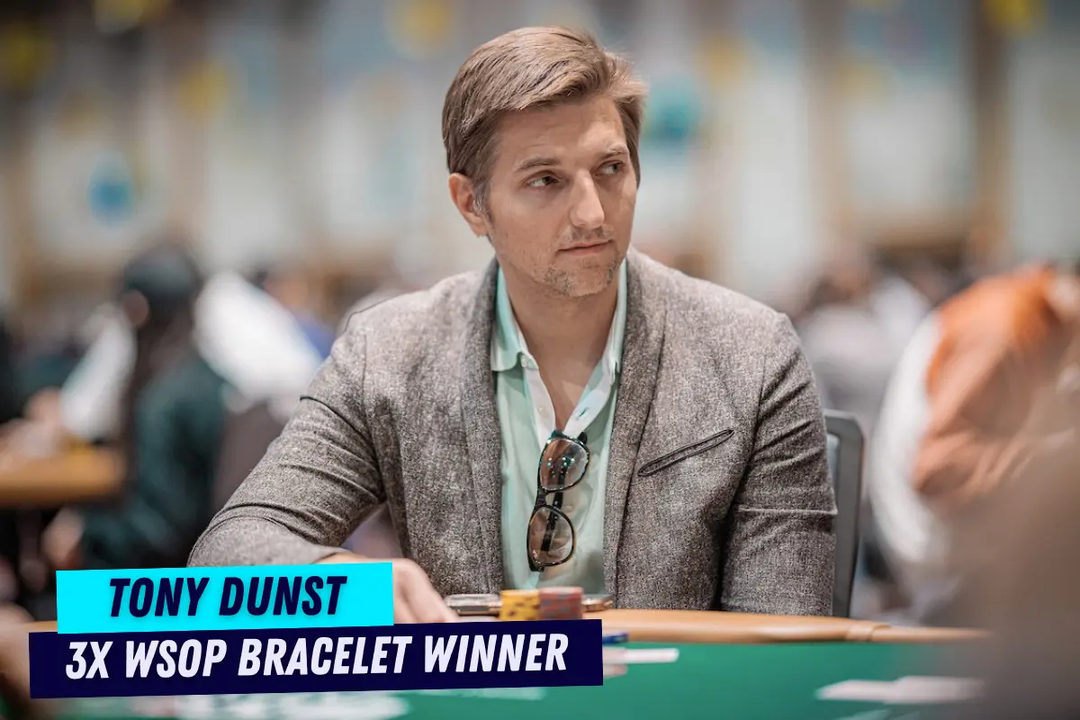
➧ What To Focus On Now:
If you’ve got at least 2 months to prepare your training should focus on strengthening fundamentals while plugging leaks. These Fearless River Strategy Episodes are a great place to start.
New to structured study? Start with our free poker training to lock in the 5 Keys framework before you build your plan.
Let's start with one of the biggest leaks in poker. Many players approach preflop play without clear guidelines and often become too cautious or over aggressive in the wrong situations. First-In Hand Ranges give you a structured way to decide when to play and what to play, based on your stack size and seat position at the table.
In this Strategy Episode, you’ll get a detailed breakdown of which hands you should play from each seat position when raising first-in to the pot, so you’ll start hands with confidence instead of uncertainty.
Here are a few points from this video to remember...
Think in Hand Ranges:
- A range includes all hands a player may have in a given situation
- Avoid trying to put your opponent on a specific hand
- Position, action, and stack depth help determine ranges
- Analyzing hand ranges is best done away from the table

These charts will tell you what hands to play when you are the first person to put money into the pot at the poker table. They'll keep you on very solid, profitable ground and ensure that you aren't playing bad poker hands.
You'll develop muscle memory for preflop play by simply reviewing the charts and then putting them into practice at the table!
Quick Tips for Using the First-In Hand Range Charts:
- Use the Position Graphic to determine your position at the table and find the appropriate range chart for your seat. Tip: Count backwards from the Button to determine your position.
- Raise with all hands highlighted in PINK. Do not call the minimum bet amount - RAISE!
- Your raise sizing should be between 2.3 and 3 times the big blind amount depending on stack depth.
- Be consistent. If you raise a larger amount with a specific hand and smaller amounts with others, you will be easier to read at the table (IE don't raise to 600 with AA, but 400 with 99)
Remember, these charts are intended for use when you are the first person to put chips in the pot before the flop aside from the blinds (forced bets). If someone else has already voluntarily put chips in the pot before your turn to act, these charts do not apply.
➧ Go Deeper: Members-Only Strategy Episodes
With 60 days to work with you have time to go beyond the fundamentals. Members can log in and watch these anytime:
➥ Episode 305: First-In Hand Ranges (Watched Above)
Knowing when and how to defend properly is one of the most exploitable leaks in tournament play, and these two episodes will tighten that up fast.
➥ Episode 463: Big Blind Defense
➥ Episode 405: Button Defense
With 60 days to work with, strengthening your 3-bet strategy is an excellent use of study time. Most players at the WSOP are uncomfortable in 3-bet pots, and these episodes will make you dangerous in them.
➥ Episode 525: 3-Betting Strategy Part 1
➥ Episode 530: 3-Betting Strategy Part 2
Not a member yet? Join now for just $5 your 1st month and get instant access to all these episodes above plus 550+ strategy videos and downloadable tools. No contracts, cancel anytime.
➧ Staying in Flow With Team Fearless River
We’ve got the strategies to help you play better poker this summer no matter how much prep time you have before your 1st tournament. More FREE tips and strategies are on the way:
➥ Prep Time = 30-Day Prep Guide
➥ Prep Time = 7-Day Prep Guide
➥ Prep Time = 1-Day Prep Guide
➥ WSOP 2026 Prep: All 4 Guides in One Place
If you are a member of the Fearless River family and will be here in Las Vegas for the World Series of Poker, we want to cheer you on! Let us know what you are playing or share your success at the table. Tag us on social media or email [email protected] with your photos and updates from the felt.
X @_FearlessRiver | Facebook @fearlessriver | IG @fearlessriver
Good luck and good playing,
- Team Fearless River
Find Your Flow. Train Smarter. Play Fearless.
www.fearlessriver.com
Have Questions about Fearless River? Send an email to our Support Team at [email protected] or click the CONTACT US button.
How to Play No-Limit Texas Hold'em: A Beginner's Guide
If you have never played a hand of poker, start here.
No-Limit Texas Hold'em is the most widely played form of poker in the world. You see it on TV, at the World Series of Poker, on the World Poker Tour, and in most cardrooms and home games.
It is also a game you can learn the rules of in about twenty minutes.
That is what this page is for.
Below is a free video that walks you through the basics from start to finish, plus a written reference you can come back to any time. You’ll learn how a hand plays out, what beats what, your options when the action is on you, and a few simple rules to guide your play. No experience required. No account required.
If you already know the basics, unlock The 5 Keys Of Poker here. Free.
Start Here: The Quick Start Video
In this video, Fearless River instructor and 2x WSOP Bracelet winner Nick Binger covers everything you need to sit down and play:
- Poker hand rankings so you always know what beats what
- How the betting works, including proper technique so you do not give away information
- Handling your cards and chips at a live table
- Which cards to play at the start of each hand
Watch it before you play, then use the sections below as a reference.
🤔 What Does That Term Mean?
Run into a word you don't recognize? Poker has a lot of unique vocabulary, and nobody expects you to know every term right away. Click the magnifying glass 🔍 in the menu at the top of any page and type in the term.
You will get the plain-language definition, plus links to Fearless River strategy videos and tools that cover it. Here is what a sample search looks like for Big Blind. Try it with position, button, or any other term as you read on.
How a Hand of No-Limit Hold'em Is Played
Every hand follows the same rhythm. Once you have seen it a few times, it becomes automatic.
- The blinds are posted. A dealer button marks one player at the table and moves one seat clockwise after every hand. The two players to the direct left of the button are required to put chips in the pot before the cards are dealt; these are called the small blind and big blind. The small blind is normally half the amount of the big blind. The amount is based on the blind level in tournaments or betting limit in cash games. The blinds are used to entice play.
- You get two cards. Every player is dealt two cards face down. These are your hole cards. Only you see them and you need to protect them from other players' view. Never show your cards unless instructed by the dealer.
- Preflop betting. Action always starts to the left of the big blind and moves clockwise. Each player folds, calls, or raises.
- The flop. Three community cards are dealt face up in the middle of the table. All players still in the hand share community cards to make their best five-card hand. Another round of betting follows.
- The turn. A fourth community card is dealt. Another round of betting follows.
- The river. A fifth and final community card is dealt. One last round of betting.
- Showdown: When two or more players are still in the hand after the final round of betting, the winner is determined by shown cards. The best five-card hand, using any combination of your two hole cards and the five community cards, takes the pot, and the dealer pushes it to that player. The last player who bet or raised turns their cards over first, then the rest follow in clockwise order.
There are two ways to take down a pot. Either you have the best hand at showdown or you bet and everyone else folds. You do not need the best hand to take the pot if everyone else folds.
Pro Tip: You are never required to show a losing hand. If you know you are beaten, you can muck, which means handing your cards to the dealer face down and giving up your claim to the pot.
Poker Hand Rankings: What Beats What
This is the one thing worth memorizing before you play. Hand rankings apply to every decision you make, and they never change.
| Rank | Hand | Example | What it is |
|---|---|---|---|
| 1 | Royal Flush | 10♠J♠Q♠K♠A♠ | Ace-King-Queen-Jack-Ten all of the same suit. The best possible hand. |
| 2 | Straight Flush | 7♠8♠9♠10♠J♠ | Five cards in sequence, all the same suit. |
| 3 | Four of a Kind | 9♥9♠9♦9♣J♠ | All four cards of the same rank. |
| 4 | Full House | 9♥9♠9♦J♣J♠ | Three cards of the same rank + two cards of the same rank. |
| 5 | Flush | Q♥3♥6♥8♥A♥ | Five cards of the same suit, not in sequence. |
| 6 | Straight | 7♦8♠9♦10♠J♣ | Five cards in sequential order, not of the same suit. |
| 7 | Three of a Kind | 7♠7♦7♥10♠J♠ | Three cards of the same rank. |
| 8 | Two Pair | 7♠7♦10♦10♠J♠ | Two cards of the same rank + two cards of another rank. |
| 9 | One Pair | Q♠Q♣6♥10♠3♣ | Two cards of the same rank. |
| 10 | High Card | A♥Q♣6♥10♠3♣ | One card ranking higher than all others. No pairs, straights, flushes. |
A few things that trip up new players:
- Suits do not rank against each other. A flush in spades does not beat a flush in hearts. The highest-ranking card in the flush decides it.
- You make your best five-card hand out of seven. Your two hole cards plus the five community cards give you seven to choose from, and only the best five count. That can mean using both of your cards, one of them, or neither. When your best five-card hand consists solely of the five community cards on the board, you are said to be "playing the board". If no player has a hand that can beat the board, the pot is split among the players involved.
- An Ace can be high or low. A-K-Q-J-10 is the highest straight. A-2-3-4-5 is the lowest (known as a wheel).
Your Options When the Action Is on You
Every decision in poker comes down to one of these actions:
- Check: To defer your action to the next player in the hand. Only possible if nobody has bet ahead of you on that street.
- Bet: To voluntarily place money in the pot.
- Call: To match the amount of someone else's bet, rather than choosing to raise or fold.
- Raise: To increase the current bet. The amount of your raise must be at least the size of the last bet or raise. Example: If it is 100 to you, the smallest raise is to 200. If someone has already raised from 100 to 300, the smallest reraise is to 500, not 600. Multiple raises can occur in a given betting round.
- Fold: The action of surrendering your cards. Players who fold at any point before showdown are not eligible to win any portion of the pot and cannot re-enter the hand.
- All-in: A bet that commits your entire chip stack to the pot. This action can take place during any betting round. If you go all-in and no one calls your bet, you win the pot without needing to reveal your hand. However, if someone does call, you must win the hand at showdown to claim the pot. It is important to note that once you declare an all-in bet, you cannot retract it.
Two habits worth building from day one:
➧ Announce your action before you touch your chips. Verbal declarations are binding, so saying "raise" or "call" out loud protects you from misconstrued hand action.
➧ Put your chips out in one clean motion. Reaching back to your stack for a second handful after your chips have crossed the line can be ruled a call instead of a raise. Also known as a string bet.
Where You Sit Changes Everything
This is the first real strategy concept, and it is the one that separates new players from everyone else faster than any other.
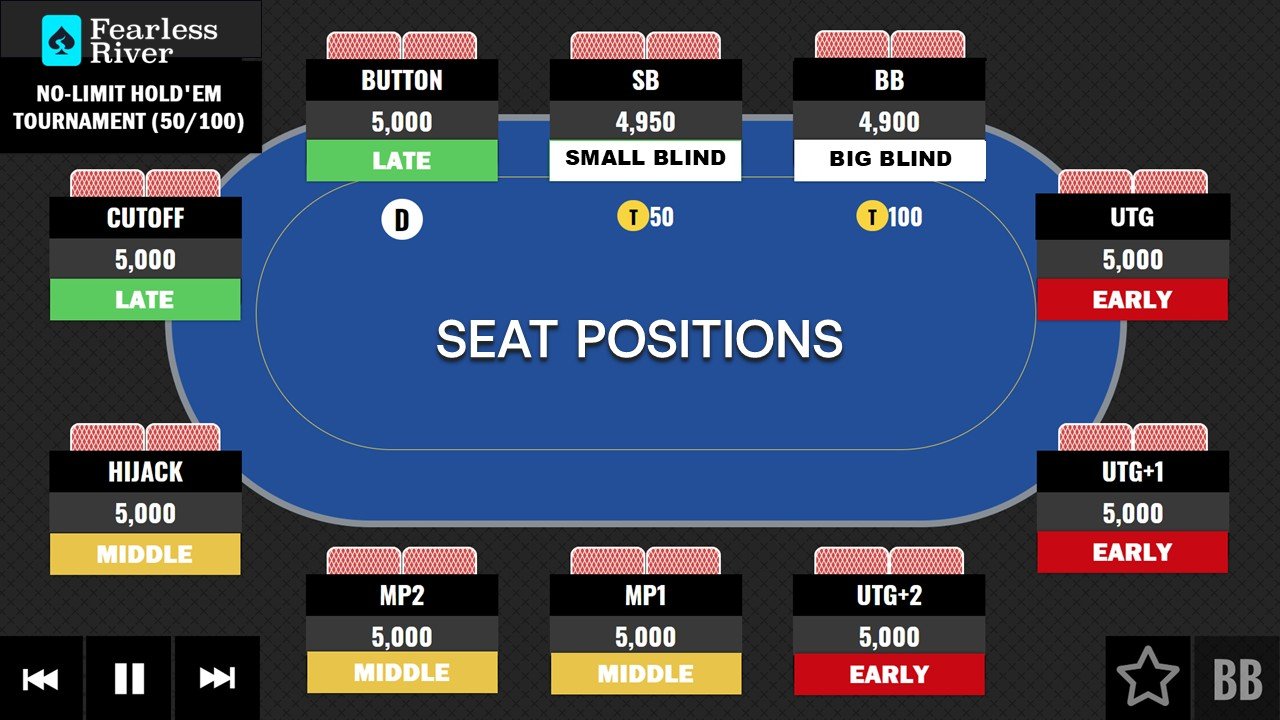
Position in poker means where you sit relative to the dealer button. The later you act in a hand, the more information you have when it is your turn. The player on the button acts last on every betting round after the flop, which makes it the best seat at the table.
Quick tips to remember:
- Early Position = play fewer hands
- Middle Position = play more hands
- Late Position = play even more hands
Always count backwards from the button to figure out where you are sitting. Later into your study we'll show you which hands you should enter the pot with depending on your seat position.
What Comes Next: The 5 Keys of Poker
Once you know the rules and basic game flow, poker stops being a memory test and starts being a decision-making game. Most new players get overwhelmed with what to do next because they think every hand feels like a brand-new problem with no obvious answer.
That's not the case. Experienced players are not memorizing thousands of situations. They are filtering every decision through a small set of core factors. We call them the 5 Keys:
- Position: Why acting last is the single biggest advantage in poker.
- First-In Hand Ranges: Which hands to raise with from each seat and how to adjust.
- Board Texture: How different types of flops, turns, and rivers affect your next move.
- Number of Opponents: Why multiway pots (pots with more than 1 opponent) require completely different thinking.
- Effective Stack Size: When stack depth calls for aggression and when it calls for control.
Get these five concepts right and you have a repeatable process for almost every decision you will face, from your first hand preflop to a river bet.
The 5 Keys training is free. You get five strategy videos, the First-In Hand Range charts download, poker quizzes, and training hands. No credit card, and you can unsubscribe any time.
Pro Tip: To build mental muscle memory for these concepts in real time, focus on the 5 Keys even when you are not in the hand. Watch what gets shown down, and you will start seeing patterns immediately.
Five Mistakes Almost Every New Player Makes
- Playing too many hands. Most starting hands are not worth playing. Folding is not passive; it is a decision.
- Calling first-in instead of raising. If a hand is good enough to put chips in with, it is usually good enough to raise with. Calling gives your opponents cheap chances to outdraw you.
- Changing bet sizes based on hand strength. Raising to 600 with aces and 400 with nines makes you easy to read. Stay consistent.
- Chasing every draw. Not every flush or straight draw is worth paying for. The rank of your flush cards, the size of the pot and the size of the bet decide that, not hope.
- Judging decisions by results. A good decision can lose the pot, and a bad one can take it down. Results in a single hand tell you almost nothing. Focus on the process.
Build a Study Routine from Day One
Improving at poker is not about playing more hands. It is about reviewing the hands you already played. The simplest version costs nothing: when you face a tough decision, write it down. Pen and paper is fine to start. What matters is capturing the same details every time so you can spot patterns later.
Here is a simple checklist of 8 questions for tracking a hand:
- ☐ What was my seat position at the table?
- ☐ What were the seat positions of my opponents?
- ☐ What was my chip stack to start the hand?
- ☐ What were the chip stacks of my opponents to start the hand?
- ☐ What were my 2 cards, specific rank and suit?
- ☐ What were the community cards, specific rank and suit?
- ☐ What were the specific actions in the hand? Which player opened the betting?
- ☐ Did my opponents show down their hand, and if so, what were the specific cards?
When you are ready to move past pen and paper, the Fearless River Hand Input Tool (HIT) lets you enter hands from your phone, replay them, and share them with our pros for feedback.
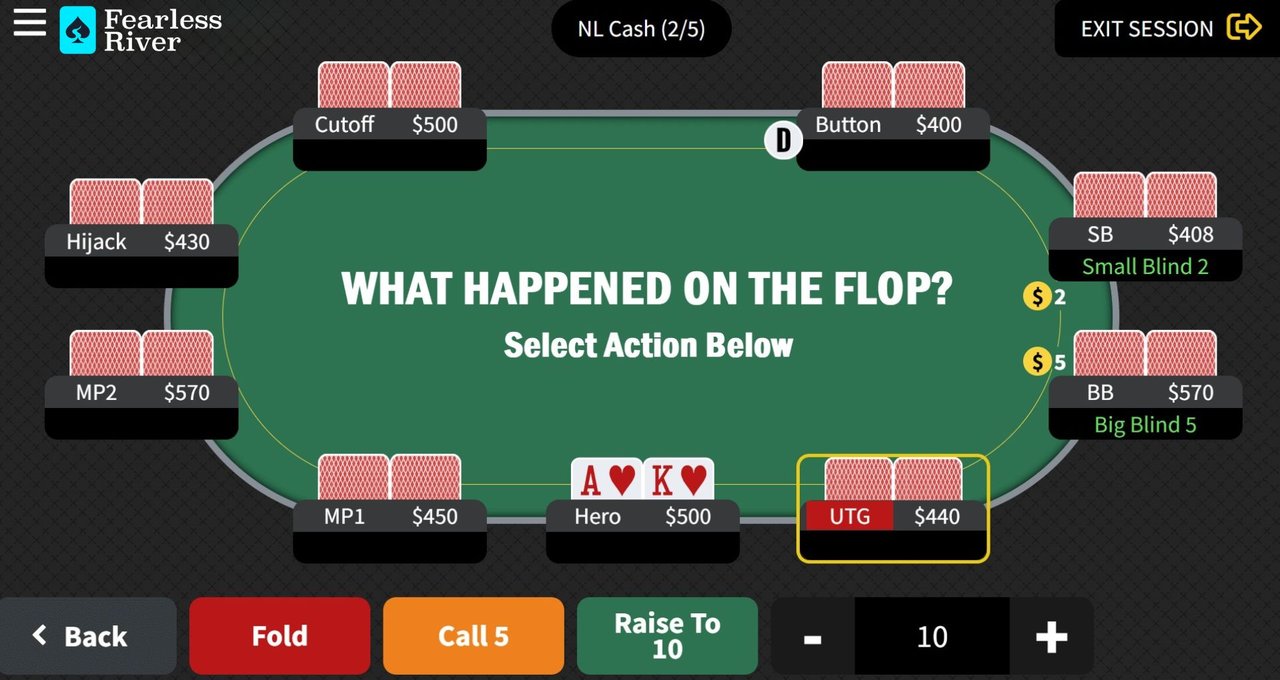
One rule when you review: focus on the range of hands your opponent could have had instead of putting them on a specific hand (like pocket jacks). Use the first-in hand range charts from the 5 Keys to guide you. Trying to put your opponent on a single hand is the fastest way to talk yourself into a bad decision.
Common Questions from New Players
Q: Do I need to memorize hand rankings before I play?
A: Yes, and it takes less time than you think. Hand rankings are the one thing that never change and you need instantly at the table. Download the free chart above and give it ten minutes.
Q: How much money do I need to start?
A: Start at the smallest stakes you can find, or play free games online while the rules sink in. There is no reason to risk money you care about while you are still learning the mechanics. Home games with your friends are also a great way to get started.
Q: Is poker mostly luck?
A: Over a single hand, luck decides a lot. Over the course of hundreds of hands, the quality of your decisions ultimately determines the outcome. That is the entire reason studying works and why you see the best players in the world constantly at the final table.
Q: Is Fearless River for beginners or experienced players?
A: Both. Our content is filterable by skill level: Foundation, Intermediate, and Advanced. You can train at the level that matches your game and skill level.
Q: Where should I start after this page?
A: The free 5 Keys training. It picks up exactly where this guide ends.
Ready to Keep Going?

We built Fearless River to make improving at poker as simple as possible, on your time and your terms. Small, consistent effort over time is the thing that separates students of the game from everyone else. Not talent.
➧ Start free. The 5 Keys training gives you five strategy videos, First-In Hand Range charts, and poker quizzes to test what you have learned.
➧ Ready for the full library? A Fearless River membership gets you 550+ strategy videos from WSOP Bracelet winners and WPT Champions, the GTO Trainer, live monthly study sessions, and the Ask a Pro Discord where you get your hands reviewed directly from our pros.
Your first month is $5. No contracts. Cancel anytime.
No matter how you choose to use Fearless River, there is a path for you to learn, improve, and have fun on your own time and your own terms.
Good luck and good playing,
– Team Fearless River
Find Your Flow. Train Smarter. Play Fearless.
Have questions? Email our support team at [email protected] or click the 'Contact Us' button and they will be happy to help.