You're Chip Leader in a Mystery Bounty Facing Multiple All-ins...
Chip Leader Mystery Bounty Facing Multiple All-ins

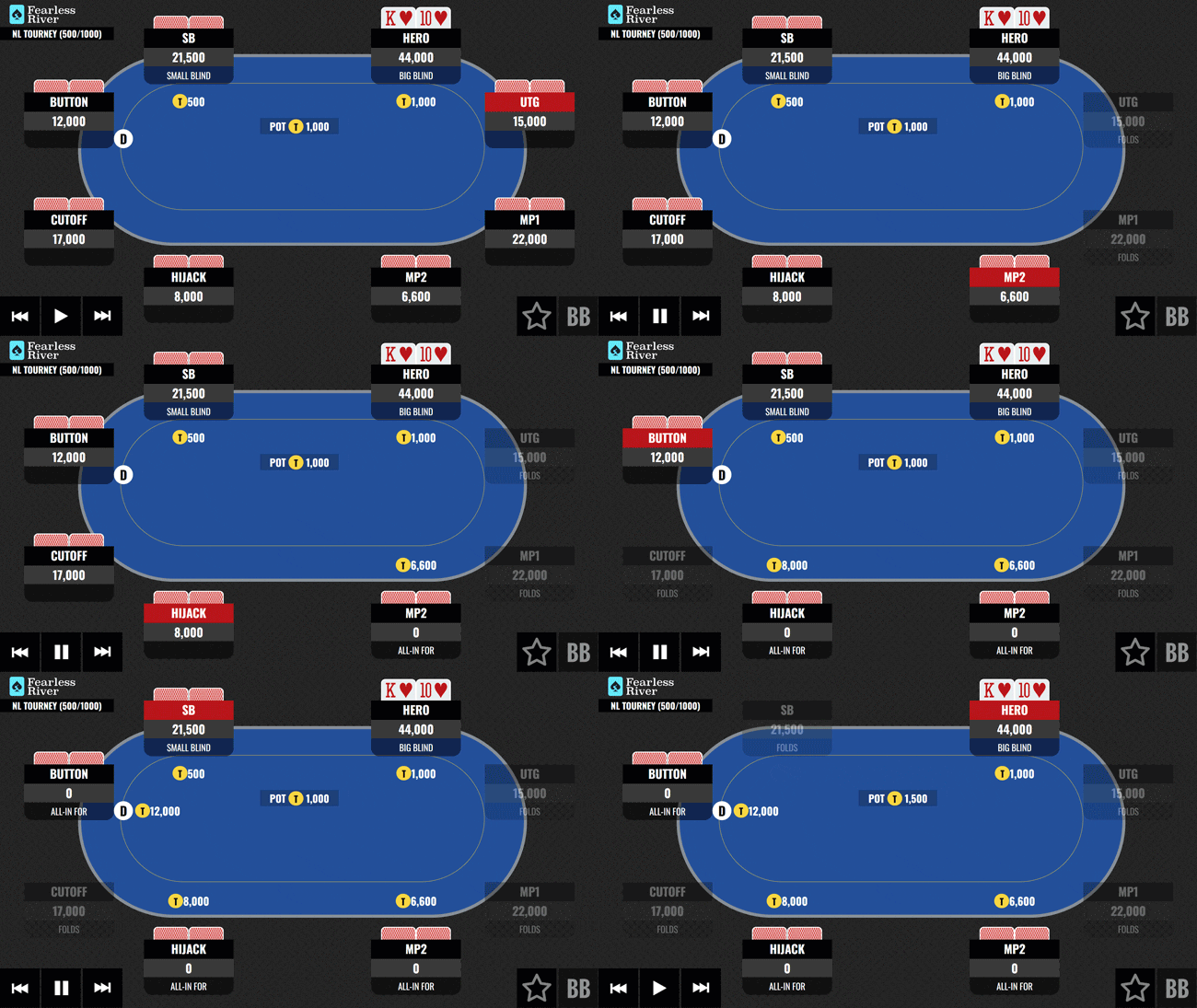
DECISION POINT: You're the chip leader with 46BBs in a large field $100 buy-in Mystery Bounty tournament with 40 players left (stacks ranging from 10BBs-20BBs) and $3,000 going to the winner. The larger bounties, which include one $3K bounty and two $2K bounties, have not been pulled. The blinds are 500/1,000 with a 1,000 big blind ante. Three players go all-in (Middle Position, Hijack, and the Button) and the Small Blind folds. Action is on you with K♥T♥ in the Big Blind. What do you do here?

Vote and see how your answer compares to other players 👇

PRO ANSWER: We're one of the final 40 players left in a large field $100 Mystery Bounty tournament. The blinds are 500/1,000 with a 1,000 big blind ante and we are the chip leader by a significant amount with 46 big blinds. Most of the players have 10-20 big blinds remaining.

None of the large bounties have been pulled at this point. Initially half the prize pool was put into the bounties and only smaller bounties and a few medium-sized bounties (2x buy-in) have been pulled so far. The average bounty payout has ballooned to $200, including one $3,000 and two $2,000 bounties still remaining, with winning first place in the tournament paying $3,000.

The action folds to the MP2 player who moves in for their last 6,600. The Hijack then moves all-in for 8,000. The Cutoff folds and the Button moves all-in for their last 12,000. The Small Blind folds and action is on us in the Big Blind with K♥T♥.

Mystery Bounty tournaments are very unique in that we must constantly be paying attention to the average potential bounty payout when making decisions. Many Mystery Bounty tournaments have top bounty prizes equal to (and sometimes greater than) taking first place, so positioning ourselves to collect bounties is very important. We’ve done an excellent job to this point accumulating chips so that we cover everyone at the table and maximize our chances to collect bounties.

Continued below ...

WSOP-Prep-Sale-staticad

When the largest bounties are collected early, the average bounty amount decreases significantly, and we should have the same approach as a traditional tournament with a scaled payout structure. With larger bounties still available, the value of knocking out a single player can be greater than the amount awarded for 1st place, meaning we should prioritize eliminating opponents rather than trying to win the entire tournament.

Analyzing this spot with a gto solver and assigning an average bounty value of $200, we should call with 61% of our hands in this scenario. Our specific hand, KTs, is fairly high up in that range. In addition, the stack sizes of the all-ins are relatively shallow compared to our stack, so we still have the table covered if we lose and can potentially collect a bounty or two even in worst-case scenarios.

Calling is the correct play.

How would you play it?
Share your answer in the comments below!


Will YOU Be Our Next Bracelet Winner?

Our students consistently crush the summer poker season, bringing home massive scores and achieving their poker dreams.
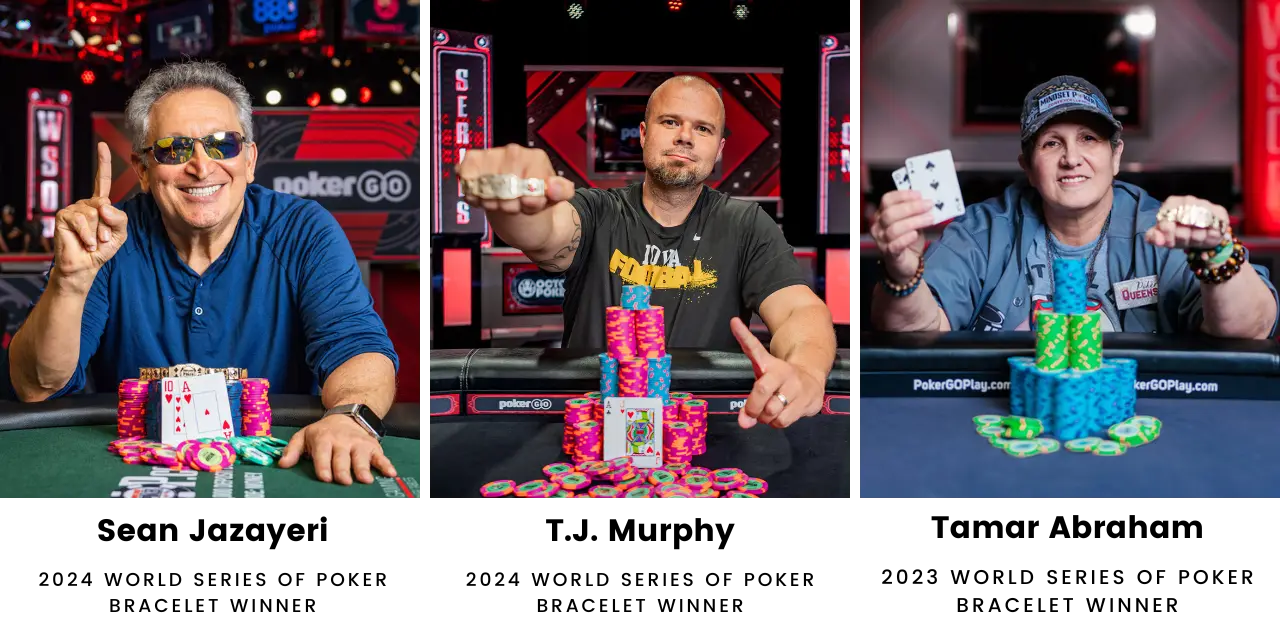
WSOP Success 2023 and 2024 - Sean-TJ-Tammy

In fact, in just the past few years alone during the summer in Vegas Fearless River Students have achieved:

🥇 4 WSOP BRACELETS
🏆 6 WSOP Final Tables
💪 1 Around Town Win
👏 9 Around Town Final Tables
💰 Over $1.7 Million in Cashes

Ready to be our next success story?

Become a FearlessRiver.com Member now for just $5 your 1st month and start preparing for your best summer yet.

Have Questions about Fearless River? Send an email to our Support Team at [email protected] or click the CONTACT US button.
Staying in Flow: Your WSOP 1-Day Prep Guide

WSOP-2026-Prep-Guide-1Day

Prep Time: 1 Day Before the Start of Your 1st Tournament

Your first WSOP event is 1 day away. The prep work is done, trust it. Today is about getting your logistics sorted, your mindset locked in, and making sure nothing off the felt gets in the way of your best poker.

We asked Team Fearless River to give us their best advice on exactly what to do the day before your first event in Las Vegas. We put one question to each of them:

❝ What advice would you give players when preparing for the WSOP based on the time before the start of their first event? ❞

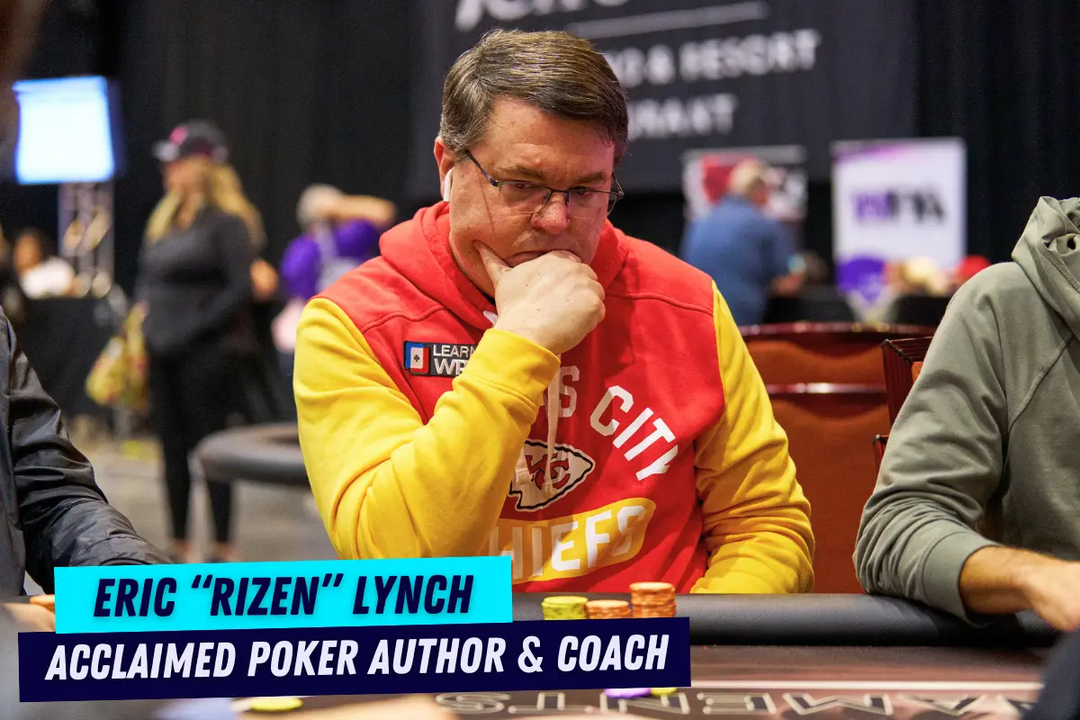
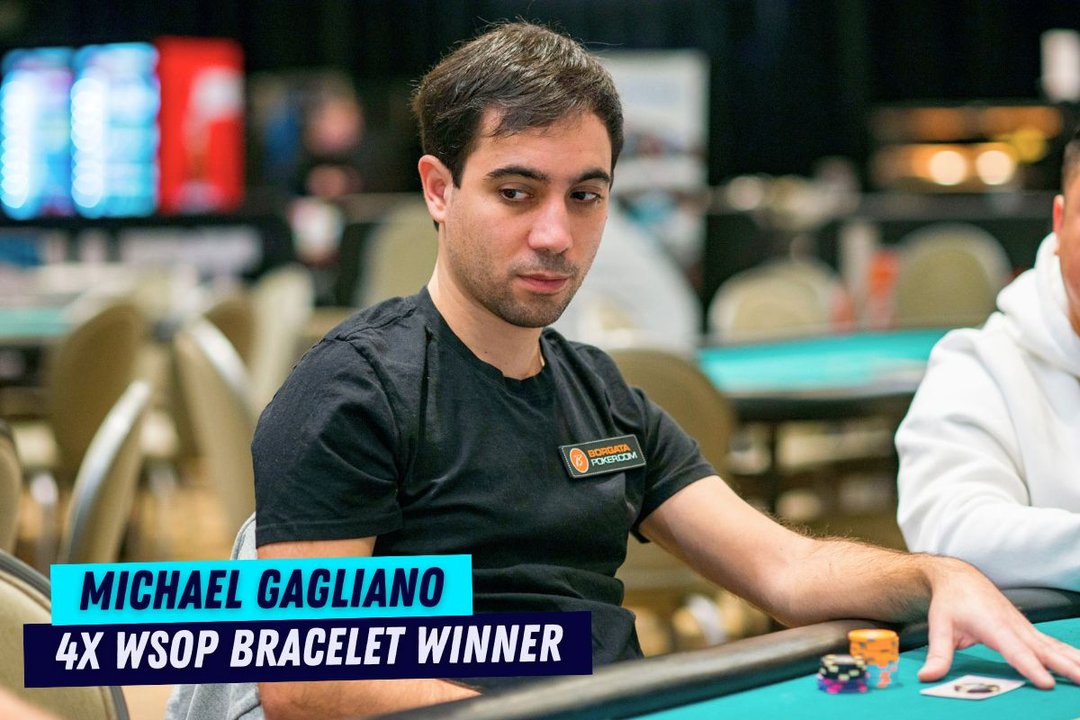
We've assembled their answers along with FREE videos, strategies, and tips plus expert advice from Tony Dunst, Michael Gagliano, Eric Lynch, and Johan Schultz-Pedersen to make sure you are ready to crush starting hand 1. ⤵

WSOP-2026-Prep-Guide-Fearless-River-Instructors

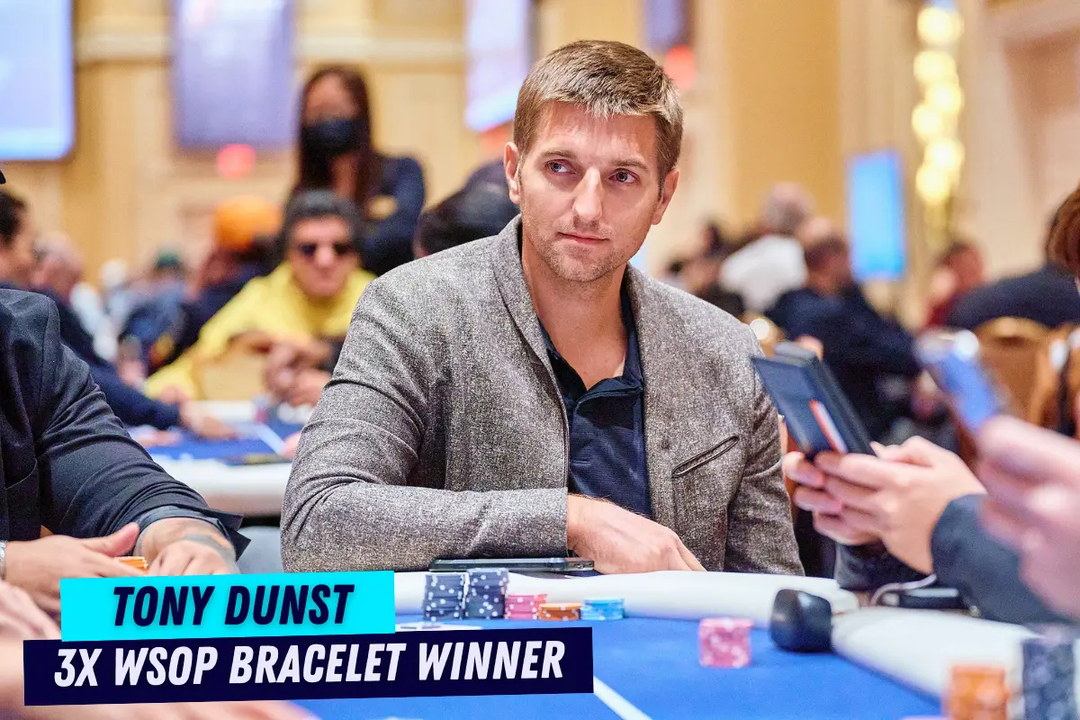
➧ Tony Dunst:

❝ I think the day before the event you want to get your logistics in order. Are you buying in that night and getting there for hand one, or will you late-reg the following day? Where are you eating in the morning? How long does it take to get from your place to the tournament? Did you leave enough time to get plenty of sleep? Did you pack a backpack with everything you’ll need for a 12 hour day of play? Is your phone charged? Think these things over so you’re not scrambling the day of the tournament and putting unnecessary stress on yourself. ❞

➧ Eric "Rizen" Lynch:

❝ Your preparation is done. Get the best rest you can and have your nutrition dialed in. Do everything you can to be your best self when the event starts. Go into the event with the expectations of doing well, but treat yourself with kindness if it doesn't. Good play isn't always rewarded, nor bad play always punished. Your mindset needs to be such that you expect you can win, but understand that even the best players bust out of events before the money around 80% of the time. Most of all, have fun. This is what you've prepared for, and as long as you show up and try to execute the best you know how, be proud of yourself. After the event, try to take away any lessons you can use for your next one. ❞

WSOP-2026-Prep-Guide-Eric-Lynch-blog

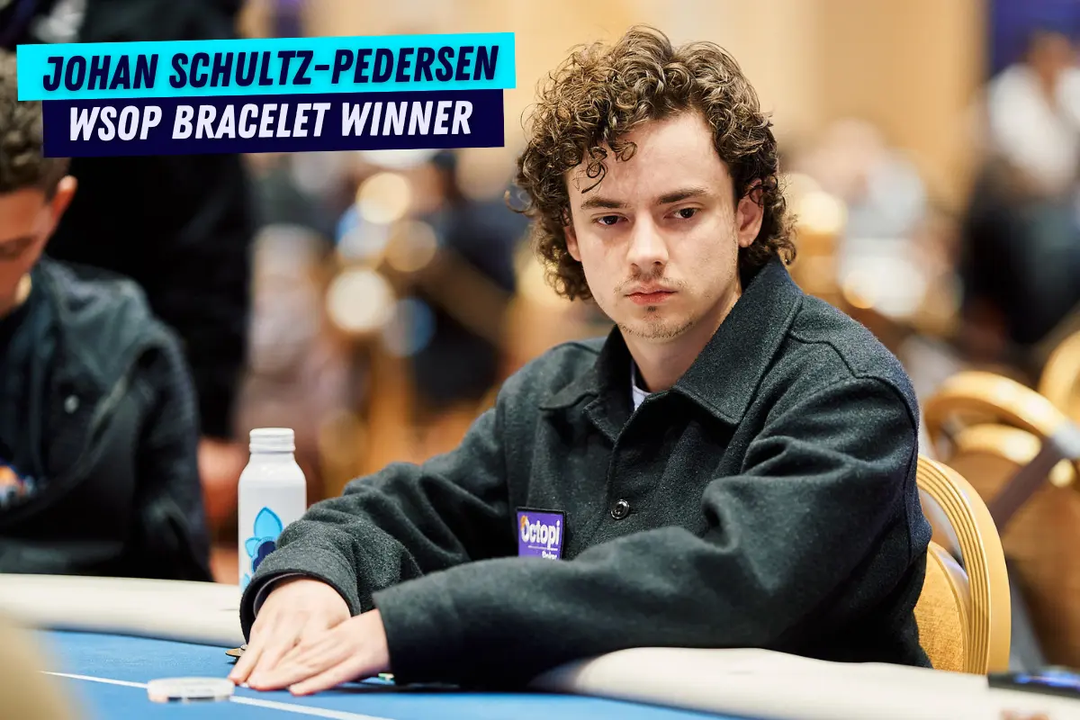
➧ Johan Schultz-Pedersen:

❝ My best advice for the day before your first tournament is to get a good night’s sleep. It can't be overstated how much of a difference good sleep makes when it comes to playing well and having fun at the table. ❞

➧ Michael "Gags30" Gagliano:

❝ It's nearly tournament time. Hopefully you're already in Vegas and have settled in. Now is a great time to check out the venue and make plans for the day of. Things to check for include:

➥ Find the place to register, if you plan to arrive on time the next day you may want to register the night before to avoid lines.
➥ You likely need a players card to play in the event, it may be good to get on the day before.
➥ See if you can find the structure sheet of the event. You often can find these online, but many venues also have printed copies. Note how often and what time breaks are going to take place.


➥ Note the locations of bathrooms near the tournament room. If there is one very close, take note of a second, as the primary bathroom is often overcrowded during the event. It can often save time to walk a little further to the less crowded bathroom.
➥ Find out the location of food options around the venue. Oftentimes you only have 15 minutes on break to use the restroom and also get food if you're hungry. If you waste 5 minutes trying to find a place that sells food then you have wasted most of your break. Also, make plans for your dinner break. If needed, make a reservation so you have a table waiting for you right at the time of break.

Final thoughts: Las Vegas during the summer is a fantastic time to play poker, but it can also sometimes be overwhelming or frustrating if you haven't properly prepared for your trip. Taking time beforehand to sort as many variables as possible so you can just focus on your strategy at the tables can be the make or break between a good trip and a bad one. Finally, making money is great, but try to enjoy yourself even if you don't. Enjoy the events, converse with your tablemates, and make the most of all that Las Vegas has to offer! ❞

WSOP-2026-Prep-Guide-Michael-Gags-Gagliano-blog-page


➧ What To Focus On Now:

With 1 day remaining prior to the start of your first event, it’s time to clear your schedule and prepare your mindset for peak performance and ready to execute. Make sure that any unresolved questions about your game are answered.

Watch below (Free, no membership required) as Nick Binger discusses the proper mindset to approach playing tournaments and why it is essential to play to win vs simply trying to survive:

New to structured study? Start with our free poker training to lock in the 5 Keys framework before you build your plan.

➧ Go Deeper: Create Your Feedback Loop

Having a trusted source to discuss strategy with is VITAL to your growth. Fearless River members have that feedback loop with our Pros through the WSOP or anytime!

If you're playing this summer keep track of any tough spots from your tournaments and get feedback from Team Fearless River anytime with these membership features:

➥ Jot down key details during play and after your session use the Hand Input Tool to store and share your hands for analysis.
Visit your HIT Dashboard

➥ Submit all of your questions about specific challenges directly to our Pros and receive in-depth feedback and answers in Discord.
Visit the members-only Ask a Pro Discord

➥ Join live Study Sessions to help focus your efforts, maximize your results, and talk poker or watch previous sessions.
Review all Study Sessions

Get quick fixes and strategy advice all summer long!

Not a member? Join for just $5 your 1st month and get instant access to the membership feedback loop features plus 550+ strategy videos and GTO Trainer spots to practice. No contracts, cancel anytime.


➧ WSOP Helpful Links and Info:

➥ 2026 World Series of Poker Full Series Information
➥ WSOP Tournament Schedule
➥ WSOP Bracelet Event Structures
➥ WSOP Satellite Schedule
➥ WSOP Daily Deepstacks Schedule
➥ Follow @KevMath and @WSOP on X for Daily Information
➥ PokerNews WSOP Hub
➥ The Guide to the 2026 Summer Las Vegas Poker Scene by Kim Unger for a great resource of events around Las Vegas
➥ Michael Gagliano's Summer Poker Calendar to build and save your own schedule. Get more info from Gags on the app.

📍 Getting Around the WSOP

Kevin Mathers is one of the most trusted resources in the poker world for WSOP information. He posted a detailed floor plan breakdown covering tournament start locations, daily deepstack and satellite venues, registration, payouts, safe deposit boxes, and other key services across Horseshoe and Paris (also available on the WSOP+ app). ➥ View on X

How to Register in Person or Online

All players must provide valid photo identification and a Caesars Rewards Loyalty card to register and a WSOP+ app account.

➥ WSOP Registration Information
➥ Download the WSOP+ App to pre-register for events and skip cage lines, make payments and get all the information about the Series.

Healthy and Quick Food Options

➥ Check out PokerOrg's: The best healthy places to eat on a break
➥ Or: Unhealthy Vegas food for your 2026 WSOP dinner break

➧ Watching from Home? Follow the Action Live

New this year, the WSOP will be host a free livestream each day on their YouTube channel for fans around the world. And ...


➧ Staying in Flow With Team Fearless River

WSOP-Prep-Guide-Stay-in-Flow-With-Fearless-River

We’ve got the strategies to help you play better poker this summer no matter how much prep time you have before your 1st tournament.

Did you miss any the previous Guides? Click below for more FREE tips and strategies:

➥ Prep Time = 60-Day Prep Guide
➥ Prep Time = 30-Day Prep Guide
➥ Prep Time = 7-Day Prep Guide
➥ WSOP 2026 Prep: All 4 Guides in One Place


➧ This Is What You Trained For

HAVE FUN! Playing a large tournament series like the WSOP is why you put in the hard work studying. Now it's time to relax, have fun, and enjoy. Even if you don't win your 1st bracelet, enjoy the process and the game we all love.

However, if you DO win your 1st WSOP bracelet, make a deep run, or cash in a tournament around town, let us know.

We love celebrating Student accomplishments, and they've been consistently crushing the Summer Poker Season. In fact, we’ve helped Fearless River students achieve:

🥇 4 WSOP BRACELETS
🏆 6 WSOP Final Tables
👏 9 Around Town Final Tables
💰 Over $1.7 Million in Cashes

WSOP-Success-TJ-Tammy-Sue-Sean

This is why we teach, and this is why you play!

Remember to share your successes with us and we'll highlight your achievements on our upcoming blog. Tag us on social media with your results from the felt or email [email protected].

X @_FearlessRiver | Facebook @fearlessriver | IG @fearlessriver

And if you see any of Team Fearless River, stop and say Hi!

Good luck and good playing,
- Team Fearless River

Have Questions about Fearless River? Send an email to our Support Team at [email protected] or click the CONTACT US button.


Fearless River logo - Stacked

Find Your Flow. Train Smarter. Play Fearless.
www.fearlessriver.com

You're Out of Position With A♦T♦ Vs a Pro at the WSOP...

Out-of-Position-AT-Vs-Pro-WSOP

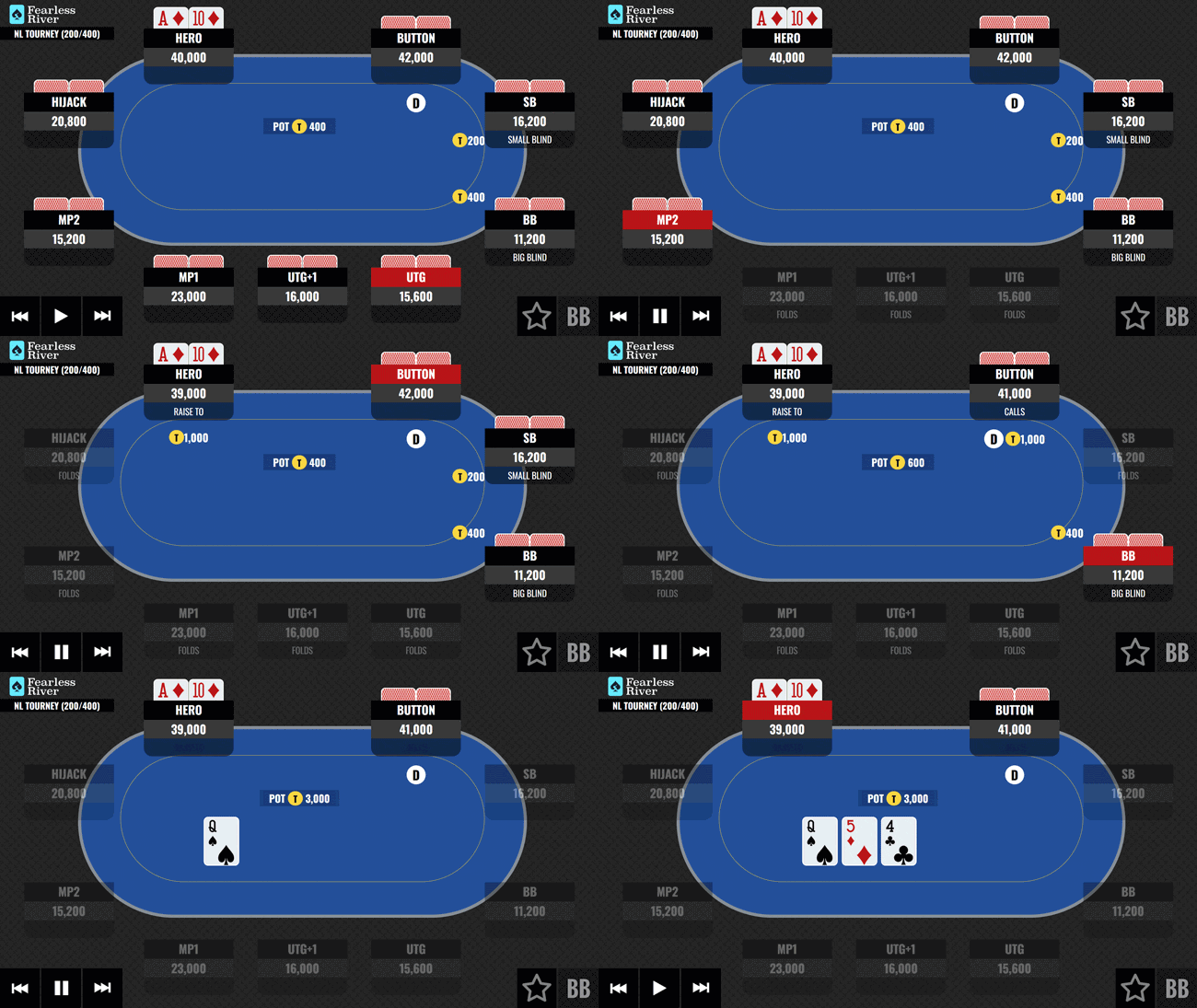
DECISION POINT: You're in the early stages of a World Series of Poker multi-day tournament with late registration and reentry still open. The blinds are 200/400 with a 400 big blind ante. Most players have around 50 big blinds, and you’ve worked your stack up to 100BBs. Action folds to you in the Cutoff with A♦T♦ and you make a standard raise to 1,000. The Button, who is an accomplished Pro and has a 105BB stack, calls. The flop comes Q♠5♦4♣ and action is on you. What do you do here?

PRO ANSWER: We're playing a multi-day event at the World Series of Poker. The tournament is in level 2 with late registration still open and players are allowed to reenter until the end of level 8. Most players have around 50 big blinds, but we’ve managed to work our stack up to 100BBs. The Button is a very studied professional poker player. The blinds are 200/400 with a 400 big blind ante and we are dealt A♦T♦ in the Cutoff. The action folds to us and we make a standard raise to 1,000. The Button decides to call and both Blinds fold. The flop is Q♠5♦4♣ and we are first to act.

The primary driver of continuation betting frequency on the flop is range advantage. Many players incorrectly believe that being the preflop raiser gives them a range advantage on dry boards like this one. Position is a key factor to consider in c-betting spots. Had we raised in Early Position instead of the Cutoff, we certainly would have a range advantage against the Button on this board. However, in this specific situation, we have a wide uncapped range and our opponent has a significantly narrower range that is capped and condensed.

Reviewing this spot in a solver as a part of post-hand analysis, we see that the Button defends with less than half as many hand combinations as we raise with from the Cutoff (215 vs. 450) and has a slight range advantage (51% vs. 49%) on the flop before any action takes place.

Continued below ...

WSOP-Prep-Sale-staticad

This dynamic occurs most frequently in Cutoff open vs Button call and Small Blind vs Big Blind scenarios. When facing skilled and aggressive players who are capable of utilizing their position appropriately in these spots, we should check the flop quite frequently. In fact, based on the solver results, the Cutoff checks with the entire range around 85% of the time. While the Cutoff is often taking a passive line on the flop, it’s crucial to note that checking here doesn’t mean giving up. We should be checking some of our big hands to protect our checking range and add check-raises with some strong value hands and bluffs such as A2s/A3s on this particular board. Check-calling on the flop also makes up a portion of our strategy, particularly against smaller bet sizes.

If our opponent on the Button were a more passive recreational player in this spot, the strategy would change significantly. There would be more merit to betting because a passive opponent is like to call preflop with a much wider range, negating the range advantage a more narrow and condensed range has on this board. Recreational opponents are also far less likely to float and raise the flop with the appropriate tendencies to discourage us from continuation betting.

Against tougher players it’s very important to recognize these spots as high-frequency checks, or we will quickly bleed chips to good players who utilize position well.

Checking is the best play.

How would you play it?
Share your answer in the comments below!


Will YOU Be Our Next Bracelet Winner?

Our students consistently crush the summer poker season, bringing home massive scores and achieving their poker dreams.

WSOP Success 2023 and 2024 - Sean-TJ-Tammy

In fact, in just the past few years alone during the summer in Vegas Fearless River Students have achieved:

🥇 4 WSOP BRACELETS
🏆 6 WSOP Final Tables
💪 1 Around Town Win
👏 9 Around Town Final Tables
💰 Over $1.7 Million in Cashes

Ready to be our next success story?

Become a FearlessRiver.com Member now for just $5 your 1st month and start preparing for your best summer yet.

Have Questions about Fearless River? Send an email to our Support Team at [email protected] or click the CONTACT US button.
Poker Bankroll Management: A Complete Guide

Poker bankroll management guide

When it comes to playing poker, there are many poker strategies and practices that can help improve your game. The more attention you pay to every aspect of your game that can be improved, the better your results can be in cash games and poker tournaments.

One of the key concepts in playing successful poker is bankroll management. In this guide, we'll give you solid guidelines for managing your bankroll, outline its tools and principles, and show you how to use it as a poker player.

What Is Poker Bankroll Management?

Poker bankroll management is a money management strategy based on statistical probability and skill level, and it's an essential part of playing poker for recreational and professional players alike. With bankroll management, you can reduce your risk of ruin by keeping your losses in check against your gains.

➧ What Is a Bankroll? Money set aside only for poker, separate from what you use for everyday life.

Having a dedicated bankroll offers a lot of advantages. If you play poker out of your everyday money, that can create a lot of problems, and you'll only go so far with your poker career if you keep playing that way. Having a dedicated bankroll offers many advantages.

Poker bankroll money is a little different from everyday money. Think of it as a tool you'll use to make more money and work your way up in stakes. When you separate your bankroll completely, you set it apart from the money you use for your mortgage, car or dinner out. Treat your bankroll as an investment in your poker career and growth.

When you keep a proper bankroll, you don't have to worry about the normal ups and downs that happen naturally because of variance. A proper bankroll can help you survive the inevitable downswings that come with playing poker over time.

➧ What Is Risk of Ruin? Your chance of losing your entire bankroll.

A good way to manage your bankroll is to physically separate it from your everyday money. Many card rooms and casinos offer safety deposit boxes, which are a good place to keep your poker bankroll. This keeps it away from your everyday money, and you'll feel safer not having to travel to and from the card room or casino with cash on you. If you play online, a separate bank account works the same way.

Watch the full lesson in Episode 5.

How Big Should Your Bankroll Be?

When playing poker, it's essential to always know the size of your bankroll. If you don't have a specific amount of money set aside for poker, how can you decide which games are worth playing?

Which games are worth playing with your available bankroll depends on whether you are a professional player or not. Professional players often have a target income and will choose the stakes that allow them to most reliably earn a specific hourly rate. Recreational players should set aside a percentage of their entertainment budget to invest in playing poker.

Although it may be tempting to jump into bigger games right away given the potential reward, it's much more enjoyable, and puts much less stress on your game, to stick to bankroll management rules.

Whether you are a top professional or new to the game, keeping track of your cash game sessions, tournament buy-ins and results is important to making good decisions with your poker bankroll.

How Long Until You Know Your Results?

After you've played several cash games and tournaments and have a good sample size to compare, it may seem like your game is ready to move up against tougher competition. So how can you make sure you're prepared?

Many players wonder how long it will take them to become better players, and how much time it takes to reach the long run when evaluating their ability at the table. There are several factors that go into playing better poker. However, improvement will mostly depend on how often you practice and how hard you work. If you practice every day, you'll likely make faster progress than someone who works on their game for only one hour a week. As long as you create a consistent study routine, you are on the right path to becoming a better poker player.

It takes time to reach the long run in poker, and that time is different for cash games and tournaments. For cash games, after around 20,000 hands, or roughly 700 hours of live play, you'll start to get a meaningful read on whether you are a winning, break-even or losing player.

In tournaments, variance is much higher, and it also depends on how big the fields are in the tournaments you play. After about 1,000 tournaments, you should have a good sense of what your skill level is and your profitability.

Bankroll Rules for Cash Games & Tournaments

Having a proper bankroll allows you to focus on decision-making at the table without the pressure of playing above your budget.

If you want to progress as a poker player, you'll have to start thinking long term instead of short term. Don't get overly emotional about a good or bad result in any single hand. Focus on improving your decision-making process. In addition to studying Fearless River Strategy Episodes, taking notes and discussing strategy with players you trust, bankroll management is one of the most effective ways to gain consistency in your game. Let's see how.

If you are just starting out in poker, it's important that your bankroll is healthy and big enough to allow for growth and learning.

Watch the full lesson in Episode 263.

You may see different guidelines for the right number of buy-ins to keep in your bankroll. To keep your risk of ruin low in cash games, budget at least 50 buy-ins for the level you are playing. For proper tournament bankroll management as a professional, you should never risk more than 1% of your bankroll on any given tournament. In other words, have at least 100 buy-ins for the tournament level you play.

Keep in mind these amounts are for pro players who can't replenish their bankroll and need to stay in the game to make a living. As a recreational player, you can be a little less strict, but you should still have at least 25 buy-ins for the level of cash games you are playing.

Bankroll Guidelines at a Glance

Player Type Cash Games Tournaments
Professional50+ buy-ins100+ buy-ins
Recreational25+ buy-ins25-50 buy-ins

Example: A $1/$2 Bankroll

Let's look at an example of how bankroll management breaks down for the recreational player. If you play $1/$2 no-limit cash games and usually buy in for $200, you want to keep at least 25 buy-ins of $200 in your bankroll. That means $5,000 set aside solely to play poker.

Example: A $1/$2 Bankroll

Typical buy-in: $200
Recreational (25 buy-ins): 25 x $200 = $5,000
Professional (50 buy-ins): 50 x $200 = $10,000

Maybe right now you can't set that much aside for poker, but you can work toward the goal of having an appropriate bankroll. That's why having a bankroll is so important: it can help your poker career or hobby become self-sustaining. You won't have to take money out of your paycheck or from anywhere else to play.

A 25 buy-in bankroll helps minimize your risk of ruin, otherwise known as your chance of going broke. The further you drop below 25 buy-ins, the higher your risk of ruin. In the same way, going above 25 buy-ins for the level you play reduces your risk of ruin even further.

When to Move Up, Move Down or Cash Out

Let the Numbers Decide

The best feature of bankroll management is that the number of buy-ins in your bankroll tells you when to move up or down in stakes, which takes the emotion and uncertainty out of one of poker's toughest decisions.

While it may seem discouraging, it's very typical to move up and down in stakes regularly to keep an appropriate bankroll.

This is why you shouldn't simply take money out of your bankroll whenever you feel like it. Ideally, your bankroll should be between 45 and 60 buy-ins before you even consider taking money out for everyday expenses or to treat yourself. A conservative bankroll strategy gives you the best chance to reach your goals and move up in levels.

To follow a more conservative strategy, split your profits each month: take a percentage out for life expenses and leave the rest to keep growing your bankroll. The typical split is 50-50. If you made $2,000, you'd take $1,000 out for yourself and leave $1,000 in your bankroll.

This is a key skill that separates amateurs from professionals. Many professional players with poor bankroll management skills are no longer able to make a living from poker. If you want to be successful over the long term, bankroll management is essential.

How Tilt Affects Your Bankroll

Another crucial skill that can help (or hurt) your ability to grow a bankroll is managing your emotions. When emotions guide us, it's often difficult to make clear decisions. Tilt is a big part of playing poker. It can happen when you're running bad, feel a sense of injustice or focus on bad luck, and many highly competitive people experience hate-losing tilt. Sometimes you'll tilt because you think you made a mistake, are overconfident, feel like you deserve to win or are motivated by revenge.

Tilt happens in everyone's game, but if you don't address it, it can have a dramatic effect on your ability to manage your bankroll.

Watch the full lesson in Episode 146.

What's the connection between tilt and bankroll management?

We've all likely experienced winner's tilt, otherwise known as overconfidence. When you start winning and it feels almost impossible to lose, you completely discount the possibility of making mistakes. Often this leads to studying less and not working as hard as before, while hyper-focusing on winning the next game you play.

When you go through a long winning stretch, it's easy to make poor bankroll decisions and move up in limits too quickly. You might buy into a tournament above your bankroll or skill level, or spend a lot more money outside the game than usual, which can lead to financial pressure later. Instead, use bankroll management to set limits when you could be emotionally at risk, and let your long-term goals guide you, not winner's tilt. Combined with consistent study, proper bankroll management gives your bankroll the best chance to grow and puts you in position to move up to bigger cash games and tournaments.

Poker bankroll management is a critical skill that lets you stay focused on executing your game plan, instead of worrying about the money at stake in any one tournament or cash game session.

Bankroll Management Tools

Bankroll tools can be handy in developing a routine and consistent process for managing your poker bankroll. Luckily, you don't need a pen and paper. There are many tools available, including mobile apps for Android and iOS and web-based tools on your computer.

➧ Bankroll management tools help you visualize your progress. Many apps include charts you can filter by game type, location and blinds. They make it easy to track how much you're making and investing, so you can build confidence and adjust quickly to the current state of your game.

➧ You can also track your bankroll in Google Sheets or Microsoft Excel. If you're creating your own tracking spreadsheet, make sure to include the following details:

  1. Date of the game or tournament
  2. Game type and stakes
  3. Total buy-ins (including rebuys and add-ons)
  4. Hours played
  5. Total amount won or lost
  6. Dealer tips
  7. Other expenses (meals, travel)

Poker can be a rewarding hobby, but there are pitfalls if you don't approach the game with a sound strategy for managing your money. Keeping a separate bankroll allows for better decision-making and perspective when you play. Proper poker bankroll management lets you treat your chips as a tool to invest, and frees you up to learn and grow by making objective decisions at the table.

How to Grow Your Bankroll

Now that we've walked through poker bankroll management for cash games and tournaments, let's review three tips for using your winnings to both grow your bankroll and reward yourself for your disciplined efforts.

How to Split Your Winnings

➧ 50% back into your bankroll. Whether you play professionally or recreationally, investing a healthy share of your winnings back into your bankroll helps secure your poker future.

➧ Up to 20% to enjoy. What else are you working for if you can't take some time to celebrate? Use it to have fun and treat yourself.

➧ Up to 30% towards savings and other goals. Put it toward other hobbies, investments or just the bank. Investing in projects you enjoy outside the game might motivate and inspire you to become an even better player.

Bankroll management strategies vary from player to player and depend on each person's financial situation. These guidelines are here to help you enjoy the game of No-Limit Texas Hold'em.

To learn more about poker bankroll management, get advice from pro players and work on every other part of your game, become a Fearless River student for just $5 your first month of membership.

Good luck and good playing,
Team Fearless River


Improve Your Game Today!
Join Fearless River and Get:

Fearless-River-Multiple-Devices

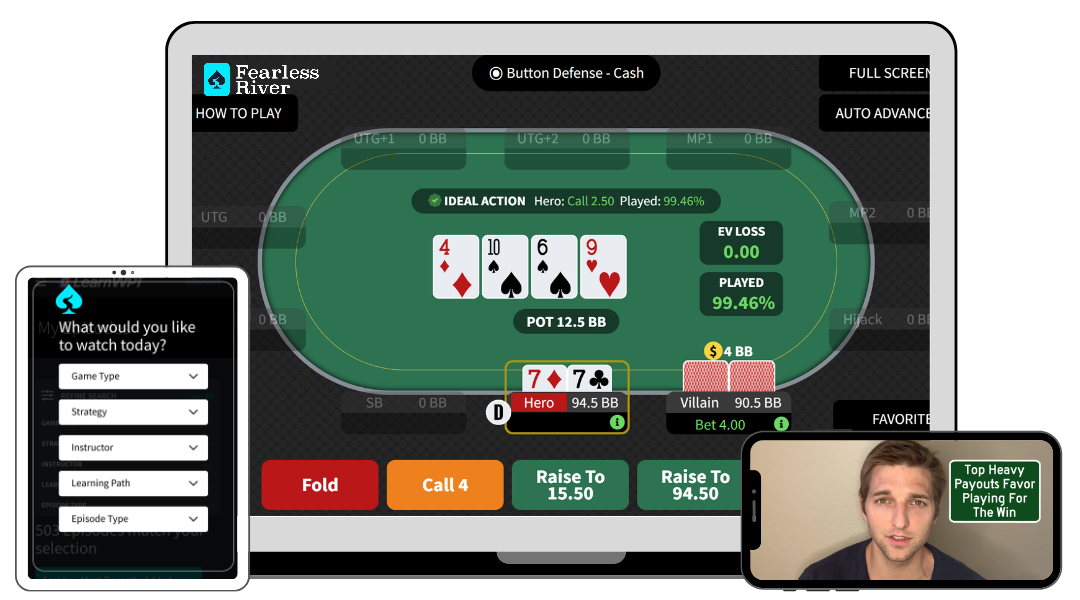
  • The GTO Trainer to play real solved hands and get instant feedback on YOUR leaks (over 4 BILLION solved spots!)
  • On-demand access to our full library of 550+ (and growing) in-depth Strategy Episodes from world-class players
  • All of your poker questions answered with the Ask a Pro Feature
  • Downloadable Tools you can use away from the tables


To join (just $5 your 1st month) click the button below and start improving your game!


Have Questions?
Email us at [email protected].


Staying in Flow: Your WSOP 7-Day Prep Guide

WSOP-2026-Prep-Guide-7Day

Prep Time: 7 Days Before the Start of Your 1st Tournament

Your first 2026 WSOP event is one week away. The time for big strategy changes is over. Now it's about sharpening execution, locking in your mindset, and showing up ready to play your best poker from hand 1. Here's exactly how to do it.

We asked Team Fearless River to give us their best advice on how to prepare your poker game to stay in flow all summer in Las Vegas. We put one question to each of them:

❝ What advice would you give players when preparing for the WSOP based on the time before the start of their first event? ❞

We've assembled their answers along with FREE videos, strategies, and tips plus expert advice from Tony Dunst, Michael Gagliano, Eric Lynch, and Johan Schultz-Pedersen to make sure you are ready to crush starting hand 1. ⤵

WSOP-2026-Prep-Guide-Fearless-River-Instructors

➧ Tony Dunst:

❝ While you should continue the study habits you’ve built up in the week leading up to the tournament, this is a good time to think about preparing your body for the grind of tournament poker. Above all that means getting on the right sleep schedule for playing from noon to midnight PDT. So if you live on the East Coast and are early to bed, you need to start staying up later and sleeping in so you’re not exhausted during the late hours of play in Vegas. The highest EV decisions of your poker day are made latest at night, so it’s crucial that you’re alert during those hours. ❞

➧ Eric "Rizen" Lynch:

❝ At this point, you really shouldn't be looking into anything new and just really solidifying the things you've already studied. Executing a good game plan very well is FAR better than executing a perfect game plan poorly, so at this point, you should really trust what you've been studying, and all your attention should be focused on taking the skills you already have and maximizing your ability to execute them flawlessly. Focus on getting good sleep and nutrition, and just maximizing your ability to be the best version of yourself. ❞

WSOP-2026-Prep-Guide-Tony-Dunst-blogpage (2)

➧ Johan Schultz-Pedersen:

❝ Try to exercise regularly leading up to the series, especially if you plan on playing long sessions. This will help with both concentration and fatigue. ❞

➧ Michael "Gags30" Gagliano:

❝ Hopefully by now you've spent some time working on your game and planning what you're going to play. Take any final looks over your strategy or any charts you've been studying, but don't try to make any large adjustments at this point. Your game is what it is, and you want to try your best to execute well in the moment, not have to craft an entirely new strategy based on something you just learned the week before. Now is the time to make sure you have all your logistics for your trip in order. Are you flying to Las Vegas? Make sure you're packing everything you'll need. Days at the poker table can be long; make a list of what you'll need while you play. I recommend a small bag you can carry with you to hold some snacks, water, headphones if you wear them, a charger for your phone, a sweatshirt in case you're cold (it might be 115 degrees outside, but those poker rooms can get cold), and anything else you may want while you're playing. You're going to need some money to buy into whatever tournaments you're playing. How will you get cash in Vegas? If you plan on going to the bank beforehand, now is a good time to do so. Many banks have limited hours and if, for example, you're flying out early Monday your bank might not be open the day before. Get your funds set now so you don't have to worry about that right before the tourney. ❞

WSOP-2026-Prep-Guide-Johan-Schultz-Pedersen-blog


➧ What To Focus On Now:

1 week prior to the start of your first event it’s crucial to ensure that any critical leaks are plugged and start shifting focus to execution.

Watch Below: Pregame Warm-up (Free, no membership required). Mental Game Coach Jared Tendler provides the building blocks for an efficient tournament poker pregame warm-up and describes why it is essential for growth in your game.

➧ Go Deeper: Members-Only Strategy Episodes

With one week to go, use these Episodes to sharpen your mental game and execution. Members can log in and watch anytime:

Your strategy is set — now it's about execution. Jared Tendler shows you how to stay locked in and mentally sharp when it matters most.
➥ Episode 84: Focus With Jared

Learn how to use aggression on the bubble in a tournament to help improve your chances of accumulating chips and maximize your ROI.
➥ Episode 61: Bubble Play

Chris Wallace introduces and outlines the fundamentals of his world-class short stack strategy.
➥ Episode 168: Short Stack Play

➥ Episode 293: Pregame Warm-Up With Jared (Watched Above)

Not a member yet? Join now for just $5 your 1st month and get instant access to all these episodes above plus 550+ strategy videos and 45 GTO Trainer spots to practice. No contracts, cancel anytime.

➧ Quick Review Checklist: 7 Days Out

Use this final week to review the concepts that come up most frequently at the tables. Don't learn anything new, just sharpen what you already know:

☑ First-In Hand Ranges: Review your opening ranges from each position before you arrive
☑ Big Blind Defense: Know which hands to defend and which to fold facing a raise
☑ Continuation Betting: When to fire and when to check based on board texture
☑ 3-Bet Pots: Have a clear plan for how you play both as the 3-bettor and the caller
☑ Short Stack Play: Brush up on sub-30BB strategy since you will face this in every tournament
☑ ICM Awareness: Near the bubble and at final tables, understand how stack sizes affect your decisions


➧ Summer in Vegas Helpful Links and Info:

WSOP-Prep-Guide-Stay-in-Flow-With-Fearless-River

➥ 2026 World Series of Poker Full Series Information
➥ WSOP Tournament Schedule
➥ WSOP Bracelet Event Structures
➥ WSOP Satellite Schedule
➥ WSOP Daily Deepstacks Schedule
➥ Follow @KevMath and @WSOP on X for Daily Information
➥ Kevin Mather's Getting Around the WSOP
➥ PokerNews WSOP Hub

➥ Michael Gagliano's Summer Poker Calendar to build and save your own schedule. The calendar includes all information including links to structure sheets. Find out more here.

➥ The Guide to the 2026 Summer Las Vegas Poker Scene by Kim Unger for a great resource of events around Las Vegas

➥ If you're playing any WSOP events this summer, it can be hard to find something to eat quickly during a tournament break. Somewhere healthy? Even tougher. Poker-playing fitness coach TJ Jurkiewicz put together a guide with an overview of the best options within walking distance of the Horseshoe and Paris Casinos you can easily reach on a dinner break. You can sign up for TJ’s free comprehensive free guide here.


➧ Staying in Flow With Team Fearless River

We’ve got the strategies to help you play better poker this summer no matter how much prep time you have before your 1st tournament. Click below for more FREE tips and strategies:

➥ Prep Time = 60-Day Prep Guide
➥ Prep Time = 30-Day Prep Guide
➥ Prep Time = 1-Day Prep Guide
➥ WSOP 2026 Prep: All 4 Guides in One Place

If you are a member of the Fearless River family and will be here in Las Vegas for the World Series of Poker, we want to cheer you on! Let us know what you are playing or share your success at the table. Tag us on social media or email [email protected] with your photos and updates from the felt.

X @_FearlessRiver | Facebook @fearlessriver | IG @fearlessriver

Good luck and good playing,
- Team Fearless River

P.S. If you are new to poker or structured study, start with our free poker training focused on the 5 Keys you should be thinking about every time you play a hand.


Fearless River logo - Stacked

Find Your Flow. Train Smarter. Play Fearless.
www.fearlessriver.com

Have Questions about Fearless River? Send an email to our Support Team at [email protected] or click the CONTACT US button.
Poker Quiz! Turned a Straight on a Highly Coordinated Board ...

Turned-Straight-on-Flush-Draw-Board

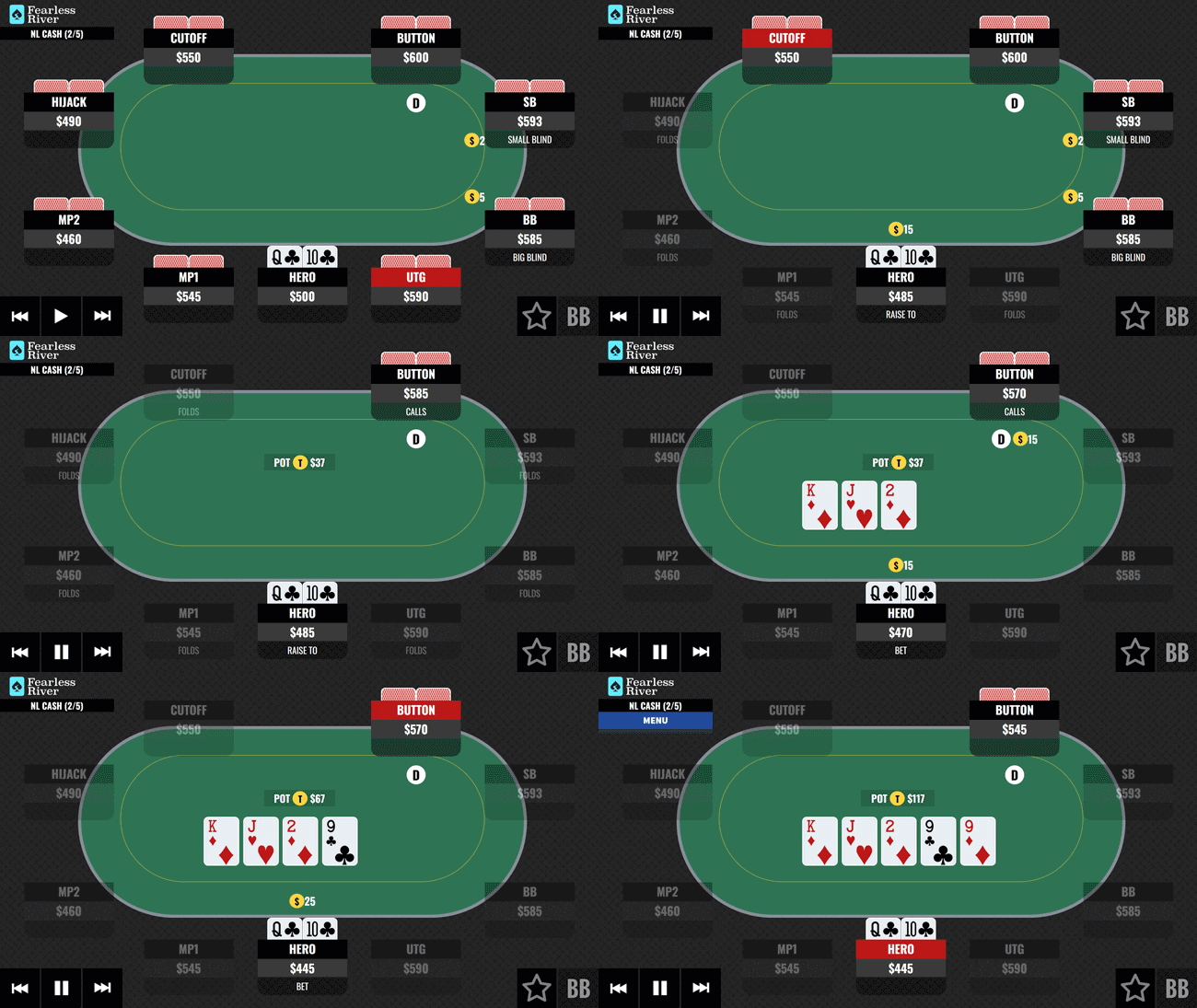
DECISION POINT: You’re in a live $2/$5 cash game that recently started. In early position you raise to $15 with Q♣T♣ and only the Button calls. You continuation bet $15 on the K♦J♥2♦ flop and get called. On the 9♣ turn you bet $25 and your opponent calls. The river is 9♦ and action is on you. What do you do here?

Vote and see how your answer compares to other players 👇

PRO ANSWER: We are playing in a $2/$5 game at our local casino. The game has recently started, and we don’t have any significant reads on our opponents. We are dealt Q♣T♣ UTG+1 and the UTG player folds. QTs is well within our first-in hand range in early position, so we make a standard open to $15. Everyone folds to the Button who flat calls, and both Blinds fold.

The flop is K♦J♥2♦ and we have an open-ended straight draw. On this flop the early position raiser has a significant range advantage and wants to bet frequently. Since we want to continuation bet our entire range, a smaller size is preferred. We bet $15 and the Button calls.

The turn is the 9♣ and we hit our straight draw. Our opponent called an early position raise preflop from the Button, which should represent a fairly condensed range consisting mostly of middle pairs, some suited broadway hands, and some suited Ax hands. We can assume that hands that continued on the flop connected with the board in some way, so the Button’s likely range on the turn is composed of flush draws, Kx/Jx/TT/T9s and QTs.

One big mistake many players make is becoming fixated on pricing out draws whenever they have a strong hand with draws present on the board. While that is a factor, we also need to be concerned about maximizing value against our opponent’s most likely range. Hands like KTs or QJs are unlikely to call a really big bet but are likely to continue against a half pot sized bet while drawing extremely thin. We elect to bet $25 and the Button calls.

The river is the 9♦. This completes the flush draw that was on the flop, and there are some hands like J9s that made a full house. Often players make the error of instantly going into check and call mode fearing the worst. By taking a check/call line we would still lose to all our opponent’s flushes, however we would also miss out on value from many Kx and 9x hands that would likely call a half-pot bet but will check behind if we check.

Missing value spots, especially out of position on the river, is one of the more common cash game leaks. Attempting to extract $60 more value in this spot by betting rather than checking and calling a similar sized bet, even though we will need to fold to a raise with some frequency, is a big way to increase your hourly rate. There are times where we may have opponent specific information that may make checking to induce bluffs in this situation more profitable, but against an unknown opponent, this is a great spot to go for a thin value bet.

Betting around half the pot ($60) is the best play.

How would you play it?
Share your answer in the comments below!


Your Opponents Are Making Mistakes.
Are You Capitalizing?

Exploit the Field Course

In almost every hand of tournament poker you play, someone is making a critical error. The Exploit the Field training teaches you the adjustments you need to turn their mistakes into your profit.

Originally taught live in the lead-up to the 2026 World Series of Poker, this training gives you the same strategy attendees learned in real time, on your own schedule.

Includes lifetime access to the recorded sessions, supplemental strategy videos, downloadable tools, and a private strategy Discord.

Have questions? Email us a [email protected].

Staying in Flow: Your WSOP 30-Day Prep Guide

WSOP-2026-Prep-Guide-30Day

Prep Time: 30 Days Before the Start of Your 1st Tournament

Your first 2026 World Series of Poker event is one month away, and this is the sweet spot for preparation. You still have enough time to sharpen your strategy meaningfully, but the series is quickly approaching. The players who make the most of this window arrive in Vegas confident, focused, and ready to flow. Here's how to join them.

We asked Team Fearless River to give us their best advice on how to prepare your poker game to stay in flow all summer in Las Vegas. We put one question to each of them:

❝ What advice would you give players when preparing for the WSOP based on the time before the start of their first event? ❞

We've assembled their answers along with FREE videos, strategies, and tips plus expert advice from Tony Dunst, Michael Gagliano, Eric Lynch, and Johan Schultz-Pedersen to make sure you are ready to crush starting hand 1. ⤵

WSOP-2026-Prep-Guide-Fearless-River-Instructors

➧ Tony Dunst:

❝ I think a month out is the ideal time to dial up your study and effort; you should feel ready and prepared approaching the tournament but not burned out on poker. The main three forms of studying are training videos, hand history reviews (while checking strategy in a solver), and playing against GTO trainers. Hand history reviews are great because you’ll be looking at your play during various stages of the tournament and in a variety of spots, but for training videos and trainer study, I think you should focus on the weak spots in your game. For example, I tend to play ICM situations too close to ChipEV out of habit, so when I have major tournaments coming up I focus more on ICM study so it’s fresh in my mind. Also, when working with GTO trainers, I think you should mostly play as the aggressor and not the caller, because the players you’ll encounter in Vegas are much more passive than a trainer and will be under-bluffing. So practice spots where you’re the one 3-betting or check-raising and not the one calling against that kind of aggression because if you call down humans like you should the trainer, you’ll end up punting against people who never bluff in big spots. ❞

WSOP-2026-Prep-Guide-Johan-Schultz-Pedersen-blog (2)

➧ Johan Schultz-Pedersen:

❝ I also recommend studying - whether that means reviewing preflop ranges, discussing strategy with friends, or watching training videos, it all helps. ❞

Simple advice, but consistent study in the final month, even in small doses, compounds quickly heading into Vegas.

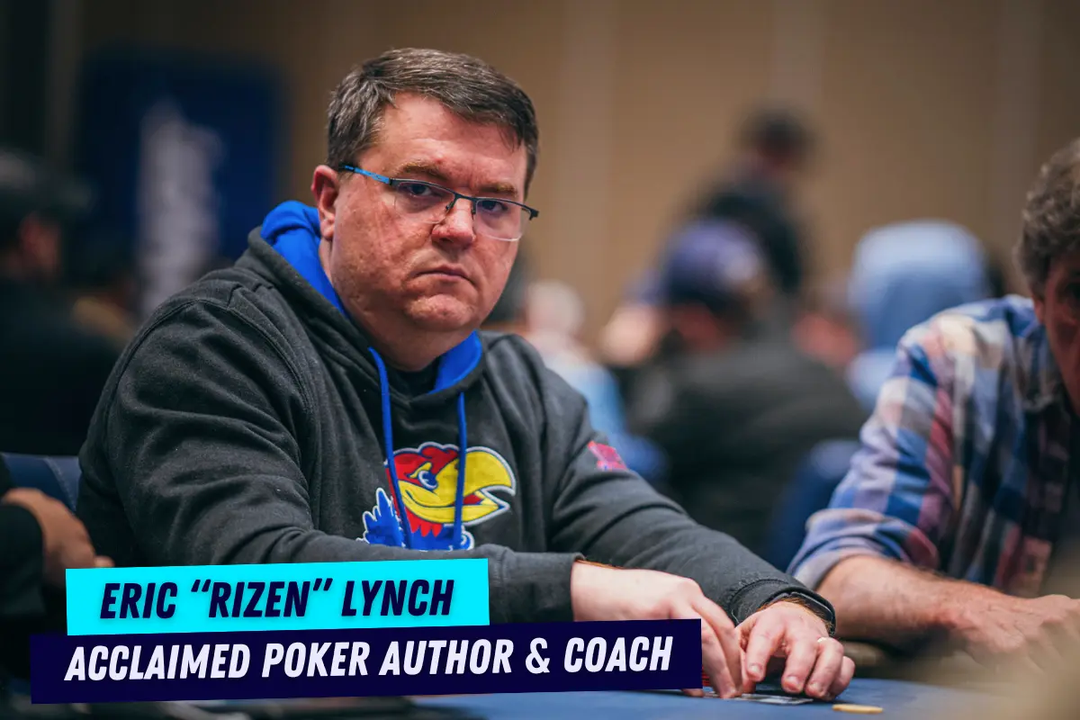
➧ Eric "Rizen" Lynch:

❝ This is the point where you really shouldn't be learning anything completely new but just refining things you already know and really solidifying them in your mind. If you have access to play in tournaments (either online or live) that mimic the structures you're preparing for, then put the things you're studying into practice. If not, use tools like the Fearless River GTO trainer to mimic play so you can really reinforce concepts. ❞

➧ Michael "Gags30" Gagliano:

❝ It's time to plan your trip. Take a look at the schedules from all the casinos and pick what events you want to play. There is a LOT to play in Las Vegas during the summer, and so many choices in terms of venue, game type, buy-in level, satellites, cash... it can be very overwhelming. Players who do not spend time preparing and making an outline of a schedule for themselves can wind up spending their time in Vegas running around like a chicken with its head cut off and more focused on what event might be next rather than focusing on the cards they're being dealt and their strategy. Taking the time early to do your planning will pay off big time when you can just focus on playing your best. It's ok to give yourself some options in your schedule, like "If I'm doing well, I'll play tourney A, but if my trip is going poorly, I'll play tourney B," but make sure you have some goals in mind and have looked at the schedules beforehand. Also, if you have the time, put in some reps at the table and continue working on your strategies that you've hopefully been studying for the past month. Take note of any weak points in your game and brush up on what you've been working on. ❞

📌 Check out the Summer Poker Calendar from Michael Gagliano to build and save your own schedule. The calendar includes all information including links to structure sheets. Find out more here.

WSOP-2026-Prep-Guide-Eric-Lynch-blogpage


➧ What To Focus On Now:

With 1 month remaining, it's crucial to ensure any critical leaks are plugged and shift focus to execution. These Fearless River GTO Trainer solutions are ideal for developing mental muscle memory and quickly identifying leaks. Alternate your training sessions with the related Strategy Episodes:

Watch Below: Tony's Live Reads & Tells (Free, no membership required). In his installment on player tendencies, Tony Dunst breaks down his most frequently observed live poker tells and gives you key guidelines for how to respond when you encounter them. With one month to go, reading your opponents at the table is just as important as your strategy off it.

➧ Go Deeper: Members-Only Strategy Episodes

With time still on your side, use these GTO Trainer hands and episodes to sharpen execution and plug leaks before you arrive in Vegas. Members can log in and watch anytime:

Continuation betting is one of the most critical skill sets in tournament poker, getting reps in now builds the muscle memory you'll need when it counts.

➥ Test Your C-Betting Skills! Play 10 Solved GTO Trainer Hands
➥ Then Watch Episode 294: Advanced Continuation Betting

Tournament chips can change hands fast in 3-bet pots. Practice as the aggressor and try to apply Tony's advice from above.

➥ Test Your 3-Betting Skills! Play 5 Solved GTO Hands
➥ Then Watch Episode 465 as Tony Plays the Same Hands

A full tournament series requires sustained focus across days and events. This episode covers exactly how to maintain peak performance throughout.

➥ Episode 541: Tournament Series Prep With Chewy, Tony, & Johan

➥ Episode 502: Tony's Live Reads and Tells (Watched Above)

Not a member yet? Join now for just $5 your 1st month and get instant access to all these episodes above plus 550+ strategy videos and 45 GTO Trainer spots to practice. No contracts, cancel anytime.

➧ Train & Practice Specific Spots

Practice, drill, and play through solved spots that give you the most problems and become more confident in your decisions on the felt (members only, log in to access).

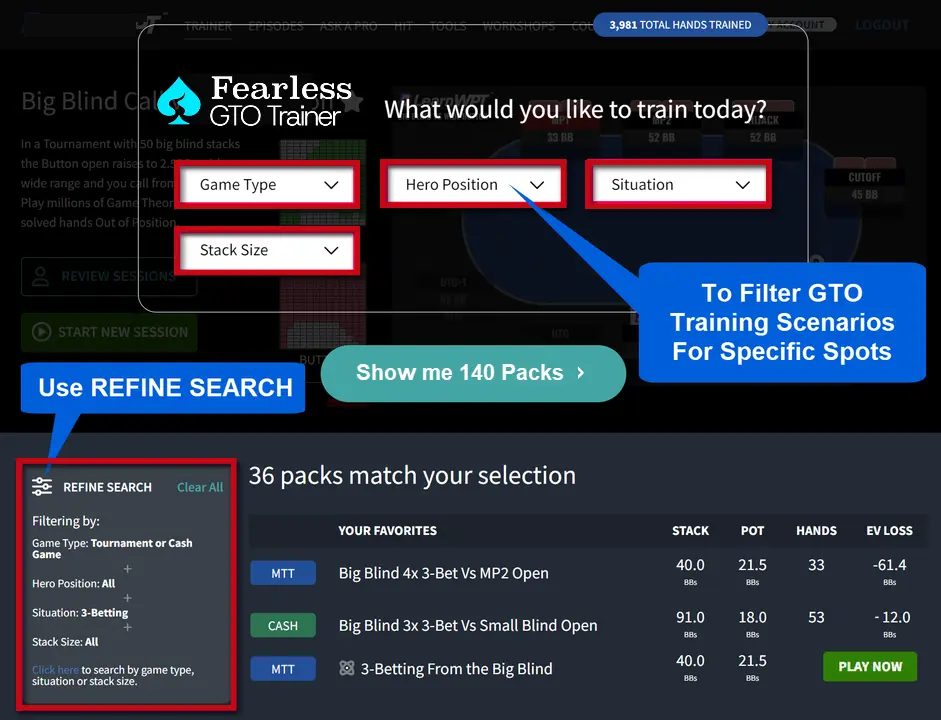
All scenarios are categorized so you can filter for Game Type, Your Position, Stack Size, and Situation (defense, open raise, 3-betting, and more) based on the packs available at your membership tier.

GTO-Trainer-Refine-Search

Platinum Members have access to over 140 spots! Upgrade anytime from your My Account page under Available Plans.

Helpful Training Tip: To improve your Big Blind Defense: Watch the Big Blind Defense Episode 287 → Go to the GTO Trainer → Click the Situation filter box below "What would you like to train today?" and select Big Blind Defense → Select a Pack and Begin!


➧ Staying in Flow With Team Fearless River

We’ve got the strategies to help you play better poker this summer no matter how much prep time you have before your 1st tournament. Click below for more FREE tips and strategies:

➥ Prep Time = 60-Day Prep Guide
➥ Prep Time = 7-Day Prep Guide
➥ Prep Time = 1-Day Prep Guide
➥ WSOP 2026 Prep: All 4 Guides in One Place

If you are a member of the Fearless River family and will be here in Las Vegas for the World Series of Poker, we want to cheer you on! Let us know what you are playing or share your success at the table. Tag us on social media or email [email protected] with your photos and updates from the felt.

X @_FearlessRiver | Facebook @fearlessriver | IG @fearlessriver

Good luck and good playing,
- Team Fearless River

P.S. If you are new to poker or structured study, start with our free poker training focused on the 5 Keys you should be thinking about every time you play a hand.


Will YOU Be Our Next Bracelet Winner?

Our students consistently crush the summer poker season, bringing home massive scores and achieving their poker dreams.

WSOP Success 2023 and 2024 - Sean-TJ-Tammy

In fact, in just the past few years alone during the summer in Vegas Fearless River Students have achieved:

🥇 4 WSOP BRACELETS
🏆 6 WSOP Final Tables
💪 1 Around Town Win
👏 9 Around Town Final Tables
💰 Over $1.7 Million in Cashes

Ready to be our next success story?

Become a FearlessRiver.com Member now for just $5 your 1st month and start preparing for your best summer yet.

Have Questions about Fearless River? Send an email to our Support Team at [email protected] or click the CONTACT US button.


Fearless River logo - Stacked

Find Your Flow. Train Smarter. Play Fearless.
www.fearlessriver.com

Poker Quiz! Q♠Q♦ on a Draw-Heavy Turn, What Do You Do?

QQ-Draw-Heavy-Turn-ps-optimize

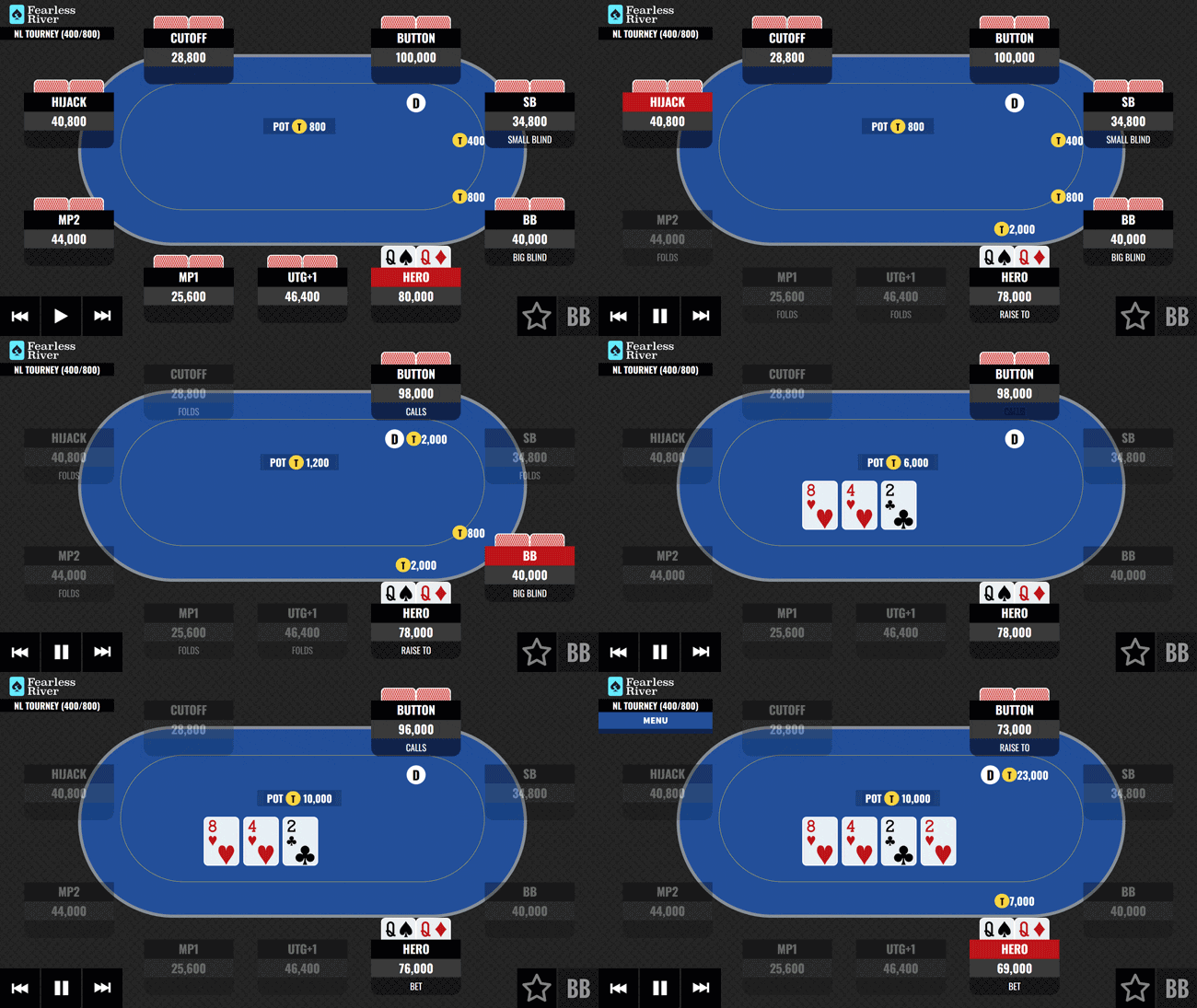
DECISION POINT: You’re playing in a weekend tournament at your local casino, and the reentry period just ended. The blinds are 400/800 with a 800 big blind ante. You are second in chips at your table with an 80,000 (100BBs) chip stack. From Under the Gun you make the standard open and raise to 2,000 with Q♠Q♦ and only the Button, who has you covered, calls. The flop is 8♥4♥2♣. You continuation bet 2,000 and get called. You bet 7,000 on the 2♥ turn and your opponent raises to 23,000. What do you do here?

Vote and see how your answer compares to other players 👇

PRO ANSWER: We are playing in a weekend tournament at our local casino. The reentry period just ended, and the blinds are 400/800 with an 800 big blind ante. We have built up an 80,000 chip stack during the reentry period, which covers the entire table except for the Button, who has 100,000 chips. We are dealt Q♠Q♦ UTG and make a standard raise to 2,000 chips. Everyone folds to the Button who just calls. Both Blinds fold, and we’re off to a flop of 8♥4♥2♣.

Most players will throw out a continuation bet here without a second thought, but it’s important to always be evaluating situations. Range advantage is the primary driver of betting frequency, and we do have a significant range advantage over our opponent in this spot. However, we have an SPR of 13 and an overpair that does not contain a heart. Our opponent will make this call preflop on the Button with a range that is weighted heavily toward suited hands and includes a lot of pocket pairs/suited connectors that connect well with this board.

If we look at this spot in a solver, pocket queens mix between betting and checking, which shows just how tough it can be to play overpairs on boards like this against a skilled Button and with deep stacks. In this situation, we do decide to make a continuation bet of 2,000, and our opponent just calls.

The turn is the 2♥. Now the obvious draw is completed, but given the small bet on the flop, our opponent still has many 8x hands in their range as well as a lot of pocket pairs. If we check and fold to a turn bet against that range, we are giving up our hand with far too much equity. Pocket queens without a heart benefit a fair amount from protection against a lot of our opponent’s range that will have around 11 outs against a vulnerable hand that has strong equity. Based on how these ranges interact on this board, our hand favors going a bit on the larger side with a turn second barrel.

We bet 7,000 and the Button raises to 23,000. Many players struggle with what to do with a big overpair in this situation.

WSOP-Prep-Guide-Tony-Dunst

If we step back and evaluate this spot logically, would our opponent ever do this with a worse hand for value? It is unlikely, which means our queens are basically a bluff catcher. Is our opponent bluffing often enough to make calling profitable?

If we consider the Button's actions on each street, there aren’t a lot of hands that make logical bluffs. Our opponent’s range is composed of strong made hands or hands with some showdown value that would likely prefer calling to raising.

Even though we started with the third-best hand in poker preflop, our pocket queens become simply a bluff catcher in a spot where our opponent doesn’t have a lot of bluffs.

Folding is the best play.

How would you play it?
Share your answer in the comments below!


Will YOU Be Our Next Bracelet Winner?

Our students consistently crush the summer poker season, bringing home massive scores and achieving their poker dreams.

WSOP Success 2023 and 2024 - Sean-TJ-Tammy

In fact, in just the past few years alone during the summer in Vegas Fearless River Students have achieved:

🥇 4 WSOP BRACELETS
🏆 6 WSOP Final Tables
💪 1 Around Town Win
👏 9 Around Town Final Tables
💰 Over $1.7 Million in Cashes

Ready to be our next success story?

Become a FearlessRiver.com Member now for just $5 your 1st month and start preparing for your best summer yet.

Have Questions about Fearless River? Send an email to our Support Team at [email protected] or click the CONTACT US button.

Staying in Flow: Your WSOP 60-Day Prep Guide

WSOP-2026-Prep-Guide-60Day

Prep Time: 60 Days Before the Start of Your 1st Tournament

Your first 2026 World Series of Poker event is 60 days away and the players who show up ready didn't start preparing with one week to go. Two months of prep time is a gift most players don't take advantage of. Here's exactly how to use it right.

We asked Team Fearless River to give us their best advice on how to prepare your poker game to stay in flow all summer in Las Vegas. We put one question to each of them:

❝ What advice would you give players when preparing for the WSOP based on the time before the start of their first event? ❞

We've assembled their answers along with FREE videos, strategies, and tips plus expert advice from Tony Dunst, Michael Gagliano, Eric Lynch, and Johan Schultz-Pedersen to make sure you are ready to crush starting hand 1. ⤵

WSOP-2026-Prep-Guide-Fearless-River-Instructors

➧ Tony Dunst:

❝ While it’s never a bad idea to form study habits, I think trying to change too much about your game or approach to poker 60 days before the summer is probably overkill. But if you’re someone who mostly plays and doesn’t study, I think it’s smart to use this time to start gradually building the habit of studying 30-60 minutes a day several times a week. Studying poker is kind of like working out, where nothing dramatic happens in one session but if you build it into your routine, you make consistent progress over a long period of time. ❞

➧ Michael "Gags30" Gagliano:

❝ Two months before playing in larger live events is the perfect time to work on your game and put in some study time. A lot of players wait until the final days before an event to study, but you really want to make sure you give yourself time to digest what you're learning and also take some time to practice your strategies so you're comfortable with them. If you're going to try anything new or make any larger changes to your game, this is the time to do so. ❞

WSOP-2026-Prep-Guide-Michael-Gagliano-blog-page

➧ Eric "Rizen" Lynch:

❝ If you've identified the event(s) you want to play, then how you prepare will depend somewhat on the event types/structures that you want to play. If you're playing a huge field event that moves fast like the Colossus, you probably want to focus your time studying sub-30BB (or even 10BB-20BB) play, as the structure is fast and most of your critical decisions will be made with a smaller stack size. If you're playing something like a WSOP/WPT Main Event structure, you'd want to focus more on ~50BB play as the structures for those often have the average stack in the 40BB range throughout the tournament. So, identify the types of events you want to play and what sort of decisions will be most critical in that tournament format/structure and develop a study plan that focuses on those items. If you already feel strong at the key stack level of the event(s) you're targeting, move on to the next most important skill you would need for the event. Focus on the things that will come up most often first, (for example, preflop play if you need to work on that, then playing heads-up single raised pots, heads-up three bet pots, and so on), then focus on things that come up less frequently. ❞

➧ Johan Schultz-Pedersen:

❝ A month or two before the first event starts, I recommend playing a few online sessions to get back into the rhythm of playing. Online poker allows you to play many more hands in a short amount of time compared to live poker. ❞

Simple advice, but getting reps in before arriving in Vegas can make a significant difference in your comfort level at the table!

WSOP-2026-Prep-Guide-Tony-Dunst-blogpage


➧ What To Focus On Now:

If you’ve got at least 2 months to prepare your training should focus on strengthening fundamentals while plugging leaks. These Fearless River Strategy Episodes are a great place to start.

New to structured study? Start with our free poker training to lock in the 5 Keys framework before you build your plan.

Let's start with one of the biggest leaks in poker. Many players approach preflop play without clear guidelines and often become too cautious or over aggressive in the wrong situations. First-In Hand Ranges give you a structured way to decide when to play and what to play, based on your stack size and seat position at the table.

In this Strategy Episode, you’ll get a detailed breakdown of which hands you should play from each seat position when raising first-in to the pot, so you’ll start hands with confidence instead of uncertainty.


Here are a
few points from this video to remember...

Think in Hand Ranges:

  • A range includes all hands a player may have in a given situation
  • Avoid trying to put your opponent on a specific hand
  • Position, action, and stack depth help determine ranges
  • Analyzing hand ranges is best done away from the table

First-In-GTO-Hand-Ranges-Fearless-River

These charts will tell you what hands to play when you are the first person to put money into the pot at the poker table. They'll keep you on very solid, profitable ground and ensure that you aren't playing bad poker hands.

You'll develop muscle memory for preflop play by simply reviewing the charts and then putting them into practice at the table!

Quick Tips for Using the First-In Hand Range Charts:

  • Use the Position Graphic to determine your position at the table and find the appropriate range chart for your seat. Tip: Count backwards from the Button to determine your position.
  • Raise with all hands highlighted in PINK. Do not call the minimum bet amount - RAISE!
  • Your raise sizing should be between 2.3 and 3 times the big blind amount depending on stack depth.
  • Be consistent. If you raise a larger amount with a specific hand and smaller amounts with others, you will be easier to read at the table (IE don't raise to 600 with AA, but 400 with 99)

Remember, these charts are intended for use when you are the first person to put chips in the pot before the flop aside from the blinds (forced bets). If someone else has already voluntarily put chips in the pot before your turn to act, these charts do not apply.

➧ Go Deeper: Members-Only Strategy Episodes

With 60 days to work with you have time to go beyond the fundamentals. Members can log in and watch these anytime:

➥ Episode 305: First-In Hand Ranges (Watched Above)

Knowing when and how to defend properly is one of the most exploitable leaks in tournament play, and these two episodes will tighten that up fast.

➥ Episode 463: Big Blind Defense
➥ Episode 405: Button Defense

With 60 days to work with, strengthening your 3-bet strategy is an excellent use of study time. Most players at the WSOP are uncomfortable in 3-bet pots, and these episodes will make you dangerous in them.

➥ Episode 525: 3-Betting Strategy Part 1
➥ Episode 530: 3-Betting Strategy Part 2

Not a member yet? Join now for just $5 your 1st month and get instant access to all these episodes above plus 550+ strategy videos and downloadable tools. No contracts, cancel anytime.


➧ Staying in Flow With Team Fearless River

We’ve got the strategies to help you play better poker this summer no matter how much prep time you have before your 1st tournament. More FREE tips and strategies are on the way:

➥ Prep Time = 30-Day Prep Guide
➥ Prep Time = 7-Day Prep Guide
➥ Prep Time = 1-Day Prep Guide
➥ WSOP 2026 Prep: All 4 Guides in One Place

If you are a member of the Fearless River family and will be here in Las Vegas for the World Series of Poker, we want to cheer you on! Let us know what you are playing or share your success at the table. Tag us on social media or email [email protected] with your photos and updates from the felt.

X @_FearlessRiver | Facebook @fearlessriver | IG @fearlessriver

Good luck and good playing,
- Team Fearless River


Fearless River logo - Stacked

Find Your Flow. Train Smarter. Play Fearless.
www.fearlessriver.com

Have Questions about Fearless River? Send an email to our Support Team at [email protected] or click the CONTACT US button.

Poker Math Shortcuts: Outs and Pot Odds Explained

Poker math formulas for calculating pot odds

➧ Do you know what poker math is and when to use it?
➧ Is it really that important for poker players to understand?
➧ Can you calculate in real time when a situation becomes profitable based on pot odds?

Let Team Fearless River show you how poker math works and how you can use it to improve your poker decisions and play your next session with more confidence.

Many people hate math, but there's no escaping its importance at the poker table. The truth is that you don't need to be an expert at poker math to beat the games. However, using poker math is something that differentiates the best poker players from the average ones.

So, if you want to upgrade your poker strategy and improve your win rate, make sure your poker math knowledge is up to par.

There are many different strategies in poker, but no matter which one you use or how your luck runs, poker is a game of probabilities.

Math is a Decision-Making Tool

Why it works: the deck has a fixed number of cards, so every outcome has a probability we can calculate.
How we use it: poker math helps us calculate pot odds and weigh our chances before every decision.

When we use poker math, we use it to make the right decision and calculate if the odds are in our favor. This means poker math helps you decide whether a call is profitable.

Poker math tells us whether it's worth putting money into the pot to chase after a particular card and how likely you are to hit it.

To understand how poker math actually works you need to become familiar with two key elements: outs and pot odds. These two elements are crucial for the decision-making process.

So let's get started!

Poker Math: Outs

➧ What Are Outs? The cards that can come on the flop, turn, or river that are likely to improve your hand.

When evaluating a poker hand, the first step is to consider how many outs we have and how likely it is that an out will be dealt in the specific scenario.

To understand the basic concept of outs, you can watch Fearless River Strategy Episode 37, which explains how to do basic calculations to determine outs with easy-to-use shortcuts. If you haven't already reviewed the Strategy Episodes on outs and pot odds, you definitely should check those before diving into the world of poker math.

Poker Math: Pot Odds

➧ What Are Pot Odds? The odds a player gets to continue in the hand, specifically a ratio comparing the size of the pot to the size of the bet.

To determine pot odds, determine how much is in the pot and then compare that amount to how much it costs to call the bet. Note that any opponent's current bet is considered part of the pot.

Your poker decisions should be fundamentally based on pot odds. The key to profitable poker is understanding pot odds and basic math so that when it comes time for decisions, you will be able to consistently make profitable ones.

Think in Terms of Risk vs Reward Ratio

Pot odds compare how much you can win (everything in the pot, including your opponent's bet) to how much you have to risk to call.

Understanding the odds is also key to playing draws effectively. After some practice, basic odds calculations won't take you a lot of time at the table and will help improve your poker strategy by using simple math. Your goal for learning about odds is to gain a repeatable skill to help evaluate decisions based on facts and data.

Using math to make poker decisions

Math Shortcut: The Rule of 2

Quick Shortcut: the Rule of 2 and Rule of 4

Rule of 2: your outs x 2 = your chance of hitting on the next card.
Rule of 4: your outs x 4 = your chance of hitting by the river. Use only when deciding to call one player's all-in on the flop.
Chance of hitting your out: a flush draw has 9 outs, so about 18% (9 outs x 2) on the next card or 36% (9 outs x 4) by the river.

➧ The Rule of 2 is a shortcut to calculating your percentage chance of hitting one of your outs on the next card to come. To use the Rule of 2, multiply the number of outs x 2 and the result gives you the percentage chance of hitting one of your outs on the next card.

The best way to learn is from an example: We have 9♣8♣ and the board is 3♥4♣Q♣. We have a flush draw and we are heads up on the flop. Our single opponent bets $1000 into $1000 pot. Remember that when talking about pot odds, we have to include any bet from our opponent that is already in the pot. So in this situation, there is $1000 in the pot plus our opponent's $1000 bet meaning the total amount that we could potentially win by continuing is now $2000.

The next step is to compare the total amount we could potentially win to the amount it costs us to call. In this case, it costs us $1000 to continue and there is $2000 in the pot. So our pot odds are 2:1. There are two units to win, and it costs us one unit to call.

As a rule of thumb, you can know that any time you are facing a pot-sized bet you're getting 2 to 1 pot odds.

Now put it together. With 9 outs, the Rule of 2 gives you roughly an 18% chance of hitting your flush on the turn. Getting 2:1, you need to win at least 33% of the time to break even. Since 18% falls well short, calling is not profitable on pot odds alone. That’s where implied odds come in, which we cover below.

What About the Rule of 4?

➧ The Rule of 4 is applied in mostly the same fashion as the rule of 2 except that it can only be used on the flop when one player is all-in and you are facing the decision to call.

Let's use that same example: We have 9♣8♣ and the board is 3♥4♣Q♣. We have a flush draw and your opponent goes all-in.

In this case, you would determine how many outs you have to make your flush, then multiply by 4 to determine the percentage chance of hitting your flush. There are 13 total cards of each individual suit and we can see 4 of them currently (2 in our hand and 2 on the board), so we can subtract 4 from 13 and get a result of 9 outs.

Then using the rule of 4 we multiply 4 x 9 for a result of 36, so we have roughly a 36% chance of hitting our flush draw on the next 2 cards to come. It is important to only use the Rule of 4 for situations where you are on the flop facing an all-in and guaranteed to see the next 2 cards if you call.

TNow put it together. If the all-in is about the size of the pot, you’re getting 2:1 and need 33% to break even. With roughly a 36% chance to hit by the river, calling is profitable.


Here Are Some Tips for Practicing:

When practicing your poker strategy, start paying attention to pot odds and how to apply the Rule of 2 or The Rule of 4 to determine your percentage chance of winning.

The Decision Rule

✔ If facing an all-in on the flop and your pot odds are higher than your chance of making your hand, continuing is profitable.
✔ If they're lower, it's not profitable to continue.
✔ If they're the same, it's a break-even decision.

Watch additional Fearless River Strategy Episodes on this subject to get comfortable with poker math and keep in mind the fundamentals of pot odds at all times. Check out Episode 41 and Episode 39 for more about this topic and others we are discussing in this article.

Now that you have the basics on determining pot odds and outs, we can introduce another key concept of poker math, implied odds.

Poker Math: Implied Odds

➧ What Are Implied Odds? Implied odds are basically when we're not getting the correct direct pot odds to call the current bet, however, if we call now we anticipate winning more chips on future streets.

Implied odds are an important factor when determining profitable preflop calling. A common guideline is to call with speculative hands, like small pairs and suited connectors, only when the call costs about 5% of the effective stack or less, in multiway pots.

We're investing a small amount now with the expectation of being able to win a larger amount later. That's at the heart of implied odds. We are hoping to make up for the fact that we're not getting the right direct odds right now in exchange for the possibility of winning more chips on later streets.

When it comes to using implied odds for decisions on the flop and turn, it's crucial to understand when you are getting them. A few factors can help you determine whether or not you are getting implied odds in a specific situation:

➧ Look at Chip Stacks
You need to ensure that there are additional chips to win on a future street to make up the difference. If your opponents are all-in or nearly all-in, then you may not be able to win enough chips to make up for calling without proper odds on previous streets. As a general rule of thumb, the deeper chip stacks are, the easier it is to win additional chips on a future street and more likely you have implied odds.

➧ Look at Your Position
When you’re in position, you act last, so you’ll win more on average than when out of position. Of course, like in every rule, there are a few exceptions but it's rare to have an advantage from out of position. Once you have position, it's easier to extract more chips from your opponent on future streets. That means that your implied odds go up when you're in position and go down when you're out of position.

➧ Look at the Number of Opponents
The more opponents in the hand, the more likely you are to get paid off. When you have just one opponent, they often just fold if you take aggressive action. So if you hit your draw on a future street against one opponent, many times they'll just check and fold. In the case of multiple opponents, you're much more likely to get paid off as the likelihood that one of your opponents will have a hand that they will continue with increases. The more opponents you have postflop, the better your implied odds are with your draw.

➧ Estimate Your Opponent's Range of Hands
Ask yourself how likely your opponent is to have a good hand or a premium hand. For example, if an opponent had raised in an early position at the table, then you're more likely to extract chips from that opponent postflop after you hit your draw. That is because their range is comprised of more premium hands and they are much more likely to have a hand to pay you off with. When an opponent raises from an early position or otherwise indicates they have a narrow range of hands or premium hand, then your implied odds go up. It will be much easier on average to win chips from an early position opponent when you hit your draw.

➧ Look at How Disguised Your Draws Are
It is well known that some draws are more evident than others. The most obvious draws tend to be flush draws, and you can spot flush draws on the flop fairly easily. More disguised would be the straight draws. Your implied odds tend to go up as you get more disguised with your draws. While straight draws have one fewer out than flush draws (eight vs nine outs), they actually have better implied odds because the straight draw is often more hidden.

Quick Check: Do You Have Implied Odds?

Chip stacks: deeper stacks mean more chips left to win later.
Position: implied odds go up when you're in position and down when out of position.
Number of opponents: more players in the hand means a better chance someone pays you off.
Opponent's range: a strong, narrow range is more likely to pay you off when you hit.
Disguised draws: the better hidden your draw, the more you can win when it lands.

You’ve learned how to determine the two most critical components of poker math (outs and pot odds). Now it's time to practice.

Stay focused on practicing counting your outs, looking at your pot odds, calculating your hand odds, and analyzing whether you have implied odds. Review episodes multiple times and remember, practice makes perfect.

Our goal with Fearless River is to empower players to ask questions, help them stay focused on the key factors that affect play, and provide answers from winning professionals through a solid game plan. We’ve helped players from around the world of all experience and skill levels, and we can help you find your leaks and learn new strategies that can help you have more fun playing poker.

Good luck and good playing,
Team Fearless River


Improve Your Game Today!
Join Fearless River and Get:

Site Features - Multiple Devices Mockup

  • The GTO Trainer to play real solved hands and get instant feedback on YOUR leaks (over 4 BILLION solved spots!)
  • On-demand access to our full library of 550+ (and growing) in-depth Strategy Episodes from world-class players
  • All of your poker questions answered with the Ask a Pro feature
  • Analysis from Fearless River Pros using The Hand Input Tool
  • Downloadable Tools you can use at the table and away from it
  • Learn from a Team of world-class Professional Players


To join (just $5 your 1st month) click the JOIN NOW button and start improving your game!


Have questions?
Email us at [email protected].