You're Facing a Preflop All-In Late in a Daily With K♣Q♣ ...
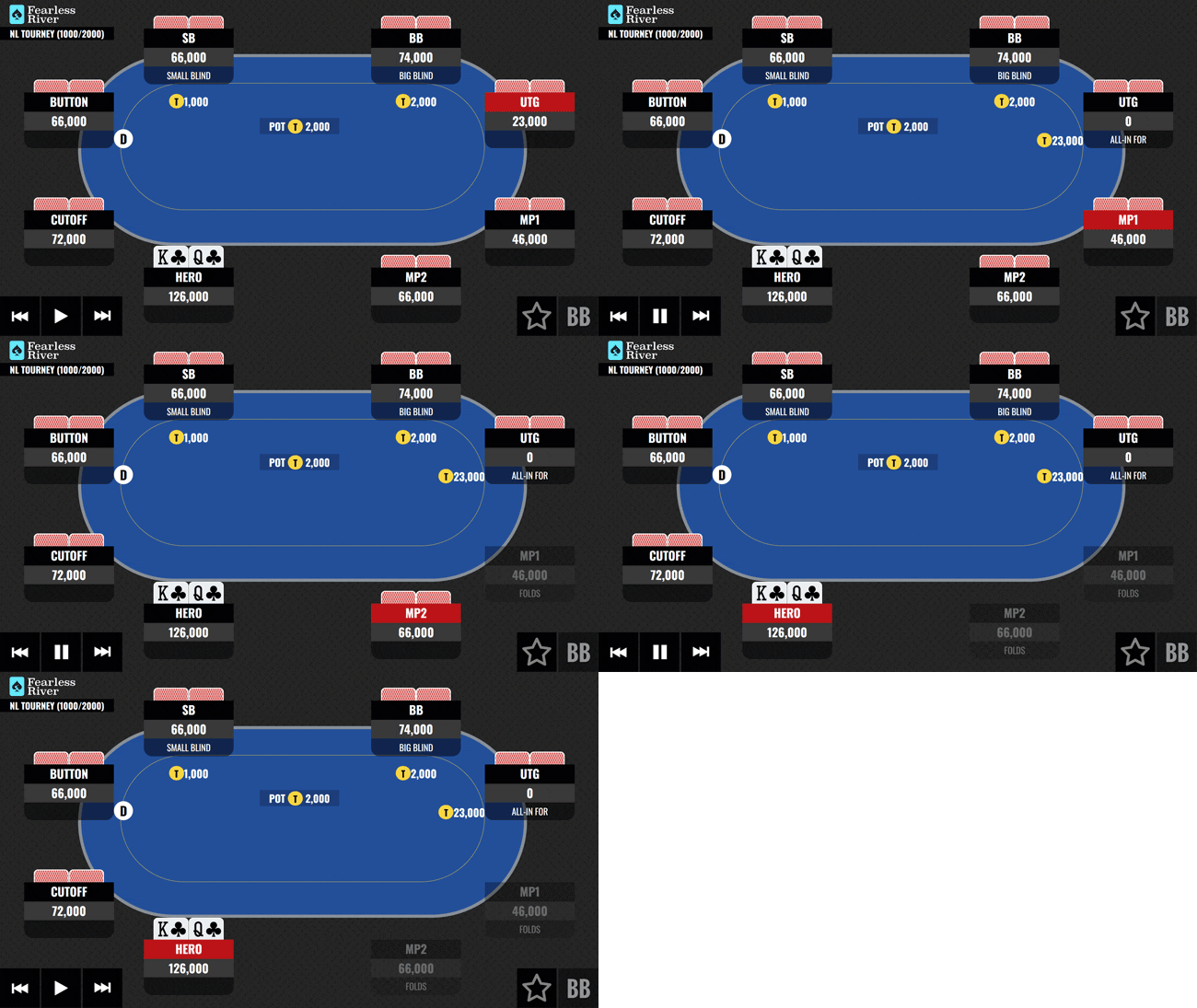
DECISION POINT: You're in a daily tournament that you frequently play at a local casino. There are 16 players remaining with 10 getting paid. In this tournament, it's common for players to do an even chop between the final 6 or 7 players. Blinds are 1,000/2,000 with a 2,000 big blind ante. You are second in chips with 126,000, with most other stacks around 60,000. The UTG player moves all-in for 23,000 and action folds to you in the Hijack seat with K♣Q♣. What's your move?
Vote and see how your answer compares to other players 👇
PRO ANSWER: We are playing in a daily tournament at our local casino. There are 16 players left and 10 places get paid. We play in this tournament regularly. It's very common for an even chop to happen with 6-7 players left, where the remaining players evenly split the remaining prize money without regard for the chip stacks in play. We are currently second in chips with 126,000 and blinds are 1,000/2,000 with a 2,000 big blind ante. There are a few short stacks at the other table, but most players have around 60,000 chips, or 30 big blinds.
We are dealt K♣Q♣ in the Hijack seat and the Under the Gun player moves all-in for their remaining 23,000 chips. Action folds to us, and we have a decision to make. Under normal circumstances with a standard payout structure that is top-heavy, KQs would be right on the cusp of being able to call an all-in from a UTG player at an 8-handed table.
This situation, however, presents several unique variables. Given this tournament normally chops 6-7 ways evenly, the payout structure is very flat and rewards staying in the tournament far more than accumulating chips. If the UTG player is adjusting appropriately, they should be shoving much narrower than they would in a more typical tournament situation with 11.5 big blinds. Additionally, being second in chips means that we will likely get the maximum payout in a chop scenario simply by staying alive in the tournament. There is very little benefit to taking on risk to attempt to grow our stack beyond what is likely to make it into the final 6 or 7 players.
With these ICM factors at play, we should be continuing with a very narrow range, particularly with so many players behind us still to act. Chopping is very common in a lot of daily tournaments, particularly in a live casino environment. Making the correct strategic adjustments deep in a tournament when an even chop is likely is key to maximizing your value in these spots.
Folding is the best play.
How would you play it?
Share your answer in the comments below!
Improve Your Game Today!
Join Fearless River and Get:
- The GTO Trainer to play real solved hands and get instant feedback on YOUR leaks (over 4 BILLION solved spots!)
- On-demand access to our full library of 550+ (and growing) in-depth Strategy Episodes from world-class players
- All of your poker questions answered with the Ask a Pro Feature
- Downloadable Tools you can use away from the tables
To join (just $5 your 1st month) click the button below and start improving your game!
Have Questions? Email us at [email protected].
Poker Quiz! A♦A♥ Facing a Flop Check-Raise, What's Your Move?
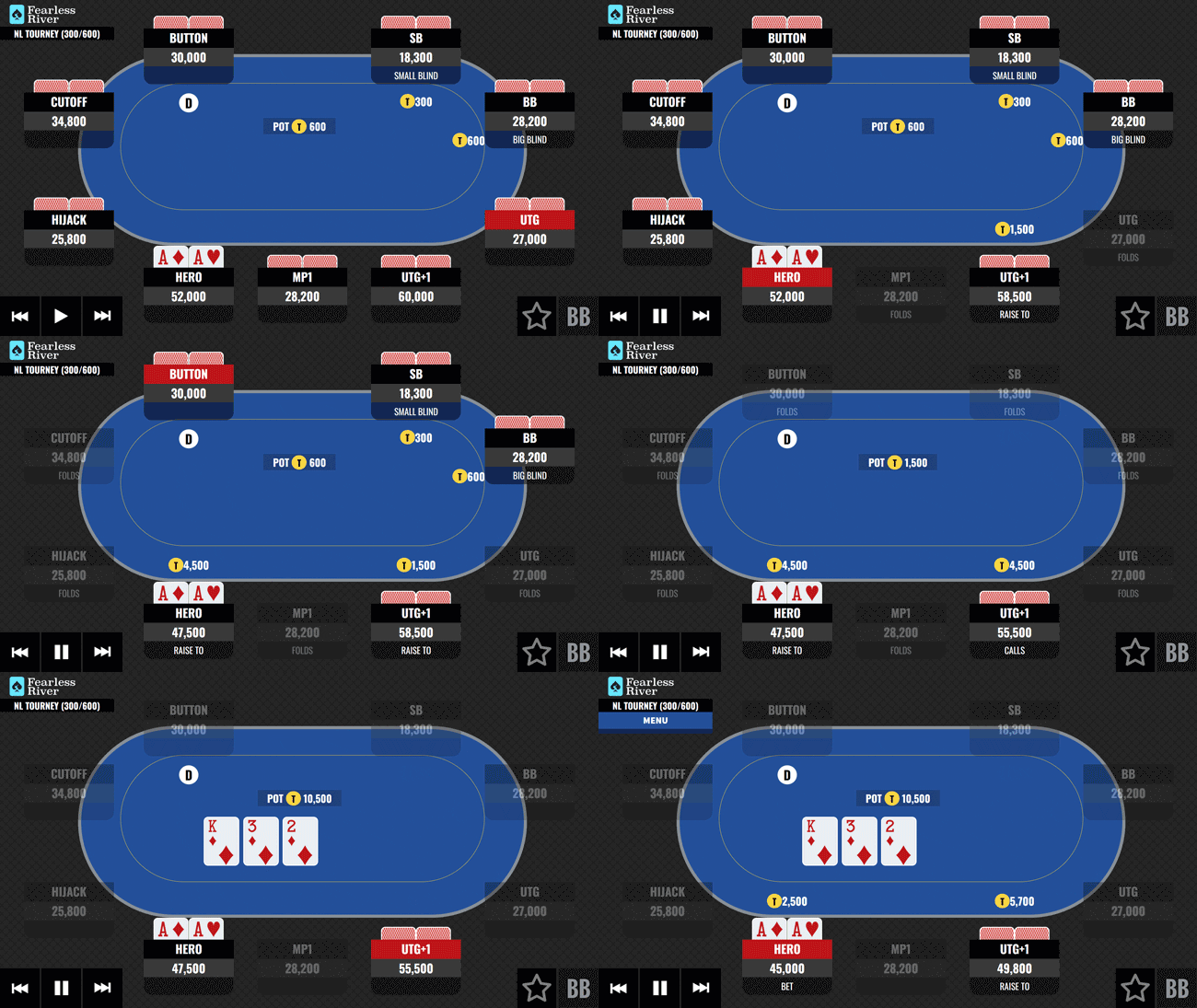
DECISION POINT: You’re in a regional tournament series with deep stacks that attract both pros and recreational players. The blinds are 300/600 with a 600 big blind ante. UTG+1, who is a known and well-studied player capable of making aggressive plays, opens to 1,500. You reraise to 4,500 in MP2 with A♦A♥. Action folds back around to the UTG+1 player, and they call. The flop comes K♦3♦2♦. Your opponent checks, you bet 2,500, and they raise to 5,700. What do you do here?
PRO ANSWER: We are playing a regional series event with deep stacks that tend to attract a variety of both pros and recreational players from around the area. The blinds are 300/600 with a 600 big blind ante. The UTG+1 player is a known player with over $500k live earnings who is well studied and capable of making aggressive plays.
We are dealt A♦A♥ in MP2 and following a 1,500 chip open from UTG+1 and a fold by MP1, we make a standard reraise to 4,500 chips. Everyone else folds back to the UTG+1 player who just calls. The flop is K♦3♦2♦ and the UTG+1 player checks.
As the preflop aggressor we retain a significant range advantage, meaning we can often bet these monotone boards with 100% frequency. Our opponent in UTG+1 also has a lot of hands that completely miss these types of boards that will fold to any size bet. Given these factors, choosing a small c-bet size will allow for a great price on our bluffs while still being able to get value out of bigger hands and draws on future streets by sizing up. We bet 2,500 chips into a pot of slightly over 10,000, and our opponent makes a very small check-raise to 5,700.
With an overpair and the A♦ in our hand, folding isn’t a consideration. At this point, we have to decide if it is better to just call or if raising is preferred. This specific check-raise size isn’t something we would normally expect to see, in theory. Since this appears to be a deviation, we need to think about what type of hands this specific opponent might check-raise this size with and put them on a range.
It’s unlikely UTG+1 expects much fold equity when we’re getting 6:1 pot odds on our call. What is more likely is that they have a range consisting of some made hands of varying strengths, or semi-bluffs that prefer to wait until the turn (often for a “safe” card) to start bloating the pot more aggressively. This range includes hands like Kx with a diamond, as well as hands including AK, 33, 22, and some made flushes. If we didn’t hold the A♦, that range might include some combos with just the Ace of diamonds, as well as suited Ax of diamonds for some nut flushes, but since we do they can be excluded.
If we consider how the hands in UTG+1’s check-raising range might react if we were to reraise, most of the hands that we dominate are likely fold and only the hands ahead of our Aces currently such as made flushes and sets are likely to continue. This is a classic “way ahead, way behind” scenario where it benefits us to keep our opponent’s range wide so that hands like Kx can continue to shovel money into the pot on future streets drawing extremely thin.
Even when our opponent does have a hand like a set or flush we are getting a very compelling price to draw to the nut flush and potential one of the two remaining Aces for top set.
Calling is the best play.
How would you play it?
Share your answer in the comments below!
Improve Your Game Today!
Join Fearless River and Get:
- The GTO Trainer to play real solved hands and get instant feedback on YOUR leaks (over 4 BILLION solved spots!)
- On-demand access to our full library of 550+ (and growing) in-depth Strategy Episodes from world-class players
- All of your poker questions answered with the Ask a Pro Feature
- Downloadable Tools you can use away from the tables
To join (just $5 your 1st month) click the button below and start improving your game!
Have Questions? Email us at [email protected].
Poker Quiz! Flopped a Straight on a Monotone Board ...
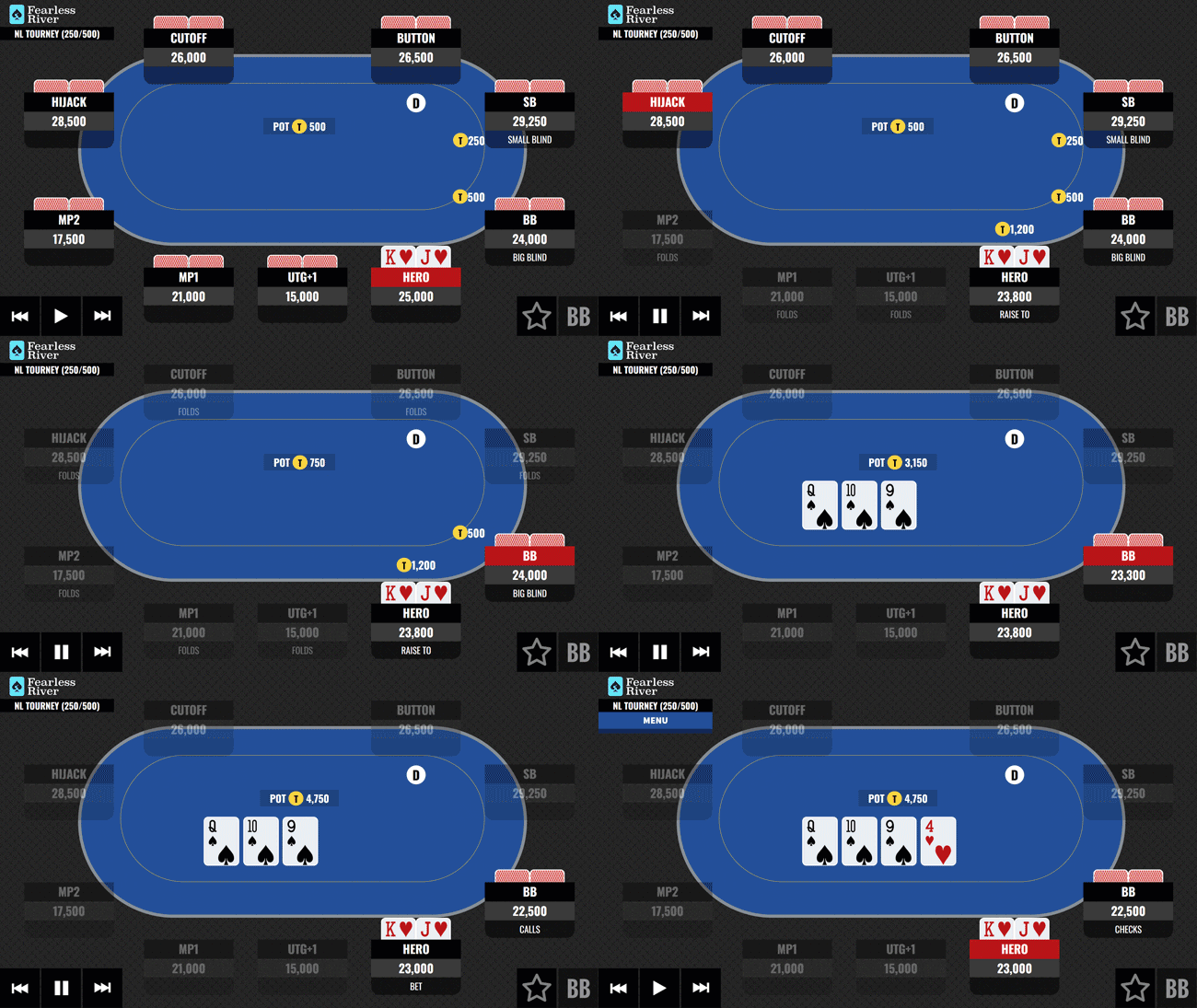
DECISION POINT: In a daily deep stack tournament with blinds at 250/500 and a 500 big blind ante, you’ve observed the table as being mostly passive with a lot of checking, calling, and very little 3-betting preflop. First to act in the UTG seat, you open to 1,200 with K♥J♥ and action folds to the Big Blind who calls. Your opponent checks the Q♠T♠9♠ flop, you c-bet 800, and they call. The turn is 4♥ and the Big Blind checks. Action is on you, what do you do here?
PRO ANSWER: We are playing a daily deep stacked tournament. The blinds are 250/500 with a 500 big blind ante. Most of the table has been fairly passive with a lot of checking and calling, as well as very little 3-betting preflop. We have 25,000 chips and the rest of the table has between 15,000-30,000 chips.
We are dealt K♥J♥ Under the Gun. While opening a tight range in early position is preferrable, KJs is easily strong enough to open, particularly at a passive table where we are unlikely to get 3-bet frequently. We open to 1,200 chips and everyone folds to the Big Blind who just calls.
The flop is Q♠T♠9♠ and we have flopped a straight on a monotone board. Our opponent in the Big Blind checks and action is on us. Monotone boards are very unique in No-Limit Hold’em. As the preflop aggressor in a heads up pot we often retain a significant range advantage, which means we should be continuation betting frequently. In fact, in many situations it will be strategically correct to continuation bet on monotone boards with 100% of our range.
The Big Blind’s defending range has a lot of hands that have completely missed with no pair and no draw that will automatically fold to any size bet. We need to choose a size that gives a good price on our bluffs while still allowing flexibility to size up on various turns and rivers against the part of our opponent’s range that has connected in some way, both for value and as a bluff.
Continued Below ...
We bet 800 chips (around 25% of the pot) and the Big Blind calls. The turn is the 4♥ and our opponent checks to us. Given our small flop bet size, the Big Blind will still have a fairly wide range on the turn including a lot of one pair hands as well as some Jx and combos containing a single spade. The Big Blind would have also preferred to check-raise some of the more vulnerable made hands on the flop such as small flushes.
These combined factors make this an excellent opportunity for us to fire a second barrel on the turn and extract value, as well as apply pressure against most of the Big Blind’s range. Many players are tempted to either check behind or bet small in this spot, fearing that they may be up against a flush. Since many of our opponent’s bigger hands would have raised the flop, it is quite likely (although never certain) we have the best hand, and we should bet bigger for value.
Betting 2/3 to 3/4 of the pot (3,000-3,500 chips) is the best play.
How would you play it?
Share your answer in the comments below!
Will YOU Be Our Next Bracelet Winner?
Our students consistently crush the summer poker season, bringing home massive scores and achieving their poker dreams.
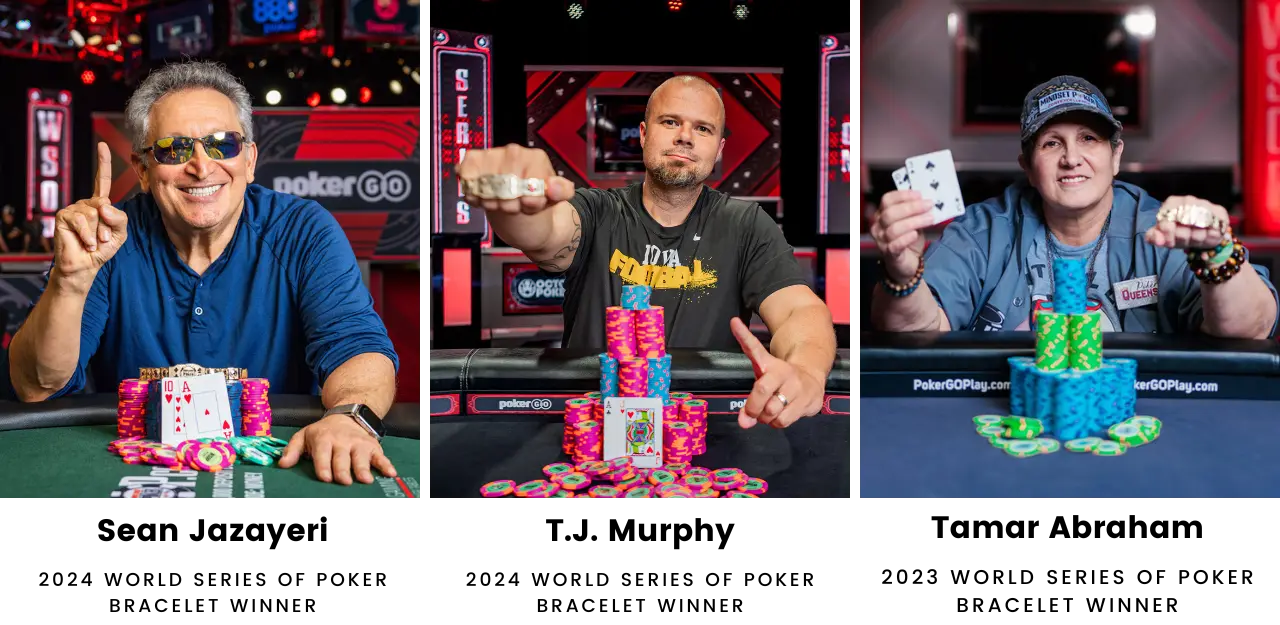
In fact, in just the past few years alone during the summer in Vegas Fearless River Students have achieved:
🥇 4 WSOP BRACELETS
🏆 6 WSOP Final Tables
💪 1 Around Town Win
👏 9 Around Town Final Tables
💰 Over $1.7 Million in Cashes
Ready to be our next success story?
Become a FearlessRiver.com Member now for just $5 your 1st month and start preparing for your best summer yet.
Have Questions about Fearless River? Send an email to our Support Team at [email protected] or click the CONTACT US button.
Poker Quiz! K♣Q♠ Facing a Big Blind Donk Bet, What Do You Do?
We are now Fearless River Poker Training!
Same training. Same access. New name.
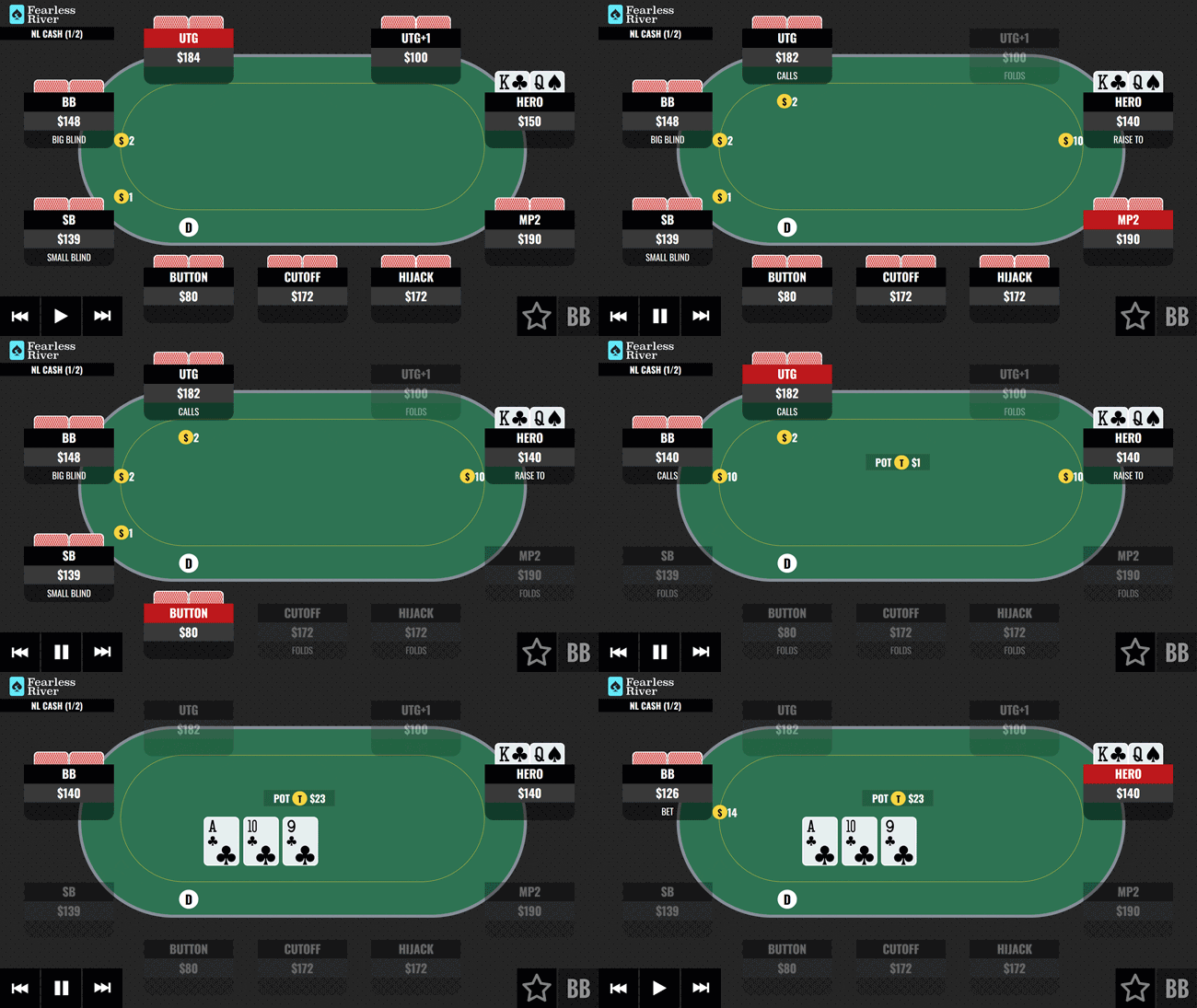
DECISION POINT: You’re playing in a live $1/$2 cash game. The table includes mostly loose/passive recreational players with many hands going to showdown, a lot of calling, and very little aggressive action. The UTG player limps, you raise to $10 from MP with K♣Q♠, the Big Blind calls, and the limper folds. The flop comes A♣T♣9♣. The Big Blind bets $14 and action is on you. What do you do here?
PRO ANSWER: We’re playing a loose/passive live $1/$2 cash game. The table is full of recreational players with many hands going to showdown and lots of calling with very little aggressive action. We are dealt K♣Q♠ in MP1. The UTG player limps and the next player folds with action on us.
As a basic default rule against limpers, we will raise with any of the hands that we cannot call with according to the calling criteria that are included in the first-in raising range for the seat position of the limper.
The first step is to determine whether we can call profitably per the calling criteria, and in this case KQo is not a true speculative hand and does not play well multiway. Looking at the first-in range from the initial limper in UTG we see that KQo is included, so isolating the limper is our preferred default play. We make it $10, everyone folds to the Big Blind who calls, and the initial limper UTG folds.
The flop is A♣T♣9♣ and the Big Blind leads for $14 into the $23 pot. In a typical game where there are some amount of skilled opponents, when the Big Blind calls preflop in this situation they likely have a very condensed and capped range. In a loose/passive game filled with recreational players, the Big Blind’s range a bit wider than it should including many of the sort of hands players want to “see a flop” with such as offsuit broadway cards, suited connectors, and pocket pairs.
When a player leads into the preflop raiser (often called “donk” betting) on flops that favor the preflop raiser, it’s often either an attempt to “see where they are at”, or because they are worried about not getting action on a big hand when they check. On a board like this monotone flop with an Ace and broadway draw which many recreational players find quite “scary”, this donk lead is typically because the Big Blind is worried we won’t bet and another club or straightening card will fall on the turn.
Holding the Kc and an inside straight draw, we still have a lot of equity in this pot, but it is unlikely we have the best hand at the moment. If the board texture was scattered or all low cards and more likely that our opponent was lead/donk betting a medium strength hand to “see where they were at”, there would be a lot of merit to making a semi-bluff raise.
On this particular board, many of the hands the Big Blind is leading with are actually happy to see a raise. Hands such as Ax/T9s combos or even small flushes prefer to get chips in on the flop before a scary card comes on the turn or river. Our hand has significant equity with the Kc and inside straight draw, and we have a lot of potential opportunities to float and take the pot away on the turn if another scary card hits. Given these factors, calling makes a lot more sense than semi-bluffing on this coordinated monotone flop.
Calling is the best play.
P.S. Check out our December live study session where we focused on Dealing with Limpers. Watch a preview →
How would you play it?
Share your answer in the comments!
Play Better Poker With Fearless River!
Whether you’re brand-new to poker training or are an experienced student, a membership to FearlessRiver.com is your chance to learn from world-class professional poker players in a friendly community using state-of-the-art tools.
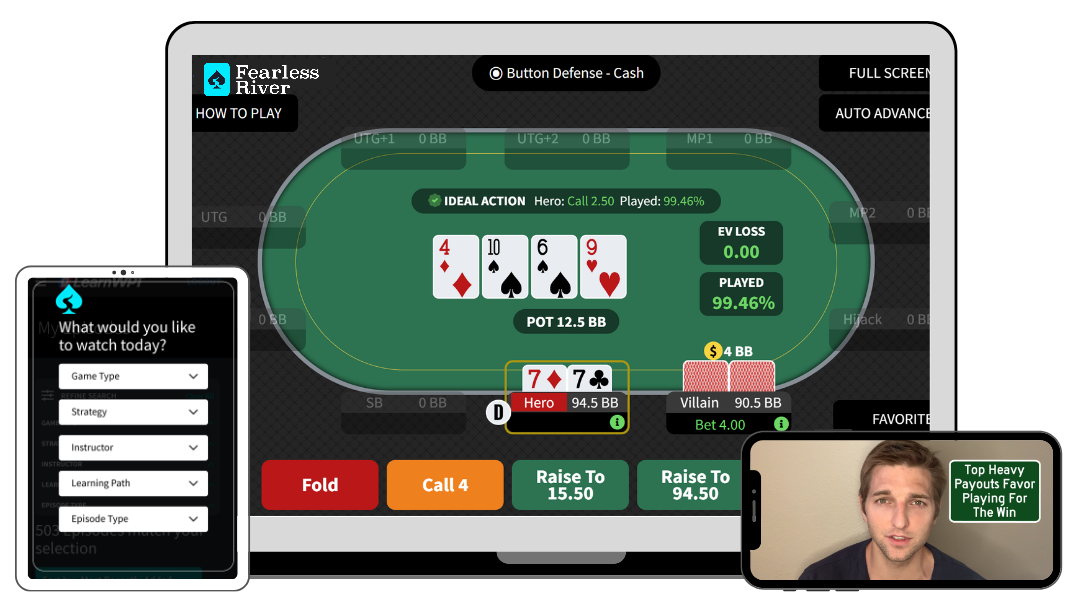
Join now to get started, and you'll immediately gain access to the Fearless River training features, including GTO Trainer packs, 550+ strategy videos, downloadable tools, Ask a Pro Discord, and more!
Have Questions about Fearless River? Send an email to our Support Team at [email protected] or click the CONTACT US button.
Poker Quiz! Pocket Eights Facing an All-In, What Do You Do Here?
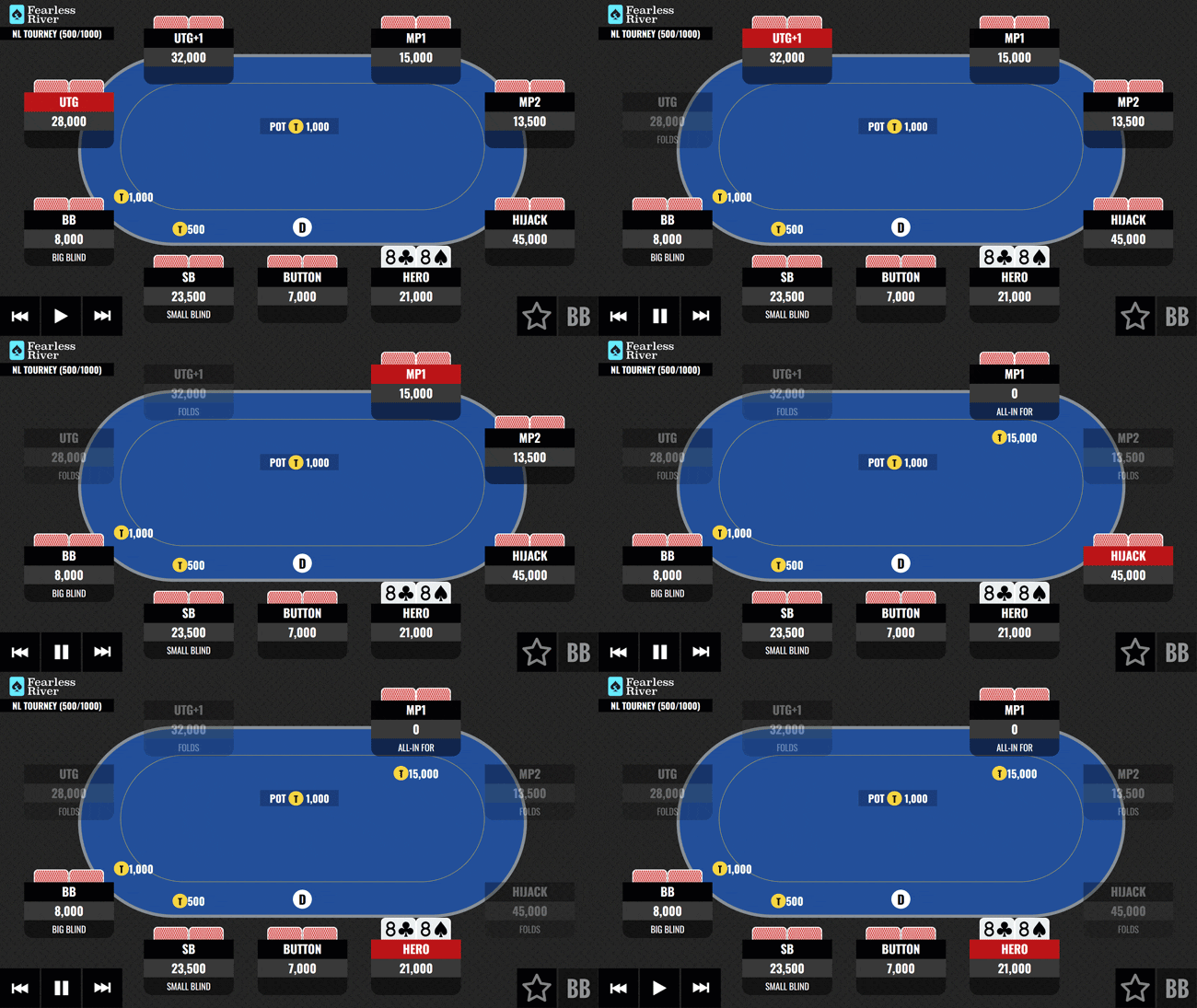
DECISION POINT: In an online Tournament with blinds at 500/1,000 and a 1,000 big blind ante you are dealt 8♣8♠ in the Cutoff seat. Stacks at the table range from 10BBs to just over 40BBs. The early position players fold, the MP1 player open shoves for 15,000 (15BBs) and action is on you with 21BBs behind. What do you do here?
PRO ANSWER: We are in the middle stages of a major Sunday online tournament. The blinds are 500/1,000 with a 1,000 big blind ante. The stacks range from 10 big blinds to just over 40. We are dealt black eights in the cutoff and it folds to MP1 who open shoves for 15,000.! Everyone else folds and action is on us.
When analyzing spots like this after the fact, we should approach from two perspectives. First, we should estimate MP1 range and how our hand performs against that range, much like we would in real-time at the table. Second, we should double check our estimate in real-time by running the spot in a solver to see what things look like when both players are using optimal ranges.
Studying in this way allows us to exercise our brain in the same way that we will use at the table, and then either reinforce our thoughts with the solver or discover any errors.
If the decision was wrong in real-time we can determine if this is a fundamental leak and what adjustments need to be incorporated to our game plan. If the opponent was likely shoving different ranges than the solvers suggest which may often be the case, then we can consider the merits of making an exploitative adjustment against our real life foes.
A primary consideration is whether MP1 has a non all-in raising range here. It’s likely at this stack size that they would raise a more standard sizing and not just move all-in with AA/KK and some of their other biggest hands.
Continued below...

Given this we can assume that MP1 is likely to have a capped range that includes many suited broadway hands, some big Ax hands, and some middle pairs. The key factor we need to assess is if MP1 will ever move all-in with pocket pairs lower than 88 or Ax combinations where their kicker is lower than 8.
In real-time we thought it was possible our opponent is capable of shoving as light as 77, but 66 or less and A8s or worse seemed unlikely so we chose to fold.
Through post hand analysis using a Game Theory Optimal Solver we can see that if MP1 is splitting their range properly the all-in range will include 66-99, A8s-AJs, AKo, KJs, KTs, QTs+. The range of hands that prefers to raise a standard amount first-in at 15BB blinds includes a mix of stronger hands (TT+/AQs+), some smaller suited Ax combinations, and offsuit broadway hands. Against the specific all-in range provided by the Solver we see that 88 has a +550 chip (+.55 BB) expectation. This means that against an opponent using GTO ranges we should be calling, although the decision is still very close.
In real world situations many players might shove hands such as TT/JJ, especially as they don’t want to encourage action and have to play postflop. If MP1 was the type of opponent to use this larger sizing with medium pairs that may be vulnerable on overcard flops then this spot would quickly become a fold. We would also have an easier call if we were in the Blinds with fewer players behind yet to act.
Against a GTO opponent, calling is the best play. Against specific opponents shoving narrower ranges or higher pairs, you could make an exploitative fold.
How would you play it?
Share your answer in the comments below!
Play Better Poker With Fearless River!
Whether you’re brand-new to poker training or are an experienced student, a membership to FearlessRiver.com is your chance to learn from world-class professional poker players in a friendly community using state-of-the-art tools.
Join now to get started, and you'll immediately gain access to the Fearless River training features, including GTO Trainer packs, 550+ strategy videos, downloadable tools, Ask a Pro Discord, and more!
Have Questions about Fearless River? Send an email to our Support Team at [email protected] or click the CONTACT US button.
Poker Quiz! Short Stacked in the Big Blind With 7♥7♦, Your Move?
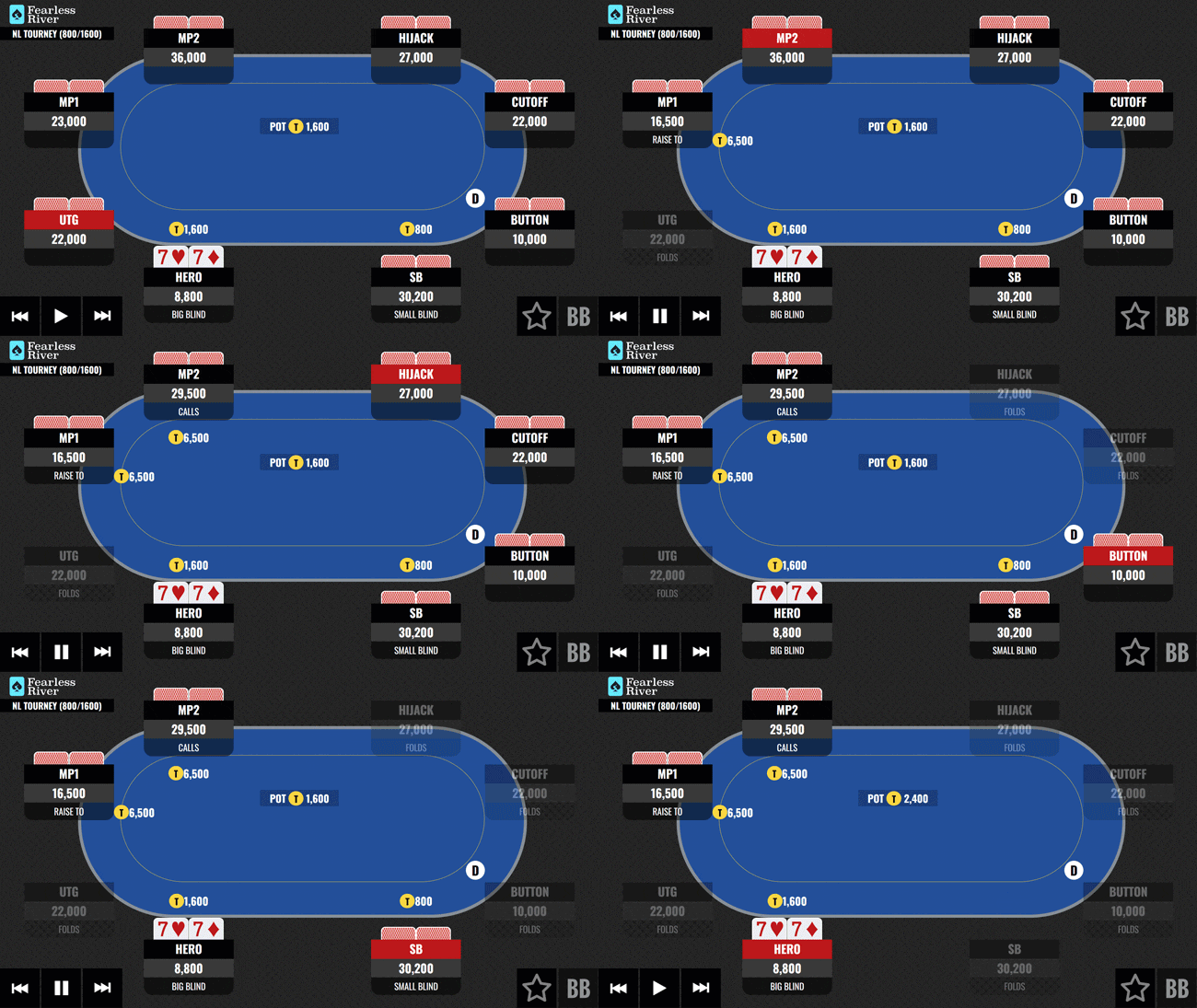
DECISION POINT: You’re in a one-day, fast-structured daily tournament. 12 places get paid and there are 40 players remaining. The table is 8-handed and the blinds are 800/1,600 with a 1,600 big blind ante. You are in the Big Blind with 7♥7♦ and an 8,800 stack after posting your blind and ante. The MP1 player raises to 6,500, MP2 calls, and action folds to you. What do you do here?
Vote and see how your answer compares to other players 👇
PRO ANSWER: We are playing a fast-structured one-day local tournament. Nearly 40 players remain with the top 12 being in the money. The blinds are 800/1,600 with a 1,600 big blind ante. We are in the Big Blind with 7h7d and have 8,800 chips after posting our big blind and the big blind ante, and the table is currently 8-handed.
The UTG player folds, and MP1 makes it 6,500. This raise is over 4 big blinds and represents over a quarter of their remaining stack. MP2 flat calls and everyone else folds over to us in the Big Blind.
Playing with a short stack is often an exercise in patience and picking your spots. Ideally, we would have found a spot to move all-in before we got this short. However, in these very fast structured daily tournaments the blinds can catch up to us quickly. That means we are likely to often find ourselves in situations such as these, so navigating them well adds meaningfully to our overall win rate.
If we continue with this hand, we are basically all-in. This situation really becomes a math problem where we estimate our opponents' ranges, estimate our equity against those ranges, factor in any perceived risk premium we have, and then decide how to proceed.
There aren't really range charts for opening more than 4 big blinds with an awkward stack, but intuitively we can guess that MP1 likely has a hand they are willing to risk their stack with. This range might look like 99+/AJs+/AQo+. Assuming that MP2 recognizes the situation, they are probably calling with a very narrow range of hands as well. Calling would normally cap someone's range but given the abundance of short stacks at this table and the unusually large opening raise size, our opponent could easily call with big hands as a trap. Given that potential, we would estimate MP2’s range to be something like TT+/AQs+/AQo+.
Using an equity calculator after the fact, we can see that against these two ranges we have just over 25% equity with 77. This means we need to be getting over 3:1 pot odds to break even. If we move all-in and assume both players call, we will be risking 8,800 chips to win 24,800 chips (2.8:1). This is very close, but not quite enough to continue, especially once we factor in any ICM/risk premium that our stack has.
In real-time, without an equity calculator, we can take a simple shortcut in these situations where continuing is likely close. The first question we want to ask is "Do we dominate any hands in our opponent's range?”. In this case, in order to continue, we would want our opponent’s likely ranges in this spot to include some hands such as 66 or A7s. If we are able to dominate even a small portion of our opponent's range, our overall equity increases significantly.
If we have observed our opponents enough to think it is likely that by shoving we may induce an all-in from the original raiser which causes the caller to fold a reasonable percentage of the time, then moving all-in becomes a compelling play. We would likely have over 35% equity all-in against the original opener's range in a heads-up situation.
Without very opponent specific information however, our hand just isn't quite good enough to continue with. In fact, against the ranges we estimated, pocket tens is the minimum we would need to continue.
Folding is the best play.
How would you play it?
Share your answer in the comments below!
Get Ready To Launch Your Poker Game

The Fearless River Launch Tournament Poker Course is a 4-session system built by WSOP Bracelet winners and WPT Champions. You'll get a clear framework for every stage of a tournament and a structured curriculum covering essential concepts and easy-to-learn methods for implementing advanced tactics.
The course includes lifetime access to the recorded sessions, GTO trainer packs, supplemental strategy videos, range charts, and a private strategy Discord.
Have Questions? Email our Support Team at [email protected] or click the CONTACT US button.
Poker Quiz! Turned a Straight With 9♦8♦, What's Your Move?
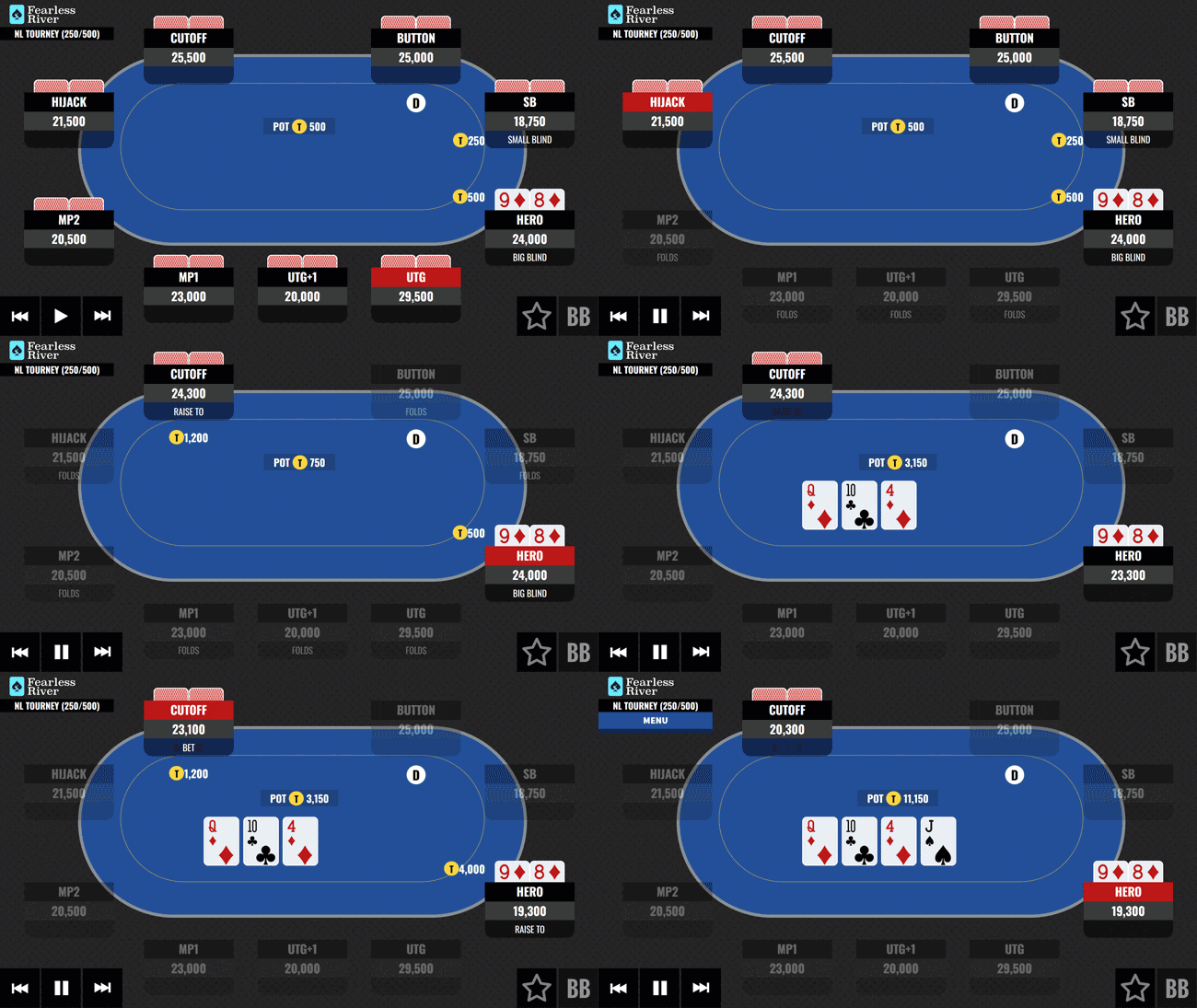
DECISION POINT: You’ve just late registered a local daily tournament with a fast structure. This is the last level of reentry and blinds are 250/500 with a 500 big blind ante. The Cutoff opens to 1,200. It folds to you in the Big Blind with 9♦8♦ and you call. You check the Q♦T♣4♦ flop. Your opponent bets 1,200, you check-raise to 4,000 and get called. The straight comes in on the J♠ turn and action is on you. What's your move here?
Vote and see how your answer compares to other players 👇
PRO ANSWER: We're playing a local daily tournament with a relatively fast structure. This is the last level of reentry before late registration closes. The blinds are 250/500 with a 500 big blind ante. We have 25,000 chips, having just registered and have no reads on the table.
We are dealt 9d8d in the Big Blind. Action folds around to the Cutoff who opens to 1,200 chips, and everyone else folds to us. We can mix in some preflop reraises with suited and connected hands, but the more standard play is to call, which we do here.
The flop is QdTc4d and we flop a flush draw along with the bottom end of an inside straight draw. This is a board that we connect fairly well with as the Big Blind, but still heavily favors the preflop raiser. We check and they bet 1,200 chips, or just over one third pot. We will have a lot of hands we can easily continue with here, such as pairs, flush draws, and some straight draws.
We also flop some strong hands that would love to check-raise now such as T4s/QTs/44. In order to get max value when we check-raise our stronger hands, some bluffs must be included as well for balance. The most logical bluffs come from some of our highest equity draws. Examples of those are ace and king high flush draws where the flush and our over card are often outs, as well as combo draws such as ours.
Taking those factors into consideration we decide to check-raise to 4,000 chips and the Cutoff just calls. The turn is the Js which completes our straight. Many players first instinct is to bet the turn when they hit their hand after check-raising, and often that is the correct approach. If we really step back and think about what each player’s range looks like in this situation, this Js is actually a much better card for our opponent than it is for us.
Much of their continuing range improves on this card, so it’s a card that we will want to be checking quite frequently. One way to protect our checking range so our opponent can’t just bet and take down the pot every time we check the turn, is to mix some strong hands into our checking range. Our particular hand makes a perfect candidate as it doesn’t fear giving away a free card since we have the flush draw, and we can induce bets from the Cutoff when they have hands such as AT that are likely to fold to continued aggression.
If we're up against a passive player who is unlikely to bluff appropriately when we check, then we could exploitatively continue betting. Against opponents who are finding the appropriate amount of bluffs by attacking perceived weakness, it’s very important to have some strong hands that we can check with.
Checking is the best play.
How would you play it?
Share your answer in the comments!
Gags Finishes 4th at the WSOP Main Event!
Fearless River instructor Michael "Gags30" Gagliano's incredible WSOP Main Event run has come to an end in 4th place, earning $2,750,000.

Out of a field of 9,208 entrants, the 4th largest Main Event ever held, Gags outlasted all but three players. We couldn't be prouder, and we wanted to celebrate it with everyone who's learned from him.
We put together a full look at his run this summer including a free strategy episode where Gags breaks down hands from his 2023 WSOP bracelet win. Thanks for the run, Gags.
Poker Quiz! Flopped a Gutshot at the WSOP, What’s Your Move?
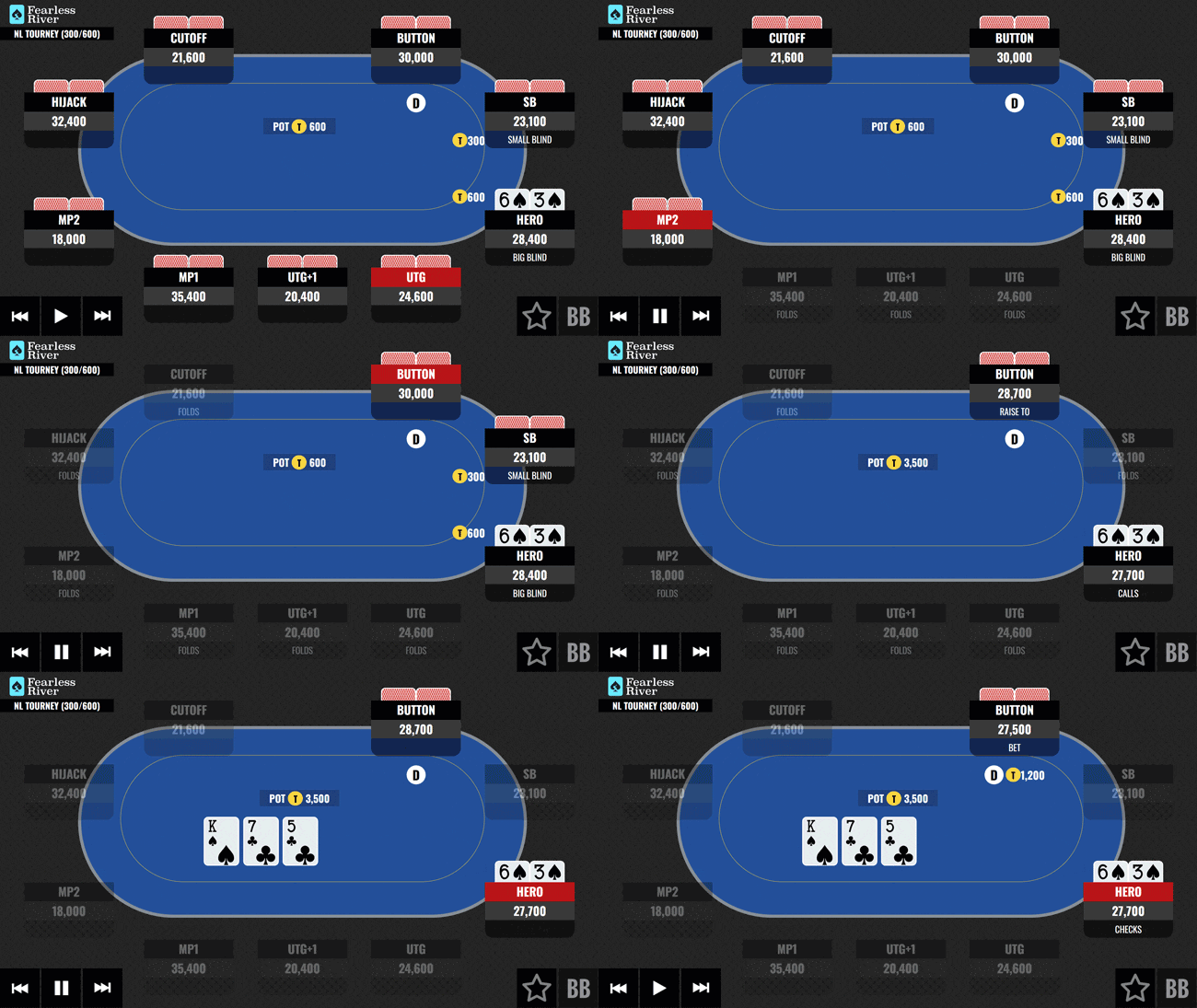
DECISION POINT: You're in the early stages of a $500 WSOP bracelet event with blinds at 300/600 and a 600 big blind ante. Most stacks are in the 50BB range, and you have no reads on your tablemates. Action folds to the Button who raises to 1,300, the Small Blind folds, and you defend in the Big Blind with 6♠3♠. You check the K♠7♣5♣ flop, the Button c-bets 1,200, and action is back on you. What's your move?
PRO ANSWER: We are playing a $500 buy-in multi-day bracelet event at the World Series of Poker. The tournament is still in the early levels, and we just moved tables a few hands ago, so we have no significant reads on our opponents. Most of the stacks are in the 50 big blind range. The blinds are 300/600 with a 600 big blind ante and we are dealt 6♠3♠ in the Big Blind. Everyone folds to the Button who opens to 1,300, the Small Blind folds, and action is on us.
With the big blind ante in play we are getting very favorable pot odds to continue from the Big Blind. While some of our weakest hands should definitely be folds, the defending range must be very wide when getting this price and calling with any two suited cards is a must. If we’re folding more than 20% of all total hands against this raise size when closing the action in the Big Blind, that means we are folding way too frequently in general.
We do elect to call, and the flop is K♠7♣5♣ bringing a backdoor flush draw and an inside straight draw. This is a flop that favors the preflop raiser’s range, so we will be checking 100% of hands by default in this situation. We check and the Button bets 1,200 into a 3,500 pot. While our hand might not seem like much with a gutshot straight draw and backdoor flush draw, we are getting nearly 4:1 on a call and the Button should have a very wide hand range in this situation.
With three cards to a straight and three to a flush in a Big Blind defense situation facing a small bet against a wide range such as this one, we should be alert that this scenario is potentially a good spot to check-raise. Our opponent is likely betting a super wide range on this board. That means that even when the Button does call our check-raise we still can potentially improve our hand to a likely winner and will pick up additional equity on some turn cards that will allow us to continue semi-bluffing.
Continued below...

Looking at this spot in a solver after the hand, the output indicates a split between calling (around 60% of the time) and raising (around 40% of the time). While our play shouldn’t always mimic a solver, understanding what the “optimal” play is based on pure theory is a good starting point. Deciding which option is best will often come down to tendencies for each player in your game.
If we had opponent specific information that the Button played tighter ranges, calling would often be the preferred option since the implied odds of hitting a straight would be higher and our check-raise would induce folds less frequently. Facing opponents who open more than they should from the Button, or continuation bet with a higher frequency than the solver suggests (which is 65% in this situation), we can adjust by check-raising.
The one clear mistake in this spot would be to fold. If we are considering a fold in this situation, we likely are proceeding too conservatively postflop when defending the Big Blind and would benefit greatly from tools such as the Fearless GTO Trainer to improve play in these postflop spots.
Calling or raising are both correct plays.
How would you play it?
Share your answer in the comments below!
Get Ready To Launch Your Poker Game
The Fearless River Launch Tournament Poker Course is a 4-session system built by WSOP Bracelet winners and WPT Champions. You'll get a clear framework for every stage of a tournament and a structured curriculum covering essential concepts and easy-to-learn methods for implementing advanced tactics.
The course includes lifetime access to the recorded sessions, GTO trainer packs, supplemental strategy videos, range charts, and a private strategy Discord.
Have Questions? Email our Support Team at [email protected] or click the CONTACT US button.
Poker Quiz! Facing a Squeeze Play With Pocket Jacks ...
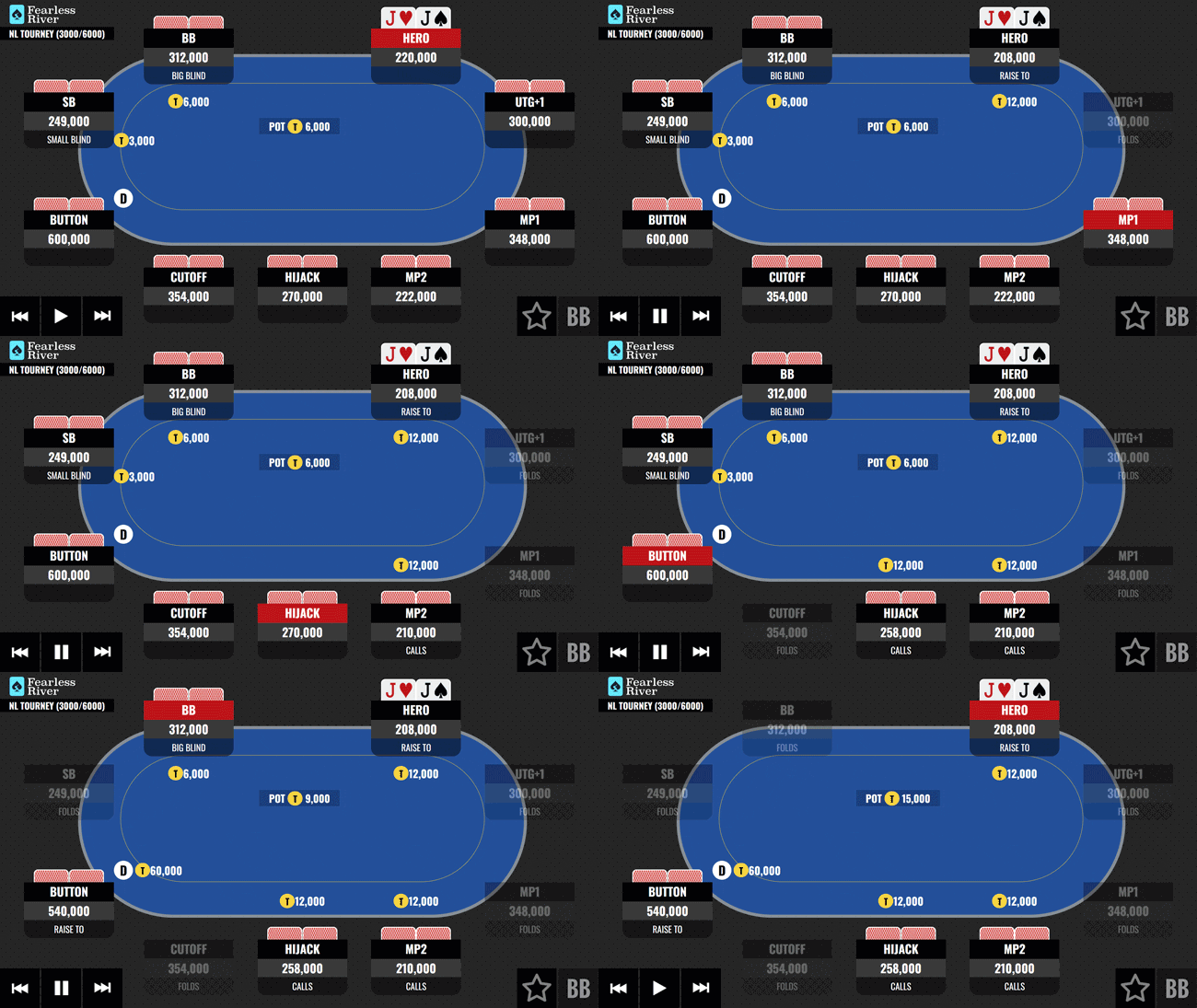
DECISION POINT: You are playing Day 2 of a $5K WSOP Bracelet event and blinds are 3,000/6,000 with a 6,000 big blind ante. It's early in the day and there is still approximately 50% of the field remaining. The average stack at your table is around 40BBs except for the Button who has 100BBs. You raise to 12,000 from UTG with J♥J♠. A Middle Position player calls, the Hijack calls, the Button reraises to 60,000, and action is back on you. What do you do here?
Vote and see how your answer compares to other players 👇
PRO ANSWER: We are playing early on Day 2 of a $5K buy-in WSOP Bracelet event. Around 50% of the field is remaining, and the blinds are 3,000/6,000 with a 6,000 big blind ante. We have just under 40 big blinds, as does most of the table except the Button who has 100 big blinds. We are dealt pocket jacks Under the Gun and make a standard open for this level to 12,000 chips (2BBs). Two players call the open and action folds to the Button who reraises to 60,000. Everyone else folds and the action is on us.
Much of the decision in this spot comes down to our assessment of the Button and whether they are capable of making a move with a wider range. If we assume that they are a skilled and studied opponent, then they definitely should be showing up with some A5s/KTs type of squeeze semi-bluffs in this situation in addition to stronger hands. Based on the Button’s assumed range, this is a slam dunk shove with jacks. Taking a closer look at this hand using a solver, the result shows it's a pretty clear +EV move to shove here against a GTO opponent.
During situations at the table like this in real-time it’s useful to ask ourselves, "Does our opponent ever have a hand here that we dominate?", such as TT or AJ in this instance.
If the answer is yes, we have a very compelling reason to continue with all the likely dead money in the pot since the middle position stacks are unlikely to have hands they can continue with here. If the answer is no and we believe the Button is raising a tighter range to include only premium pairs such as AA-JJ plus AK and AQ, then we could consider exploitatively folding.
In a $5K buy-in WSOP Bracelet event, most of our opponents are likely to be more than capable of including some semi-bluffs in their 3-bet squeezing range here, making our hand a fairly trivial all-in. Using the framework of asking ourselves the question “Does my opponent ever have hands I dominate?” will help us exploitatively adjust in the event that we do run into an opponent who has an extremely narrow range in this situation.
Moving all-in is the best play.
How would you play it?
Share your answer in the comments below!
Improve Your Game Today!
Join Fearless River and Get:
- The GTO Trainer to play real solved hands and get instant feedback on YOUR leaks (over 4 BILLION solved spots!)
- On-demand access to our full library of 550+ (and growing) in-depth Strategy Episodes from world-class players
- All of your poker questions answered with the Ask a Pro Feature
- Analysis from Fearless River Pros using The Hand Input Tool
- Downloadable Tools you can use at and away from the tables
- Learn from a Team of world-class Professional Players
To join (just $5 your 1st month) click the JOIN NOW button and start improving your game!
Have Questions? Email us at [email protected].
You're Chip Leader in a Mystery Bounty Facing Multiple All-ins...
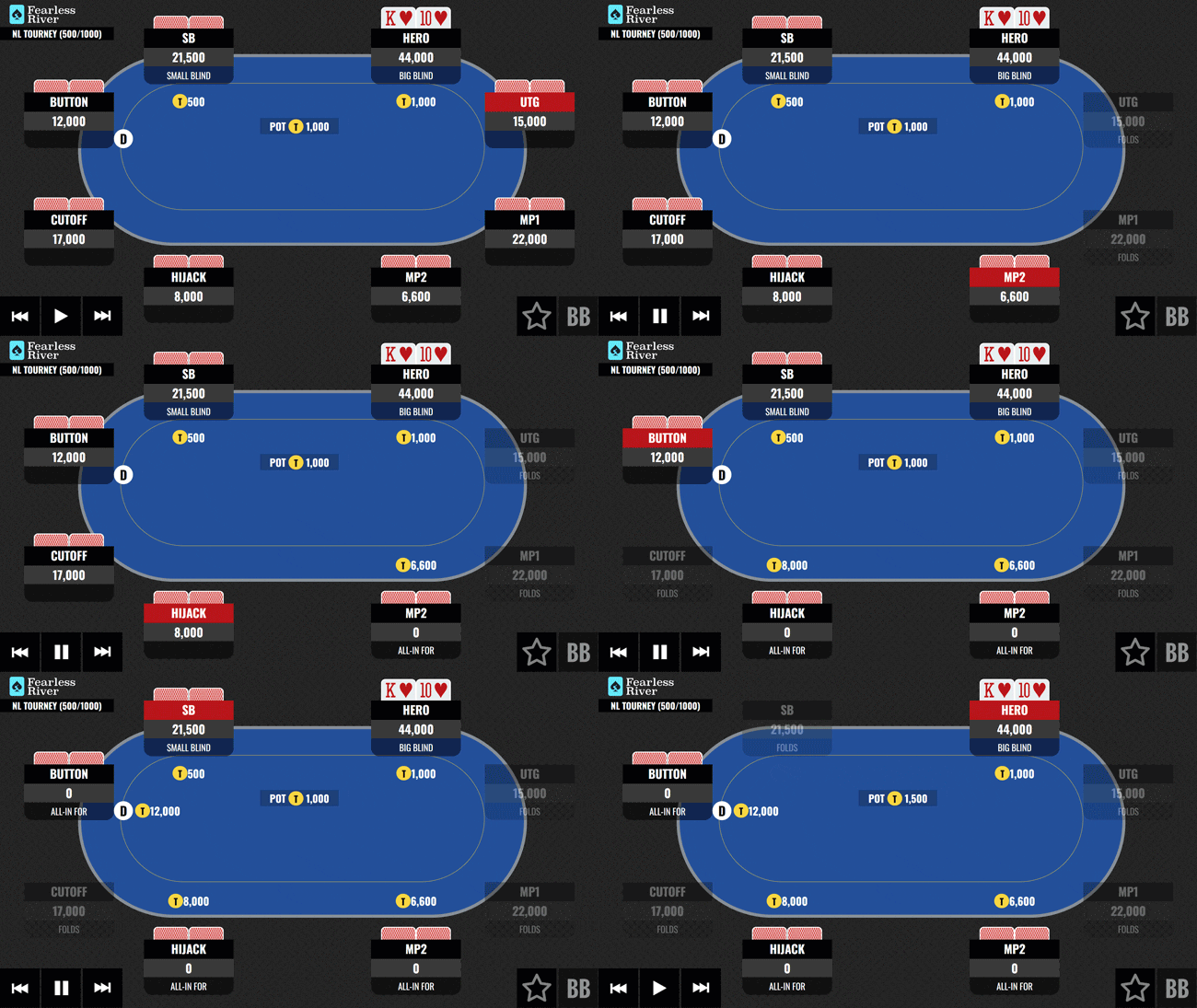
DECISION POINT: You're the chip leader with 46BBs in a large field $100 buy-in Mystery Bounty tournament with 40 players left (stacks ranging from 10BBs-20BBs) and $3,000 going to the winner. The larger bounties, which include one $3K bounty and two $2K bounties, have not been pulled. The blinds are 500/1,000 with a 1,000 big blind ante. Three players go all-in (Middle Position, Hijack, and the Button) and the Small Blind folds. Action is on you with K♥T♥ in the Big Blind. What do you do here?
Vote and see how your answer compares to other players 👇
PRO ANSWER: We're one of the final 40 players left in a large field $100 Mystery Bounty tournament. The blinds are 500/1,000 with a 1,000 big blind ante and we are the chip leader by a significant amount with 46 big blinds. Most of the players have 10-20 big blinds remaining.
None of the large bounties have been pulled at this point. Initially half the prize pool was put into the bounties and only smaller bounties and a few medium-sized bounties (2x buy-in) have been pulled so far. The average bounty payout has ballooned to $200, including one $3,000 and two $2,000 bounties still remaining, with winning first place in the tournament paying $3,000.
The action folds to the MP2 player who moves in for their last 6,600. The Hijack then moves all-in for 8,000. The Cutoff folds and the Button moves all-in for their last 12,000. The Small Blind folds and action is on us in the Big Blind with K♥T♥.
Mystery Bounty tournaments are very unique in that we must constantly be paying attention to the average potential bounty payout when making decisions. Many Mystery Bounty tournaments have top bounty prizes equal to (and sometimes greater than) taking first place, so positioning ourselves to collect bounties is very important. We’ve done an excellent job to this point accumulating chips so that we cover everyone at the table and maximize our chances to collect bounties.
Continued below ...

When the largest bounties are collected early, the average bounty amount decreases significantly, and we should have the same approach as a traditional tournament with a scaled payout structure. With larger bounties still available, the value of knocking out a single player can be greater than the amount awarded for 1st place, meaning we should prioritize eliminating opponents rather than trying to win the entire tournament.
Analyzing this spot with a gto solver and assigning an average bounty value of $200, we should call with 61% of our hands in this scenario. Our specific hand, KTs, is fairly high up in that range. In addition, the stack sizes of the all-ins are relatively shallow compared to our stack, so we still have the table covered if we lose and can potentially collect a bounty or two even in worst-case scenarios.
Calling is the correct play.
How would you play it?
Share your answer in the comments below!
Will YOU Be Our Next Bracelet Winner?
Our students consistently crush the summer poker season, bringing home massive scores and achieving their poker dreams.
In fact, in just the past few years alone during the summer in Vegas Fearless River Students have achieved:
🥇 4 WSOP BRACELETS
🏆 6 WSOP Final Tables
💪 1 Around Town Win
👏 9 Around Town Final Tables
💰 Over $1.7 Million in Cashes
Ready to be our next success story?
Become a FearlessRiver.com Member now for just $5 your 1st month and start preparing for your best summer yet.
Have Questions about Fearless River? Send an email to our Support Team at [email protected] or click the CONTACT US button.